Does Foil Make Potatoes Bake Faster? A Practical Guide
Explore whether wrapping potatoes in foil speeds baking, how foil affects texture and moisture, and practical tips for faster, evenly baked potatoes. Insights from Bake In Oven.


Does foil make potatoes bake faster? Generally no. Wrapping potatoes in foil traps steam, which softens the skin and slows browning, often extending the bake time rather than speeding it. For quicker results with fluffy interiors, bake uncovered or partially pre-cook (parboil or microwave) before finishing open in the oven.
Foil and the bake-time dynamic
Does foil make potatoes bake faster? This is a question many home bakers ask when planning weeknight meals. Wrapping a potato in foil changes the heat-transfer balance inside the potato. The foil creates a microclimate around the tuber that reduces the rate at which surface moisture escapes, effectively trapping steam. This steam retention tends to heat the interior more gradually while slowing down the surface drying that drives browning. In practice, most typical home ovens respond to foil-wrapped potatoes with a slightly longer overall bake time rather than a faster one. The Bake In Oven team emphasizes that the exact timing is highly dependent on the potato variety, its size, and the oven’s performance. If your texture goals include a very fluffy interior with a soft, less crisp skin, foil can help; if you want a fast, deeply browned exterior, foil is usually a hindrance. Understanding these dynamics will help you choose the method that best fits your schedule and texture preferences.
To apply this to real cooking, start with a baseline: bake an unwrapped potato to your standard finish, then repeat with a foil-wrapped version, and compare texture, appearance, and sense of doneness. Your oven’s quirks will become clearer with a small, controlled test. Bake In Oven’s guidance relies on practical, kitchen-tested experiments to map how subtle differences in technique translate to real-world results.
blockType”:null,
Moisture, steam, and browning: what foil does
Foil acts as a moisture trap. By insulating the potato, it reduces the vapor loss that would normally occur in an uncovered bake. This moisture retention makes the interior feel lighter and can produce a more evenly cooked center, but it also suppresses surface dehydration that drives browning and crisping. As a result, foil-wrapped potatoes may finish with a softer skin and a less dramatic crust. The effect is more pronounced for larger potatoes, which have more internal moisture to contend with, and less pronounced for small, thin-skinned varieties. If your goal is a crisp skin and browned exterior, foil likely won’t help and may hinder the overall speed of bake. The trade-off—softer exterior for tender, evenly cooked interior—depends on your texture priorities and the exact oven environment. Bake In Oven’s tests indicate that the same potato cut or shape can produce different outcomes depending on whether foil is used.
blockType”:null,
When foil speeds up or slows down: variables
There are several variables that determine whether foil will speed up or slow down your bake. Potato size and variety matter: Russets with thicker skins behave differently from Yukon Golds. Oven temperature and whether you pre-warm the potato affect outcomes. A high-temperature, open-bake setup accelerates browning and reduces time to reach a fluffy center, while foil slows overall heat transfer by delaying surface drying. Parboiling or microwaving before final baking can negate some of foil's drawbacks, creating a midpoint between texture goals and time efficiency. In practice, the best approach is to define your texture target first—crispy skin vs. ultra-tine interior—and then choose whether foil should be part of your process. Bake In Oven’s framework encourages homeowners to run small comparisons to identify their own oven's quirks.
blockType”:null,
Practical testing at home: steps to compare foil vs no foil
To evaluate the impact of foil on your potatoes, perform a controlled side-by-side test. Use the same potato variety, size, and oven, and bake one potato wrapped in foil and one unwrapped. Preheat to your standard potato-baking temperature, then record bake times by poking with a fork and noting interior texture. Document surface texture, browning, and whether the interior feels fluffy or dense. If you want speed without sacrificing interior quality, try pre-cooking methods (parboil or microwave) for the wrapped version and finish in the oven uncovered to compare textures side by side. Repeat with different potato sizes or varieties to confirm your oven's tendencies. Bake In Oven recommends a small, methodical testing routine to build a personal guide.
blockType”:null,
Techniques to achieve fluffy interior with crisp skin without sacrificing time
Several techniques help you get a fluffy interior and crisp skin without relying on foil to speed bake times. First, pre-cook the potato briefly (parboil or microwave) before a final open-bake to finish textures quickly. Second, consider piercing and rubbing with a light coating of oil and salt to promote browning when the potato is exposed to dry heat. Third, use a hotter final bake or a longer preheating phase to ensure a dry surface before the skin forms. Finally, choose the right potato variety for your texture preferences: Russets are classic for fluffy interiors; red potatoes hold shape but are less ideal for a dramatic bake. Each method influences bake speed, so house bakers should document their own results to develop a reliable workflow.
blockType”:null,
Common mistakes and troubleshooting
Common mistakes include assuming foil will always hasten bake times, failing to preheat, or forgetting to wash and pierce potatoes before baking. Over-wrapping can cause steam burns and under-salted interiors. Another pitfall is underestimating potato size variations; larger potatoes take longer to bake, and foil can worsen this. If your skins aren't browning, raise the oven temperature slightly, remove the foil sooner in the bake, or switch to unwrapped baking for the final phase. If interior textures are dense, consider pre-cooking steps and test moisture influence on your oven.
blockType”:null,
Scientific rationale: heat transfer in oven-baked potatoes
Baking potatoes relies on heat transfer from the surrounding air through the potato's skin and interior. When foil is present, convective heat transfer is partly replaced by internal moisture flow, reducing surface evaporation and slowing crust formation. Without foil, moisture escapes at the surface, enabling browning and a crisper exterior. The potato's starches gelatinize as heat penetrates, and the interior becomes tender as starch granules swell and soften. Understanding these dynamics helps bakers tailor their method to texture goals and timing constraints. Practical testing with your own equipment yields the most actionable results. Bake In Oven's analysis emphasizes that there is no universal answer—the best method depends on your texture priority and oven behavior.
blockType”:null}
Comparison of foil vs non-foil baking outcomes
| Condition | Bake Time Impact | Skin Texture | Interior Moisture |
|---|---|---|---|
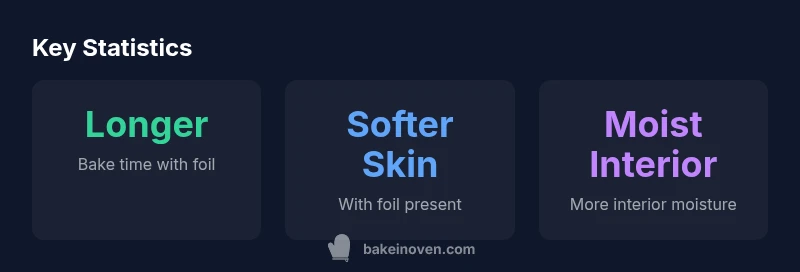
| Foil-wrapped potatoes | Longer bake time | Softer skin | Higher interior moisture |
| Unwrapped potatoes | Faster bake time | Crisp skin | Lower interior moisture |
| Parboiled first, then baked unwrapped | Moderate bake time | Balanced skin | Moisture moderated |
Frequently Asked Questions
Does foil speed up bake time?
No. Foil typically slows bake time by trapping steam and reducing surface drying, which delays browning. For faster results, bake uncovered or use pre-cooking techniques before finishing in the oven.
No—foil usually slows the bake. If you need speed, go uncovered and consider pre-cooking.
Will foil help potatoes get crisp skins?
Foil generally dampens browning, leading to softer skins. Unwrapped baking promotes browning and a crisper crust. If crisp skin is your priority, skip the foil.
Foil is not great for crispy skins; go open for browns and crispness.
Can foil-wrapped potatoes still taste good?
Yes. Foil can yield tender interiors and prevent drying, but texture will be different. You may miss the crispy skin, but interior tenderness can be desirable.
Moist, tender interiors with foil, but less crispy skin.
Does foil affect flavor?
Texture is the main effect; flavor comes from seasonings and heat exposure. Foil itself doesn’t add flavor, but it can alter how effectively seasonings permeate.
Flavor mostly depends on seasoning and heat exposure, not foil.
What’s a quick way to test methods at home?
Do a side-by-side bake: one wrapped and one unwrapped, using the same potato variety and oven. Note textures, browning, and any time differences. Repeat with different potatoes to confirm results.
Try two potatoes side-by-side, one foil-wrapped, one not.
Are there safe times to use foil when baking potatoes?
Yes, but handle carefully to avoid steam burns. Start with foil for interior texture, then remove foil during the final stage if you want browning.
Be careful with steam; remove foil at the end if you want browning.
“Foil dramatically alters moisture dynamics in potato baking; the choice should hinge on desired texture and bake time.”
Key Takeaways
- Test both methods to see your oven's quirks
- Unwrapped baking yields crisper skin and faster finish
- Foil increases interior moisture, softening exterior
- Parboiling or microwaving first can speed final bake without sacrificing interior tenderness