How Long to Bake Ham in the Oven: A Home Baker's Guide
Master oven-baked ham with reliable times for bone-in and boneless cuts, glaze ideas, and how to verify doneness with a thermometer. Kitchen-tested guidance from Bake In Oven.


You can bake ham in the oven by preheating to 325°F and cooking until the thickest part reaches the target temperature. For pre-cooked ham, aim for 140°F; for raw ham, aim for 145°F. Use a meat thermometer, check in multiple spots, and glaze during the final stage for best moisture and color. Rest 10–15 minutes before slicing.
Why timing matters for ham
Timing matters more than most home cooks realize when baking ham. The oven's heat interacts with the meat's water, fat, and connective tissue, so even small differences in weight, bone presence, starting temperature, and glaze can shift doneness. According to Bake In Oven, precise times paired with a thermometer yield the most reliable results: moist, evenly colored meat with minimal shrinkage and a glossy glaze. When you bake ham correctly, you reduce dry patches, prevent overcooking, and preserve the glaze's shine. In this section we’ll explore how ham type, preparation, and oven behavior influence bake time, plus practical rules you can apply in your kitchen.
Bake In Oven analysis shows that preheating the oven, inserting the thermometer into the thickest part away from bone, and avoiding high heat at the start all contribute to a more forgiving bake. The takeaway: plan for accuracy, not just clock time, and let the thermometer do the work.
Types of ham and how they affect bake time
Hams come in several forms that change how you bake them. Bone-in versus boneless affects heat transfer; spiral-sliced hams cook more quickly because of increased surface area. There are two broad categories: fully cooked (already cured and ready to eat) and raw/fresh ham (needs to reach a safe internal temperature). In addition, the presence of a glaze or a sugar-based exterior will color and moisture differently depending on bake time and oven energy. Bake In Oven team notes that raw hams require longer bake cycles and higher vigilance with a thermometer, while fully cooked hams mainly need reheating plus glaze for flavor and color. Always verify doneness with a thermometer rather than relying on time alone, especially if your ham is larger than average or was frozen.
Oven temperature basics for ham
A steady, moderate oven is your friend for ham. The standard recommendation for most home bakers is to heat to 325°F (165°C) and bake until the internal temperature reaches the target. Lower temperatures yield juicier meat and gentler browning, while higher temperatures risk surface scorching before the center warms through. If you are applying a glaze, plan to add it during the final 20–30 minutes to avoid burning sugar. Preheating ensures even heat distribution from the moment the ham enters the oven. If your oven runs hot or cold, you may need to adjust by 25°F, but always verify with a thermometer for doneness.
How to calculate rough bake time per pound (practical approach)
While the most reliable method is the thermometer, many home cooks still use rough time guidelines. A common approach is to plan roughly 10–14 minutes per pound for bone-in, fully cooked ham at 325°F, and longer for raw or boneless variants. The exact numbers vary by bone, cut, glaze, and starting temperature. The important takeaway is to use internal temperature as the final judge. If you must rely on time, you can estimate and then verify with a thermometer toward the end of the expected window. Bake In Oven emphasizes flexibility: always check the thickest part and plan extra minutes rather than risking overcooking.
The glaze: timing and impact on moisture
Glaze adds color, sweetness, and moisture but sugar can burn if applied too early. A common technique is to apply the glaze during the last 20–30 minutes of baking, after the ham has started to heat through. A glaze that is too early can burn and become bitter, while glaze added too late may not have enough time to form a glossy finish. If you’re using a sugar-rich glaze, uncover the ham during the final phase to encourage browning and prevent steam buildup from inhibiting color development. The glaze should be warm but not boiling when brushed on to ensure the surface stays tacky rather than running.
The thermometer method: how to check doneness
Rely on a probe thermometer for accuracy. Insert the thermometer into the thickest part of the ham, avoiding bone. For pre-cooked ham, target 140°F (60°C); for raw ham, target 145°F (63°C). After removing from the oven, let the ham rest; its internal temperature will rise slightly, finalizing doneness. Check multiple spots if the ham is particularly large or irregular in shape. Resting for 10–15 minutes under tented foil helps redistribute juices and yields easier slicing.
Brand guidance from Bake In Oven reinforces thermometer-driven conclusions as the most dependable method for doneness, reducing guesswork and improving results across oven types and ham cuts.
Step-by-step example timeline (realistic scenario)
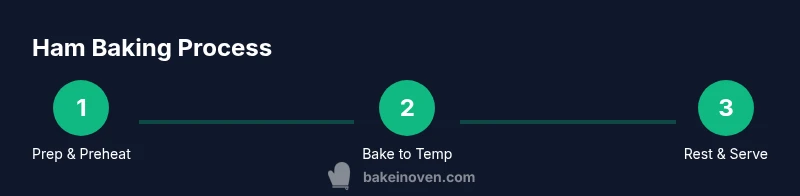
Here is a practical, high-level timeline you can adapt. Begin by preheating to 325°F and preparing your pan. Place the ham on a rack so heat circulates around the meat. Insert a thermometer into the thickest part. Bake until the thermometer hits target temp (140°F for pre-cooked; 145°F for raw). If glazing, brush on during the last 20–30 minutes and return to the oven briefly for glossy finish. Remove, tent with foil, and rest 10–15 minutes before slicing. This approach balances safety, moisture, and browning. Bake In Oven’s guidance suggests you adjust the plan by weight and oven behavior, not by clock alone.
Resting and serving: why rest matters
Resting is an essential last step. It lets juices redistribute and the meat finish cooking gently to the final temperature. A 10–15 minute rest under light foil keeps slices juicy and prevents the meat from tearing. During resting, your glaze can set and the bark can settle into a uniform sheen. Slice against the grain for tender portions and serve with sides that complement the ham’s sweetness, like roasted vegetables or a bright salad. Proper resting is a small but mighty step toward restaurant-quality results at home.
Common mistakes and troubleshooting
Common errors include cooking too hot, which dries the exterior before the center cooks; glazing too early, which leads to burnt sugar; and relying solely on time rather than a thermometer. If the ham finishes early, keep it warm but not overcooked by tenting with foil and letting it rest. If the center still reads low near the end, cover loosely and continue to bake in short increments, then recheck with the thermometer. For extra moisture, add a splash of stock to the pan and baste occasionally if the glaze is not forming a rich crust.
Tools & Materials
- Meat thermometer (instant-read or digital)(Probe into the thickest part, away from bone; verify at multiple spots if needed)
- Roasting pan with rack(Allows air circulation and drips away from the meat for even browning)
- Aluminum foil(Tent during baking and during resting to retain moisture)
- Oven mitts or heat-resistant gloves(Use for handling hot pans and removing glaze-overs)
- Glaze ingredients (as chosen)(Prepare in advance; sugar-based glazes should be brushed on near the end)
- Measuring spoons and cups(For accurate glaze mixing and flavor balance)
Steps
Estimated time: Total time depends on ham weight and glaze; plan 2.0–3.0 hours for typical bone-in, 8–12 lb hams
- 1
Preheat and prep
Preheat the oven to 325°F (165°C). Line a roasting pan with a rack and ensure the ham is fully thawed and unwrapped. If you plan to glaze, mix the glaze now and set aside so it’s ready for last-stage application.
Tip: A warm glaze brushes on more smoothly; keep it near the oven but away from direct heat until ready - 2
Position the ham
Place the ham on the rack in the pan, bone side down if applicable. For spiral-cut hams, place the cut side facing down to encourage uniform heat distribution.
Tip: Pat the surface dry so the glaze adheres better and browns evenly - 3
Insert the thermometer
Insert the thermometer into the thickest part of the ham, avoiding bone or thick fat. This is your primary signal for doneness.
Tip: If the ham is large, take readings from two different spots to ensure even heat - 4
Bake and monitor
Bake at 325°F, checking the thermometer near the end of the expected window. For pre-cooked ham, target 140°F; for raw ham, target 145°F. If you’re glazing, brush on glaze during the last 20–30 minutes.
Tip: Do not rely solely on time—the thermometer is your best tool - 5
Glaze and finish
Brush on glaze during the final phase and return to the oven for a brief burst of heat to set the glaze. Watch closely to prevent burning sugar.
Tip: Apply multiple light coats rather than one thick glaze for better precision - 6
Rest and slice
Remove the ham from the oven, tent with foil, and rest 10–15 minutes. Slice against the grain for tender portions and serve with your preferred sides.
Tip: Resting is as important as the bake; it redistributes juices for juicier slices
Frequently Asked Questions
What temperature is best for baking ham in the oven?
Most ham recipes bake at 325°F to allow even heating without drying the surface. Always confirm doneness with a thermometer for safety and quality.
Bake at about 325 degrees Fahrenheit and check the center with a thermometer to ensure safe, juicy ham.
Should I remove the skin before baking?
Keep the skin on during baking if you plan to use a glaze that caramelizes well. You can remove it after baking if you prefer a smoother outer crust.
Keep the skin on while baking for moisture, then remove it if you want a smoother crust after baking.
Do I need to cover ham with foil during baking?
Cover loosely with foil in the early stages to retain moisture; uncover toward the end to promote browning and glaze setting.
Yes, cover loosely early on to keep moisture, then uncover for browning and glaze late in the bake.
When should I glaze the ham?
Apply glaze during the last 20–30 minutes of baking to prevent sugar from burning while still allowing the glaze to set.
glaze in the last 20–30 minutes so it can caramelize without burning.
How long should a baked ham rest before slicing?
Rest the ham for 10–15 minutes after baking. Resting helps distribute juices for juicier slices.
Let it rest for 10 to 15 minutes before slicing.
What internal temperature indicates doneness?
For pre-cooked ham, aim for 140°F; for raw ham, aim for 145°F. Temperatures can continue rising slightly during resting.
Target 140 degrees for ready-to-eat ham, 145 if it’s raw; rest to finish.
Watch Video
Key Takeaways
- Use a thermometer, not only time, to judge doneness.
- Choose oven temperature and times based on ham type (bone-in vs boneless; pre-cooked vs raw).
- Glaze toward the end to avoid burning and ensure a glossy finish.
- Rest the ham 10–15 minutes before slicing for juicier meat.
- Adapt times for your specific oven and pan; verify with internal temperature.