How to Deal with Roasting: Master Even Oven Roasts
Learn practical, kitchen-tested strategies to manage roasting, prevent burning, and achieve even browning in oven-roasted dishes with clear, actionable steps.


This guide shows you how to deal with roasting by focusing on prep, temperature control, and timing to deliver even browning and tender interiors. You'll learn how to pick the right pans, adjust oven racks, sear and finish with consistent heat, and avoid common roasting mistakes such as uneven heat, overcrowding, and drying out proteins or vegetables.
Why Roasting Can Be Tricky
Roasting is a versatile technique used for vegetables, poultry, beef, and fish, but achieving a crisp exterior while keeping the interior juicy is not automatic. Ovens have hot spots, and pan choice matters; overcrowding traps steam, dulling browning and creating uneven textures. Even small changes in rack height, preheating, or air flow can swing results. According to Bake In Oven, understanding how heat transfers around a roasting pan and how surface area affects browning is foundational. In this section we explore the physics of browning, evaporation, and moisture migration, and set expectations for dependable results in a home kitchen.
- Practical roasters should pay attention to the pan type (rimmed vs. shallow), the material (stainless vs. carbon steel), and whether you use a surface that promotes browning (like a wire rack).
- Oven calibration matters: many home units run hot or cool by a few degrees. A quick test with an oven thermometer can save a world of guesswork.
- Space around the food is essential. Crowded trays trap steam and dampen color development. Bake In Oven's practical rule is to leave enough room for air to circulate and for drippings to collect without steaming the food.
This section sets the stage for reliable roasting by merging technique with real-world constraints, so you can approach each roast with confidence.
Core Principles for Even Roasting
Even roasting hinges on three core principles: proper heat, airflow, and surface contact. If you expose food to consistent, moderate heat and allow air to circulate, browning occurs more uniformly. Use a rack to lift food off the pan so heat reaches all sides rather than just the bottom. Rotate the pan halfway through to compensate for hot spots and to ensure consistent color. Avoid peeking too often; every oven is happiest with steady heat. If you’re using a convection setting, the fan aids browning but may require a slight temperature adjustment (down 25°F is a common starting point, but verify with your oven's guidelines).
- Start with a hot, dry surface; moisture on the surface delays browning and can cause steam.
- Space is your friend: give each piece room to brown rather than steam.
- Use a rack to maximize air exposure beneath and around the food, improving even heat transfer.
- If you see uneven browning, rotate the tray, switch racks, or re-even the surface by turning multi-tier pans.
Bake In Oven emphasizes that consistent results come from understanding your oven’s quirks and applying the same fundamentals across proteins and vegetables. The goal is predictable browning with juicy interiors, not simply a browned crust.
Prep Before Roasting
Preparation unlocks successful roasting. Start by selecting fresh ingredients and patting them dry; surface moisture stalls browning and can lead to soggy edges. Bring proteins to room temperature for 20–30 minutes before roasting to promote even cooking. Line pans with parchment to prevent sticking, and lightly oil the surface or toss vegetables in a neutral oil that can withstand high heat. When roasting, a dry surface and proper oil help achieve crisp edges and a golden crust. Bake In Oven’s approach also highlights the importance of a clean pan and a dry rack to maximize air contact and consistent heat.
- Pat ingredients dry with paper towels; any moisture joyfully steams away heat.
- Preheat the oven as you prepare ingredients; a hot oven starts browning faster.
- Use parchment or a silicone mat to reduce sticking and simplify cleanup.
- For potatoes and root vegetables, cut into uniform sizes to ensure even cooking.
With the right prep, you set up the roast for better texture and color. This step is the foundation for the rest of the process and helps prevent common mistakes like undercooked centers or burnt exteriors.
Temperature and Timing Strategies
Roasting temperatures vary by food type, but the guiding principle is to start with a higher heat to induce browning and finish with moderate heat to finish cooking without scorching. If you have a convection oven, you can leverage the air movement for more even color, though you may need to reduce the temperature slightly to avoid over-browning. A typical approach is to start at a high heat for the first 10–15 minutes to develop color, then reduce to a steady range to finish cooking. Time is defined by the size and thickness of the pieces and by internal temperature targets (you’ll check those with a thermometer).
- Vegetables: 425–450°F for even browning and crisp edges.
- Poultry: 375–425°F depending on size and bone-in vs. boneless.
- Beef and pork: 350–425°F depending on desired doneness; use a thermometer for precision.
- Fish: 350–400°F to preserve moisture without becoming tough.
If you need a safety check, remember that a thermometer is your best friend. Rely on internal temperature, not color alone, to determine doneness. Bake In Oven’s recommendations emphasize consistent racks and a calm oven environment over rushed, high-heat attempts that risk uneven results.
Note: Convection can speed browning; adjust temperatures accordingly and monitor closely to avoid scorched spots.
Techniques for Different Roasts
Roasting strategies vary by ingredient. Here are practical guidelines for common categories, with emphasis on achieving a reliable brown crust and a juicy interior.
Vegetables
- Cut into uniform pieces to ensure even cooking.
- Toss with a light coating of oil and salt; spread in a single layer on a rack or parchment-lined tray.
- Roast at high heat, flip once for even color, and finish under high heat for extra crisp.
Poultry
- Pat dry and season generously; air-drying the skin for a short period before roasting benefits crispiness.
- Place on a rack to lift the skin away from fat and promote air exposure around the bird.
- Use a meat thermometer to reach target internal temps without overcooking.
Beef and Pork
- Start with a sear or high-heat phase to develop crust, then finish at a controlled temperature.
- Rest meat after roasting to redistribute juices and maintain moisture.
- For larger cuts, consider bone-in configurations to optimize heat transfer.
Fish
- Keep the skin on if possible for extra protection against drying out.
- Use moderate heat and watch closely; fish cooks quickly and can go from perfect to overcooked fast.
- Flake gently with a fork to check the interior.
Across all roasts, the emphasis is on airflow, surface dryness, and precise timing. Bake In Oven’s practical tips help home cooks adapt these methods to their ovens and pan choices, turning a potentially challenging process into a repeatable routine.
Special cases and shortcuts
- For small batches, you can roast on a single sheet pan to minimize wasted space.
- If your oven racks don’t offer ideal height, you can use a makeshift rack using crumpled aluminum foil or a silicone rack to create space for air to circulate.
Troubleshooting and Quick Fixes
Even with preparation, roasting can go off the rails. Common issues include uneven browning, soggy interiors, overdone exteriors, and dry textures. Start by confirming oven calibration with a thermometer, ensuring food isn’t overcrowded, and giving foods space to breathe on the tray. If browning is happening too fast, reduce the oven temperature or move the tray to a higher rack. For moist interiors, check that the protein isn’t overcooked by relying on a thermometer rather than color alone. For vegetables, a touch more oil and a quick turn can help everything crisp up. Bake In Oven’s approach emphasizes consistent heat, airflow, and careful moisture management to correct these issues.
Tools & Materials
- Roasting pan with rack(Heavy, with a sturdy rack to lift food for air exposure)
- Oven thermometer(Checks actual oven temperature vs. dial setting)
- Meat or instant-read thermometer(For accurate doneness checks )
- Parchment paper or silicone mat(Prevents sticking and speeds cleanup)
- Silicone brush or spoon(For applying oil or glaze evenly)
- Kitchen timer(Avoids overcooking by tracking intervals)
- Mixing bowls(For seasoning blends and tosses)
- Chef’s knife and cutting board(Uniform pieces for even roasting)
Steps
Estimated time: 40-60 minutes
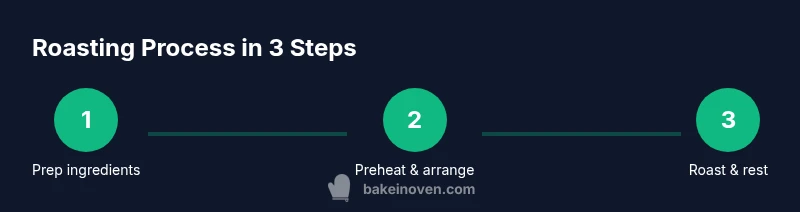
- 1
Prepare ingredients
Pat ingredients dry, trim excess fat, and cut into uniform sizes. Let proteins come to room temperature for even cooking. Toss vegetables with a light coat of oil and salt to promote browning.
Tip: Pat dry thoroughly; moisture causes steaming and dulls browning. - 2
Preheat oven and arrange rack
Preheat to the target temperature and place the rack in the middle for balanced heat. If your oven runs hot at the top, start with a lower rack to avoid scorching. Use parchment or a silicone mat for easy cleanup.
Tip: A hot start seeds browning; a reliable oven thermometer confirms accuracy. - 3
Season and oil evenly
Season generously and toss to coat in a light film of oil. Even coverage is essential for consistent browning; avoid clumping which creates soggy spots. For poultry, pat skin dry before seasoning to promote crispiness.
Tip: Oil helps transfer heat and crisp the surface; too much oil can make foods greasy. - 4
Roast with space and rotate
Spread foods in a single layer with space between pieces for airflow. Rotate the tray halfway through to equalize exposure to heat and prevent uneven browning.
Tip: If using multiple trays, stagger them or rotate to balance air distribution. - 5
Check temps and finish
Use an instant-read thermometer to check internal temps at the thickest point. Remove from heat when near target, as carryover cooking will finish the job. Allow a brief rest before serving to redistribute juices.
Tip: Rely on internal temperature rather than color; color is not a reliable doneness indicator. - 6
Rest and serve
Let roasted items rest 5–10 minutes before slicing or serving. Resting keeps juices from running out and helps flavors settle.
Tip: Cover loosely with foil to keep warm without trapping steam.
Frequently Asked Questions
What is the best oven temperature for roasting vegetables?
Roasted vegetables benefit from high heat to bloom color and crisp edges. Start around 425–450°F and adjust based on your oven and the veg size. Spread in a single layer and flip halfway for even browning.
Roasting vegetables works best with high heat, about four hundred twenty-five to four hundred fifty degrees, spread in a single layer and turned once.
How long should I rest meat after roasting?
Resting allows juices to redistribute and improve moisture. A general rule is 5–10 minutes for small cuts and 10–20 minutes for larger roasts, covered loosely with foil.
Rest meat for about 5 to 10 minutes for small cuts or 10 to 20 minutes for larger roasts.
Can I use convection to roast everything?
Convection speeds browning and can reduce cooking time. If using convection, lower the temperature by about 25°F and monitor closely to avoid scorching delicate items.
Yes, but lower the temperature a bit and watch closely to prevent burning.
What equipment is essential for even roasting?
A sturdy roasting pan with a rack, parchment paper or a silicone mat, a thermometer for doneness, and a timer are essential. These tools support airflow, surface contact, and precise cooking.
A solid pan with a rack, parchment or silicone mat, a thermometer, and a timer are essential.
How do I fix soggy exteriors in roasted veggies?
Increase air exposure by using a rack, pat vegetables dry, and roast at a higher heat for a few minutes to re-crisp. Avoid overcrowding the pan.
Give the vegetables space, pat dry, and briefly crank up the heat to re-crisp.
Should I baste during roasting?
Basting can add flavor but isn’t always necessary. If you baste, do so quickly and sparingly to avoid cooling the oven and prolonging cook time.
Baste only if you have time; it slows roasting and can cool the oven.
What is the role of parchment in roasting?
Parchment paper or a silicone mat keeps foods from sticking, makes cleanup easier, and can help distribute heat more evenly when used with a rack.
Parchment helps prevent sticking and makes cleanup easier.
Watch Video
Key Takeaways
- Preheat thoroughly and dry surfaces for better browning
- Space pieces for airflow and rotate for even color
- Rely on internal temperature, not just appearance
- Use a rack and parchment for best results
- Rest meat and vegetables briefly before serving