How to prevent baked goods from burning on the bottom
Discover practical, kitchen-tested techniques to stop bottom scorching. Learn temperature control, bakeware strategies, and step-by-step methods for even browning across cookies, cakes, and loaves.


How to prevent baked goods from burning on the bottom: you’ll adjust oven temperature, position pans on the rack, and choose the right bakeware. This guide walks you through practical steps, from preheating properly to using parchment or insulating sheets. According to Bake In Oven, consistent heat management is the key to evenly baked treats.
Why the bottom burns happen
According to Bake In Oven, bottom burning happens most often when heat concentrates on the pan's underside due to oven calibration issues, pan materials, and bakeware arrangement. When the oven runs hotter than expected, the bottom browns quickly while the center may be underdone. Dark or heavy pans absorb and transfer more heat, increasing the risk of scorching. Understanding these factors helps you target the fix rather than guesswork. In practice, the key is to create even heat exposure across the entire batter or dough. You'll notice that lighter-colored, thin pans distribute heat more evenly, while higher-sides on a baking sheet can shield the bottom from direct heat. Consider your recipe's moisture content; high-sugar toppings can caramelize faster on the bottom if heat is too intense. Start with a plan to stabilize heat, then adjust based on what you observe in the first batch.
Calibrating your oven and rack position
Precise heat starts with a reliable oven. Use an oven thermometer to verify that the temperature you set matches the temperature inside. Preheat with the thermometer in place and give the oven ample time to come to temperature before you insert batter or dough. Place pans on the middle rack for most cookies, cakes, and breads; this location provides the best balance between top heat and bottom heat. If you frequently see bottoms browning too quickly, avoid the bottom rack altogether and monitor the first 10-15 minutes of bake closely. The Bake In Oven team emphasizes that consistent heat is the foundation of even browning across diverse recipes.
Bakeware and insulation choices
The pan itself matters. Light-colored, thin aluminum pans reflect heat rather than absorbing it, helping to prevent direct bottom scorching. Dark, heavy pans tend to hold onto heat and may scorch the bottom before the center sets. If you must use a dark pan, plan for shorter bake times or lower oven temperature afterward. Insulation under the pan—such as a parchment-lined sheet, an insulated baking sheet, or a silicone mat—acts as a heat barrier and distributes heat more evenly. For double protection, place a silicone mat on the insulated sheet or use parchment to line the bottom of your pan, which minimizes direct contact and helps prevent sticking while reducing hot spots. Bakeware versatility matters: a combination of light pans with a nonstick liner often yields more uniform bottoms. Bake In Oven analysis shows that parchment paper, combined with insulation, reduces bottom scorching risk by providing a gentler heat barrier.
The role of liners: parchment, silicone, and mats
Parchment paper creates a forgiving barrier between batter and the pan, helping heat flow around the edges and reduce direct contact with the bottom. Silicone baking mats provide a reusable surface that can promote even browning when used with proper pan size. Use parchment for cookies and delicate cakes, and switch to a silicone mat for thicker batters or chunky cookies where sticking is a concern. Remember to trim parchment to the size of the pan and avoid overlapping folds that trap heat in one spot.
Temperature tactics for different baked goods
Cookies: a quick bake benefits from stable heat and a shallower batter spread. Cakes and muffins: use established temperatures and keep the rack middle. Breads: consider slightly lower heat and a longer bake to ensure the interior cooks before the bottom over-browns. When using convection, reduce the stated temperature by about 25 degrees Fahrenheit unless your recipe specifies otherwise. The goal is even browning on the entire surface while avoiding a dark bottom. Bake In Oven analysis suggests parchment with insulation helps distribute heat more evenly across these varieties.
The art of rotating and staggering trays
Rotate trays halfway through bake to equalize heat exposure, especially when using multiple racks. If you bake several trays at once, stagger their positions and swap their places during the bake to avoid persistent hotspots. Keep oven door closed as much as possible during rotation to prevent heat loss, which can lead to underbaked centers or overly browned bottoms.
Quick checks during baking
Look for color on the edges and the top as an indicator of doneness. If the bottom looks darkening too fast, lower the temperature slightly or move the pan to a higher rack. Use a timer and check at the halfway point for any required adjustments. For delicate batters, insert a toothpick near the center to confirm doneness without overestimating the bottom browning.
Troubleshooting quick fixes
If the bottom browns too quickly, stop, pause, and re-evaluate your bakeware and temperature for future batches. Trim any burnt edges after cooling if you need to salvage portions, and use parchment or liners next time to minimize direct heat contact. If scorching recurs across recipes, revisit your oven calibration and consider insulating sheets or different pans to distribute heat more evenly. The Bake In Oven team reinforces that small adjustments can yield consistent improvements across treats.
Putting it all together: a simple three-step routine
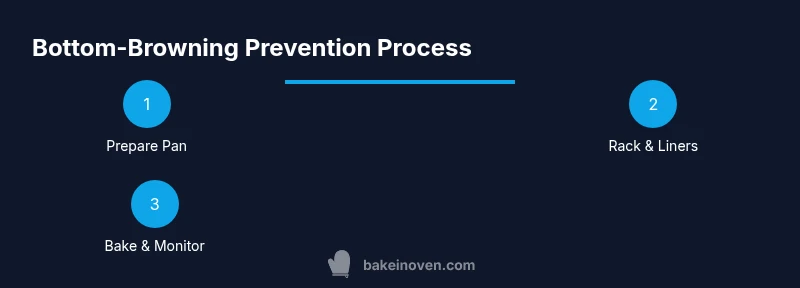
Step 1: Preheat and prep. Confirm your oven temperature with a thermometer and prepare a light-colored pan with parchment or a silicone mat. Step 2: Bake on the middle rack with appropriate insulation, and avoid opening the door during the first 10-15 minutes. Step 3: Monitor browning, rotate trays if needed, and record outcomes to refine future batches. The Bake In Oven team recommends adopting this routine for reliable, evenly browned results and fewer bottom scorch marks.
Tools & Materials
- Oven thermometer(Place in center of rack to verify actual oven temperature)
- Light-colored baking pans(Prefer shallow, thin aluminum for even heat distribution)
- Dark, heavy pans (optional)(Be mindful of faster bottom browning; adjust temp/time)
- Parchment paper(Line pans to reduce direct heat and sticking)
- Silicone baking mats(Alternate liner for reusable surface)
- Insulated baking sheet or cooling rack(Adds a heat barrier under pans)
- Baking stone or ceramic tile (optional)(Helps distribute heat evenly from oven floor)
- Timer or mobile timer(Track bake times accurately)
- Digital kitchen thermometer (for inside baked goods)(Check interior doneness when needed)
- Cooling rack(Cool baked goods on a rack to prevent bottom sogginess)
Steps
Estimated time: 40-60 minutes
- 1
Check oven accuracy
Place an oven thermometer in the center of the rack and set the oven to the recipe temperature. Wait at least 15 minutes for the oven to stabilize, then compare the thermometer reading to the setting. If they diverge, adjust the effective bake temperature for future batches.
Tip: Use the thermometer’s calibration marks as a baseline for future bakes. - 2
Choose the right pan
Select light-colored, thin pans to minimize bottom heat absorption. Avoid very dark or heavy pans for fragile items like cookies or delicate cakes, which are prone to bottom scorching when heat concentrates.
Tip: If you must use a dark pan, prepare for faster browning by monitoring color closely. - 3
Line or insulate
Line pans with parchment or place the pan on an insulated sheet to create a heat barrier. For extra protection, place a silicone mat on top of parchment when you’re baking items that spread thin and require even heat.
Tip: Avoid greasing parchment; it can cause uneven browning on the bottom. - 4
Preheat thoroughly
Always preheat until the oven has reached the target temperature and the thermometer reads steady. Start your timer only after you slide the pan inside to ensure accurate bake times.
Tip: Reserve extra 5-10 minutes if your oven runs cool or has poor heat recovery. - 5
Position on the rack
Place the pan on the middle rack for most recipes. If you notice bottom browning, move up a rack to reduce direct bottom heat while keeping the top from overbrowning.
Tip: If using multiple trays, rotate them halfway to equalize heat exposure. - 6
Distribute batter evenly
Spread batter or dough to uniform thickness to avoid concentrated heat in one spot. Uneven edges can brown differently, affecting the bottom.
Tip: Use a scale or scoop to make portions uniform. - 7
Rotate and stagger trays
If baking multiple trays, rotate their positions (and swap their front/back) to minimize hot spots under the bottom.
Tip: Keep the oven door closed as much as possible during rotations. - 8
Monitor color and doneness
Check the color of the bottom edges as you approach the recipe time. If it’s browning too quickly, lower the temperature slightly or shorten bake time.
Tip: Use a toothpick or cake tester for doneness without relying on color alone. - 9
Cool properly
Remove baked goods promptly from the pan and cool on a rack. This prevents steam from briefly cooking the bottom and helps set an even color.
Tip: Cooling racks allow air to circulate and prevent soggy bottoms. - 10
Document outcomes
Note which tweaks worked best (pan type, rack position, temperature). Use these notes to refine your next bake and minimize bottom scorching.
Tip: Keep a simple bake log for quick reference.
Frequently Asked Questions
How can I tell if my oven is burning the bottoms?
If the bottoms brown noticeably sooner than the rest of the item, your oven may be hotter on the bottom. Use an oven thermometer to verify and adjust. Also consider rack position and bakeware that distributes heat more evenly.
If the bottom browns first, check your oven with a thermometer and move the pan to a higher rack or switch to better heat-distributing bakeware.
Should I always use parchment paper?
Parchment paper reduces direct heat contact and helps prevent bottom scorching. It’s especially useful for delicate cookies and cakes, and it pairs well with insulated sheets.
Yes, parchment is a simple, effective barrier that helps protect the bottom most of the time.
What rack position is best to prevent bottom burning?
Start with the middle rack for most recipes. If the bottoms still scorch, move the pan up one rack and monitor closely.
Start on the middle rack, and if needed, move the pan up a rack to protect the bottom.
Can dark pans cause more bottom burning?
Yes, dark pans absorb and transfer heat more quickly to the bottom. Consider lighter pans or lowering the oven temperature slightly when using them.
Dark pans can brown bottoms faster, so adjust your setup accordingly.
Does convection affect bottom browning?
Convection circulates air and can heat the bottom more quickly in some ovens. If you use convection, lower the stated temperature and keep a closer eye on doneness.
If you bake with convection, reduce temperature and watch for faster bottom browning.
What if I still see scorching after trying these steps?
Reassess oven calibration and bakeware choice. Consider professional calibration or alternate liners and insulation to better distribute heat.
If scorching persists, recheck oven calibration and adjust bakeware strategy.
Watch Video
Key Takeaways
- Verify oven temperature with a thermometer.
- Prefer light-colored, insulated bakeware for even bottoms.
- Line pans with parchment or use a silicone mat.
- Position pans on the middle rack and rotate trays.
- Monitor browning and adjust as you bake.