How to Put Baked Potatoes in Oven: A Complete Guide
Learn how to put baked potatoes in the oven with a foolproof method, from prep to bake time, plus tips for crisp skins and fluffy interiors. This kitchen-tested guide by Bake In Oven covers technique, timing, and serving ideas.


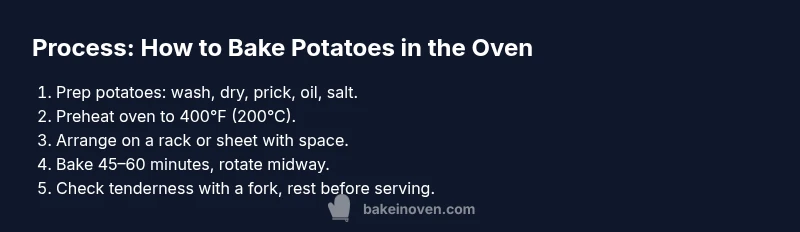
To bake potatoes in the oven, start by choosing russet or Yukon Gold, scrub clean, and pat dry. Prick each potato with a fork, rub with olive oil and a pinch of salt, then bake at 400°F (200°C) for 45–60 minutes until tender inside and the skin is crisp. Let them rest a few minutes before serving.
Why Oven-Baking Potatoes Delivers Flavor and Texture
According to Bake In Oven, oven-baking potatoes is the most reliable method for consistent texture and flavor, delivering a fluffy interior with a crisp, flavorful skin. The dry heat of the oven creates a gentle crust on the exterior while the inside remains light and moist. When you learn how to put baked potatoes in oven the right way, you’ll reduce soggy skins and uneven centers. This approach works best with potatoes that have a starchier composition, such as russet or standard baking potatoes, because their starch helps create that desirable contrast between skin and flesh. In practice, the key factors are preheating, proper air exposure, and minimizing surface moisture before roasting.
Beyond texture, oven-baking is forgiving for home cooks who juggle multiple dishes. You can bake several potatoes at once on a sheet pan, rotate the pan for even heat, and still achieve consistent results. Keep in mind that oven temperature remains constant, so setting a precise temperature and following a predictable bake time will consistently produce excellent potatoes. Bake In Oven Team emphasizes steady heat and minimal handling as core principles for dependable outcomes.
Choosing the Right Potato Variety and Prep Routine
Potato selection matters when learning how to put baked potatoes in oven. Russet potatoes are the classic choice for baked potatoes because their high starch content yields a light, fluffy interior when fully cooked. Yukon Golds offer a creamier texture and a slightly sweeter flavor, which can be a nice variation if you prefer a less dry center. For a traditional fluffy interior, pick potatoes that are uniform in size to ensure even cooking. Wash the potatoes thoroughly to remove any dirt, and dry them completely before proceeding. Any remaining moisture on the skin can steam the surface, dampening crispness. If you want a super crunchy skin, consider using a light coating of oil and a touch of salt just before roasting.
As you follow the steps to put baked potatoes in oven, consider patting the potatoes dry again after washing. Moisture on the surface can hinder browning. If you buy potatoes with eyes or shallow defects, simply trim them away. Uniform size helps every potato reach a perfect doneness at roughly the same time, enabling you to pull them all from the oven together and serve hot. The Bake In Oven guidance highlights choosing sturdy, undamaged potatoes and avoiding varieties that are too waxy for baking, which can yield a dense interior.
In addition to size, plan for the number of potatoes you’re baking. A single large potato will take longer than several smaller ones. When cooking multiple potatoes, space them evenly on a rimmed baking sheet so hot air can circulate around each potato, ensuring consistent browning.
Prep: Scrub, Dry, Prick, and Oil
Preparation is where good baked potatoes begin. Start by scrubbing the skins under cool running water to remove any dirt. Dry thoroughly with a clean towel to reduce moisture on the surface. Pricking each potato with a fork or a thin skewer creates a vent for steam, preventing a buildup that could cause the potato to burst. After vents are created, rub the potatoes with a light coat of olive oil or another neutral oil. The oil aids browning and helps the salt stick to the skin, producing a crispier outer layer. Sprinkle with coarse salt for flavor and a little visual appeal. If you like pepper or garlic powder, add a dusting at this stage. Ensure the surface is evenly coated and dry before placing the potatoes in the oven.
The oil-and-salt treatment is a small step with a big impact. It encourages browning and contributes to a robust, savory crust that contrasts nicely with the soft interior. For best results, avoid soaking the potatoes or applying heavy toppings at this stage; too much moisture or oil can lead to soggy skins rather than crisp ones.
This section reinforces the practical steps for how to put baked potatoes in oven, emphasizing prep precision and surface dryness. The results are not just about flavor; they’re about texture that makes the potato experience memorable.
Temperature and Time Guidelines
Temperature and bake time are the backbone of a successful baked potato. A common starting point is 400°F (200°C). Preheat the oven fully to ensure consistent heat from the moment the potatoes enter the oven. Place the prepared potatoes directly on a rack or on a baking sheet depending on your preference for skin texture. Generally, 45–60 minutes is sufficient for medium to large russets; smaller potatoes may finish closer to 40 minutes. The goal is a fork-tender interior with skins that have puffed and turned crisp. If you’re cooking more than a few potatoes, rotate the sheet halfway through to ensure even exposure to heat.
Different oven models vary slightly in heat distribution, so you may need to adjust slightly based on your particular oven. A general rule of thumb is to start checking for doneness at around the 40-minute mark if your potatoes are petite. When assessing readiness, pierce the center with a fork—the potato should give easily and slide off the fork with little resistance. If you encounter resistance, bake a bit longer, checking every 5–7 minutes.
Bake timing can be influenced by potato size, initial texture, and oven calibration. Bake In Oven recommends keeping a simple bake chart handy for your frequent potato sizes so you don’t have to guess each time.
Rack Position and Even Cooking Techniques
Where the potatoes sit in the oven matters for even cooking and skin texture. Placing potatoes directly on the oven rack allows hot air to circulate all around the potato, promoting uniform browning. If you prefer a crisper bottom, a sheet pan can work well, but avoid crowding. Leave space between potatoes so air can move freely. If you notice uneven browning, consider rotating the pan halfway through the bake. Some cooks place a parchment-lined sheet under the potatoes to catch drips and make cleanup easier; others prefer no liner to maximize skin crispness.
If you’re using a conventional oven, keep the oven door closed as much as possible to minimize heat loss during bake. The longer the interior remains hot with consistent surface moisture reduced, the more uniform the interior texture will become. For very large potatoes, you may need to extend the bake time a few minutes, while consistently checking for tenderness.
Skin Texture: Crisp Skin vs Tender Flesh
A quintessential baked potato has a crisp, salty skin with a fluffy interior. Achieving that contrast is a balance of dry surface, hot air, and time. A light oil layer with coarse salt is typically enough to produce a satisfying crackle on the skin. If you prefer very tender skins, you can reduce the oil slightly and bake a bit longer, then finish with a short blast of heat (or a quick 5-minute broil) to re-crisp the exterior. Remember: every oven behaves differently, so you may need to fine-tune the heat and bake duration for your situation.
Some cooks cream the inside with a little butter or milk after cutting, then fluff with a fork before returning to the oven for a final minute to re-crisp. This technique creates a luxurious interior with a lightly enriched flavor. If you’re aiming for a classic, straightforward potato, simply scoop and serve after the optional resting period to allow the steam to settle.
Variations: Foil, Parchment, and Oven Accessories
There are several approaches to baking potatoes, and each yields slightly different results. Baking without foil on a clean sheet pan yields the crispiest skin because the dry heat can interact directly with the surface. Wrapping potatoes in foil steams the skin, producing a softer exterior and a more moist interior—ideal if you prefer a very tender skin. Parchment paper can be used to reduce cleanup effort when cooking multiple potatoes. Some home cooks use a cast-iron skillet or a baking stone to achieve steady heat and uniform browning, especially in ovens that have hot spots. For very large batches, you can bake on two racks with rotated pans to maximize airflow and minimize unevenness.
Experiment with these methods to learn what yields your preferred texture. Bake In Oven encourages trying both direct-oven and foil-wrapped methods to discover your ideal balance of crisp skin and fluffy inside.
Troubleshooting Common Issues
Even with a solid plan, issues can arise. If the interior remains firm or doughy after the recommended time, extend the bake by 5–10 minutes and test again. If the skin is pale or soggy, ensure the potato surface was dry before oiling, and avoid overcrowding the pan to promote air circulation. If the exterior is scorched but the interior is not fully tender, reduce the oven heat slightly and cook a bit longer, checking frequently to prevent burning. If you notice moisture collecting on the skin, pat the surface dry and reapply a thin oil and salt layer before returning to the oven.
Remember that variations in potato size or oven calibration can affect timing. Keep a simple cadence—check at the lower end of the time range, verify tenderness with a fork, then adjust as needed. The goal is a uniform interior and a blistered, crisp skin that complements the fluffy center.
Resting, Serving, and Storing Leftovers
After removing baked potatoes from the oven, let them rest for about 5–10 minutes on a rack or plate. Resting allows the steam to settle, making the interior less likely to collapse when you cut into it. Serve with classic toppings like butter, sour cream, shredded cheese, chives, or paprika, depending on your preference. If you have leftovers, store baked potatoes unwashed in the refrigerator for up to 3–4 days. To reheat, warm in a 350°F (175°C) oven for about 10–15 minutes to refresh the texture, or reheat briefly in the microwave if you’re in a hurry, then finish with a quick 2–3 minute oven crisp to reestablish the skin’s texture.
Authority Sources
For those who want to dive deeper into food safety and best practices for baking potatoes, the following sources provide reliable guidance on heat, moisture, and safe handling:
- https://www.usda.gov
- https://www.fda.gov
- https://www.cdc.gov/foodborneburden/food-safety.html
- https://www.fsis.usda.gov/food-safety
- https://extension.osu.edu/food-safety
These references help ensure safe handling, proper storage, and best practice cooking methods when learning how to put baked potatoes in oven.
Tools & Materials
- Russet potatoes(Medium to large, similar size for even cooking)
- Olive oil (or oil of choice)(Light coat for crisp skin)
- Coarse salt(Flaky or kosher salt enhances crust)
- Fork or skewer(Prick holes to vent steam)
- Baking sheet or sheet pan(Rimmed pan to catch drips)
- Parchment paper (optional)(Makes cleanup easier)
- Oven mitts(Handling hot pans safely)
- Tongs (optional)(Flipping without piercing skin)
- Airflow-friendly rack (optional)(Promotes even browning)
Steps
Estimated time: 60-75 minutes
- 1
Preheat oven and prepare sheet
Preheat your oven to 400°F (200°C). Line a baking sheet or place parchment if you prefer easier cleanup and less sticking. Ensure the rack is centered for even heat distribution.
Tip: Preheating is crucial for crisp skin; start with a fully heated oven for best results. - 2
Prepare potatoes
Wash potatoes under cold running water, then pat completely dry. Scrub with a brush to remove dirt from the eyes and crevices. Dry thoroughly to promote crispness.
Tip: Moisture on the surface can steam the skin and hinder browning. - 3
Vent, oil, and season
Prick each potato a few times with a fork. Rub with a thin coat of oil and sprinkle with coarse salt. This creates a crisp, flavorful crust.
Tip: Evenly coat all surfaces for uniform crust color. - 4
Arrange on pan
Place potatoes on the sheet pan with space between each. If using a rack, set it over the sheet for better air exposure.
Tip: Avoid overcrowding; air needs to circulate to crisp the skin. - 5
Bake and rotate
Bake 45–60 minutes, flipping or rotating halfway through for even browning. Check tenderness with a fork after 40 minutes for smaller potatoes.
Tip: Rotating ensures uniform heat distribution across all potatoes. - 6
Check doneness and rest
The potatoes are done when the flesh yields to pressure and the skin is crisp. Let them rest 5–10 minutes before serving to redistribute interior steam.
Tip: Resting prevents hot steam from erupting when you cut into them.
Frequently Asked Questions
Can I bake potatoes directly on the oven rack without a sheet pan?
Yes, you can bake directly on the oven rack for crisper skins, but a sheet pan helps catch drips and makes cleanup easier. If using a rack, ensure good air circulation around each potato.
You can bake directly on the rack for crisp skins, or use a sheet pan to catch drips and simplify cleanup.
Should I poke holes in the potatoes before baking?
Pricking potatoes with a fork creates vents for steam, reducing the risk of bursting and helping the interior cook evenly.
Yes, poke a few holes with a fork to vent steam and ensure even cooking.
What temperature is best for baking potatoes?
Common guidance is to bake at 400°F (200°C). This temperature yields a crisp skin and fluffy interior when timed correctly.
Bake at four hundred degrees Fahrenheit for a crispy crust and soft interior.
Can I prepare baked potatoes in advance and reheat later?
Yes. Bake them, then refrigerate or freeze. Reheat in a 350°F (175°C) oven until heated through, finishing with a brief high-heat burst if you want extra crispness.
Yes, you can bake ahead and reheat in a warm oven for best results.
What if my potatoes turn out underdone in the center?
Check size uniformity and oven temperature. If needed, bake longer and rotate. A quick test with a fork should slide in with little resistance when done.
If the center is underdone, bake longer and rotate the pan for even heat.
Watch Video
Key Takeaways
- Preheat the oven to 400°F for best results.
- Dry skin, oil, and salt promote crispness.
- Prick potatoes to vent steam and prevent bursting.
- Space potatoes apart for even cooking and browning.
- Rest before serving to maximize interior fluffiness.