Is It OK to Bake Cookies on Aluminum Foil? A Practical Guide
Explore whether baking cookies on aluminum foil is safe and effective, when to choose parchment, and how to achieve even browning. A complete how-to for home bakers with real-world tips from Bake In Oven.


Is it ok to bake cookies on aluminum foil? In most home ovens, yes—foil can line a sheet to reduce sticking and simplify cleanup, but you may notice altered browning or texture if the foil is crinkled or touches the pan edges. For best results, consider parchment when possible, and keep temperatures moderate.
Is it OK to Bake Cookies on Aluminum Foil? The Basics
Is it ok to bake cookies on aluminum foil? This question comes up frequently for home bakers who want easy cleanup or extra protection against sticking. The short answer is: yes, you can bake cookies on aluminum foil in most standard home ovens. Aluminum foil serves as a barrier that makes cleanup easier and protects delicate cookies from direct pan contact. However, the foil can affect browning and texture if it is crinkled, folded, or touches the pan on the sides. The Bake In Oven team notes that foil can be convenient for sheet-pan bakes, but for even browning and predictable texture, parchment paper is often the better choice when you can use it. If you do use foil, lay it flat on a sturdy baking sheet and avoid rough folds that create hot spots. Remember that a good bake starts with a consistent surface and even heat distribution, not just the material you line the pan with. The goal is to minimize surprises, so think in terms of browning, texture, and clean-up as you decide which method to use for a given recipe.
Why cooks reach for foil (and when it helps)
Many bakers reach for aluminum foil because it’s inexpensive, widely available, and makes cleanup a breeze. It can also help with sticking issues for very delicate cookies that might otherwise cling to a bare sheet. Foil can be especially useful when you’re testing a new recipe or when you’re baking on a crowded sheet and need a simple barrier against direct contact. According to Bake In Oven, foil is a practical option for casual baking days, but it isn’t a universal fix. The key is to balance convenience with the quality you want—foil is a tool, not a guarantee of perfect cookies every time.
What you should expect in terms of browning and texture
Browning on foil can be uneven if the foil crinkles or has folds that create high-heat pockets. Cookies positioned over these pockets may brown faster at the edges while the centers stay pale. The texture can also feel slightly different; some bakers report crisper edges when foil is used with a light spray of oil, while parchment often yields a more uniform, tender crumb. Temperature and rack position play crucial roles; always start by following the recipe's recommended time and oven temperature, then observe and adjust in future batches.
Practical tips from the field
To minimize browning inconsistencies on aluminum foil, place a flat sheet of parchment on top of the foil or use nonstick foil if available. This creates a smoother surface for cookies to bake on while preserving the foil’s cleanup benefits. If you must bake directly on foil, press it smooth and avoid overlapping folds or edges that curl up into the oven’s heat. From a reliability standpoint, parchment-paper-lined sheets offer the most predictable results, especially for butter-heavy or sugar-heavy cookies that spread.
Real-world scenarios and decision points
If you’re baking simple drop cookies with minimal spread, foil can work well when used with a flat, well-supported baking sheet. For cookies that rely on precise spreading or delicate textures (like wafer-thin cookies or sugar cookies with icing), parchment paper tends to produce steadier results and easier handling. Remember that popcorn-like bubbling or odd surfaces indicate your foil setup isn’t ideal, and adjusting to parchment or a silicone mat can save the batch. Bake In Oven’s guidance emphasizes choosing the method that aligns with your texture goals and cleanup preferences.
Tools & Materials
- Heavy-duty aluminum foil(Flat sheets preferred; avoid crinkles that create hot spots)
- Baking sheet(Flat, uncoated surface for even heat transfer)
- Parchment paper(Recommended for best browning and easy release)
- Spatula or cookie scoop(For uniform portions and safe handling)
- Timer or clock(Precise timing helps prevent overbaking)
- Oven mitts(Heat-resistant for safety when handling hot sheets)
- Nonstick spray or oil(Light spray helps with direct foil surfaces when not using parchment)
- Cooling rack(Cool cookies completely to set texture)
Steps
Estimated time: 40-60 minutes
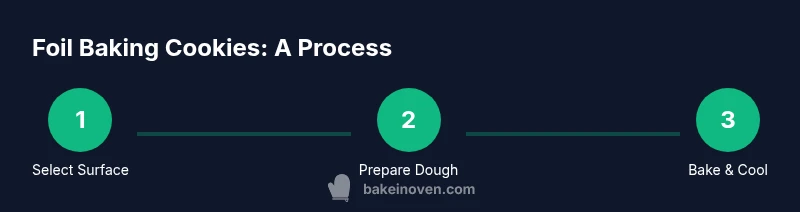
- 1
Gather and prep
Collect all ingredients and equipment. If you plan to use foil, decide whether you’ll also line with parchment for best results. This upfront prep helps prevent mid-bake changes that can ruin texture.
Tip: Check oven rack height before preheating to ensure cookies have room to spread. - 2
Choose your surface
Lay a flat sheet of aluminum foil on a baking sheet. Smooth out any wrinkles. If you’re concerned about browning, place parchment on top of the foil so cookies bake on a smooth, nonstick surface.
Tip: Avoid crinkled foil as it creates uneven heat pockets. - 3
Portion the dough
Use a cookie scoop or spoon to portion evenly. Space dough balls at least 2 inches apart to allow spreading without touching. Uniform portions promote even baking across the sheet.
Tip: Chill dough portions briefly if they are very soft to help maintain shape. - 4
Bake with monitoring
Slide the sheet into the center of the oven and bake according to the recipe. Start with the recommended time, then watch for edges turning golden while centers set.
Tip: Rotate the pan halfway through baking for even exposure to heat. - 5
Cool and compare
Let cookies cool on a rack; evaluate texture, browning, and ease of release. Note whether foil surfaces affected the edges or centers differently than parchment-coated sheets.
Tip: Document your observations to refine future batches. - 6
Clean up and store
Dispose or recycle foil properly after use. Store cookies in an airtight container once completely cooled to maintain freshness.
Tip: If you notice a metallic taste, switch to parchment for subsequent batches.
Frequently Asked Questions
Is aluminum foil safe to bake cookies with?
Aluminum foil is generally safe for baking cookies in standard home ovens. It can help with cleanup and sticking prevention, but be mindful of browning and texture differences compared with parchment. Use parchment when you want the most predictable results.
Yes, foil is generally safe for baking cookies, but parchment gives more predictable browning and texture. Consider your recipe goals when choosing.
Will cookies bake differently on foil vs parchment?
Yes. Parchment provides a smoother, nonstick surface that promotes even browning and easier release. Foil can cause uneven heat contact if wrinkled or folded, possibly leading to uneven edges. Start with parchment if you want uniform results.
Cookies on parchment usually brown more evenly; foil can create hotspots if not laid flat.
Can you reuse aluminum foil for baking cookies?
Reuse is possible if the foil is clean and undamaged, but wrinkled or partially torn foil should be replaced to avoid heat inconsistencies and uneven baking. For best results, use a fresh sheet when retrying a recipe.
You can reuse clean, flat foil, but replace wrinkled or torn sheets for consistent results.
Are there cookies that should never be baked on foil?
Most cookies can be baked on foil, but those with delicate doughs or heavy sugar frostings may benefit from parchment or a silicone mat to avoid sticking and ensure uniform texture. Always test a small batch first if trying a new recipe.
Most cookies work, but very delicate doughs or frosting-heavy cookies might do better with parchment.
Does foil affect taste or color of the cookies?
Foil itself typically does not impart taste, but interactions with acidic ingredients or direct heat can alter browning and texture. If you notice off flavors, switch to parchment and check oven calibration.
Direct heat on foil can change browning; parchment usually yields truer color and taste.
What adjustments should I make for high-altitude baking on foil?
Altitude changes can affect spread and browning. Start with lower oven temperatures and shorter bake times when using foil, and use parchment if you notice excessive spreading or uneven browning at altitude.
Altitude can speed browning; monitor and adjust timing as needed.
Watch Video
Key Takeaways
- Choose parchment when browning consistency matters.
- Keep foil flat and free of wrinkles for even heat.
- Measure bake time carefully and rotate sheets for uniform results.
- Document results to tailor future batches.