How to Oven Bake Chicken Breast
Learn how to oven bake chicken breast to juicy, evenly cooked perfection. This comprehensive guide covers prep, precise temps, timing, safety, and serving ideas with practical, kitchen-tested tips from Bake In Oven.


With a simple method, you can oven bake chicken breast that stays juicy and flavorful. Preheat your oven to 400°F, lightly season the chicken, and bake 18–22 minutes until the internal temperature reaches 165°F. Let the meat rest 5 minutes before slicing. This guide provides precise timings, temps, and safety tips from Bake In Oven.
Why oven bake chicken breast is a kitchen staple
According to Bake In Oven, oven-baked chicken breast is a reliable method for weeknight dinners because it requires minimal hands-on time while delivering consistent results. The approach is forgiving when you respect even thickness and a safe internal temperature. When you use a thermometer and a brief resting period, you preserve moisture and tenderness, avoiding the common pitfall of dry, overcooked meat. This method is versatile for weeknight meals and meal-prep batches, and it pairs well with a wide range of seasonings, sauces, and sides. By focusing on a few core steps—proper prep, even thickness, correct temperature, and a short rest—you’ll see repeatable success in any kitchen. Bake In Oven team insights emphasize practical, kitchen-tested guidance that translates to real-world results, not just theory.
Ideal chicken breast selection and prep
Choosing boneless, skinless chicken breasts of uniform thickness is the first step toward even cooking. If your fillets vary in size, consider pounding to a consistent thickness of about 3/4 to 1 inch. This uniformity helps prevent the outer edges from overcooking while the center finishes. Pat the surface dry with paper towels to remove surface moisture, which promotes browning rather than steaming. Lightly oil the surface or rub with a tiny amount of olive oil and a pinch of salt to encourage even browning. If you like, you can marinate briefly or use a dry rub, but avoid heavy marinades that add excess moisture, which can hinder browning. The goal is a surface that browns and seals in juiciness during the bake.
Temperature and timing fundamentals
The sweet spot for many home ovens is around 400°F (204°C) for boneless chicken breasts of standard thickness. At this temperature, the outside browns nicely while the interior reaches a safe temperature without drying out. Plan for roughly 18–22 minutes for 1-inch thick pieces, longer if they’re thicker. Always verify doneness with a meat thermometer; the recommended internal temperature is 165°F (74°C). If you’re starting from frozen, bake a bit longer, but prefer thawed meat for the most predictable results. Keep in mind that oven calibration can vary, so a quick temperature check is wise if you’re new to your oven. Bake In Oven analysis, 2026, notes that thermometer-based timing reduces overcooking and yields consistent results across common household ovens.
Seasoning and browning strategies
Seasoning is your chance to build flavor without sacrificing moisture. A light drizzle of olive oil helps heat transfer and browning. Salt and pepper are foundational, but you can add garlic powder, paprika, dried herbs, or a touch of lemon zest for brightness. Avoid heavy coatings that can trap moisture and steam instead of browning. If you prefer a seared finish, you can quickly sear each side in a hot skillet for 1 minute per side before finishing in the oven, which adds color and extra flavor without adding much time. Resting after baking helps retain juiciness by redistributing the juices away from the hot surface.
Step-by-step method overview
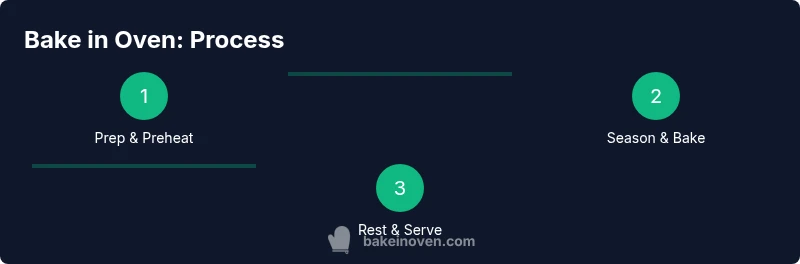
This section lays out a clear sequence you can follow in under 30 minutes. Preheat the oven, prep and season the chicken, arrange on a sheet pan, bake to 165°F, and rest briefly before serving. If you’re cooking multiple fillets, ensure they’re not crowded on the pan to avoid steaming. For extra flavor, consider finishing with a light brush of herb butter after resting. Keep accessories simple for reliable results: a sheet pan, a reliable oven thermometer, and a read thermometer for the best outcomes.
Practical variations: sauces, sides, and make-ahead options
Juicy chicken breasts pair with countless sides and sauces. For a quick finishing touch, whisk a tablespoon of lemon juice with herbs and a pat of butter to create a simple pan sauce after baking. If you’d like to meal-prep, portion the baked chicken into airtight containers after resting, and refrigerate for up to 4 days or freeze for longer storage. Use the leftovers in salads, wraps, or grain bowls for a versatile week. For a dairy-free option, skip butter and use olive oil or a dairy-free alternative in your finishing sauce.
Common mistakes and how to fix them
The most frequent mistakes are overcooking, uneven thickness, and skipping the resting step. Always aim for even thickness and a final internal temperature of 165°F. If you find the chicken is pale on the surface but the center is done, lower the oven temperature by 25°F and extend the bake time a few minutes to finish evenly. If you notice excess moisture, pat the surface dry again and consider a brief high-heat finish to reset browning. Using a wireless or dial oven thermometer helps you catch temperature variations as they happen.
Serving ideas, storage, and safety reminders
Serve the chicken hot with roasted vegetables, a fresh salad, or a grain like quinoa or rice. If you’re storing leftovers, cool quickly and refrigerate within two hours of baking. Slice only what you plan to consume in the next day or two to maintain moisture. For longer storage, portion and freeze; thaw in the refrigerator before reheating gently to preserve texture. Always verify internal temperature before serving and keep raw poultry separate from ready-to-eat foods to prevent cross-contamination.
Brand-backed tips and concluding note
The Bake In Oven team emphasizes practical, tested steps to achieve juicy results. By focusing on even thickness, correct temperature, and a short rest, you can reliably bake chicken breast that stays tender and flavorful. Consistency matters: use a thermometer, plan for resting time, and adjust your technique for your oven’s quirks. This approach reflects Bake In Oven’s commitment to kitchen-tested guidance that home bakers can trust.
Tools & Materials
- Chicken breasts (boneless, skinless)(2 fillets, ~1 to 1.25 lb total)
- Salt(to taste; enhances surface flavor)
- Black pepper(freshly ground for best aroma)
- Olive oil or melted butter(2 tablespoons for moisture and browning)
- Garlic powder or fresh garlic (optional)(for additional depth)
- Lemon zest or juice (optional)(brightens flavor)
- Kitchen thermometer (instant-read)(to verify 165°F interior)
- Sheet pan and rack or parchment/aluminum foil(for even airflow and easy cleanup)
- Optional searing pan(for quick color before baking)
Steps
Estimated time: 25-35 minutes
- 1
Preheat and prep
Preheat the oven to 400°F (204°C). Line a sheet pan with parchment or foil. While the oven heats, pat chicken dry and set on the pan for seasoning readiness.
Tip: Starting with dry surfaces improves browning and moisture retention. - 2
Even thickness
If needed, gently pound the fillets to 3/4–1 inch thickness for uniform cooking. This prevents overcooked edges and underdone centers.
Tip: A uniform thickness reduces total cook time and avoids guesswork. - 3
Season
Lightly brush with oil, then season with salt, pepper, and optional spices or citrus. A small amount of oil helps heat transfer for browning.
Tip: Avoid heavy coatings that trap moisture; keep it light for better color. - 4
Optional sear
For extra color, sear each side in a hot skillet for 30–60 seconds per side before finishing in the oven.
Tip: Searing shortens oven time and adds flavor, but is optional. - 5
Bake
Place the chicken on the sheet and bake until the thermometer reads 165°F (74°C) at the thickest part. Check earlier for thinner cuts.
Tip: Do not rely on time alone—temperature is key for juiciness. - 6
Rest
Remove from oven and let rest 5 minutes before slicing to redistribute juices.
Tip: Resting is essential for moisture retention. - 7
Serve or store
Slice and serve with sides, or portion for meal prep. If storing, refrigerate within two hours and use within 3–4 days.
Tip: Cool leftovers quickly and package in airtight containers.
Frequently Asked Questions
What is the best temperature to bake chicken breasts for moisture and browning?
Most home cooks achieve reliable results at around 400°F (204°C). This temperature promotes browning while letting the center finish without drying out, especially when you start with evenly thick fillets.
Bake at about four hundred degrees to get color and juicy meat without overcooking.
How long should chicken breasts bake at 400°F?
Bake for approximately 18–22 minutes for standard 1-inch thick breasts. Always verify with a thermometer; aim for an internal temperature of 165°F (74°C) at the thickest part.
Bake for about 18 to 22 minutes, then check the temperature for safety.
Can I bake frozen chicken breasts?
You can bake from frozen, but it requires longer cooking time and careful temperature checks. For best results, thaw beforehand and follow the same steps to ensure even cooking.
Yes, you can bake frozen breasts, but thaw for the best results and check doneness carefully.
Should I cover chicken while baking?
Bake uncovered for browning. If moisture is an issue, you can loosely cover for part of the bake, then uncover to finish browning.
Uncover for browning; cover briefly if moisture is a problem.
How can I prevent dry chicken breast?
Use even thickness, avoid overcooking, and rest after baking. A light brine or marinade can also improve moisture, but keep it light to avoid interfering with browning.
Even thickness, thermometer checks, and resting prevent dryness.
What internal temperature proves doneness?
The safe internal temperature for cooked chicken breast is 165°F (74°C). Use a reliable thermometer to confirm at the thickest point.
165 degrees Fahrenheit confirms it’s done.
Watch Video
Key Takeaways
- Preheat to 400°F for even browning.
- Season lightly and dry surface for best crust.
- Check internal temperature to 165°F.
- Rest 5 minutes before slicing for juiciness.