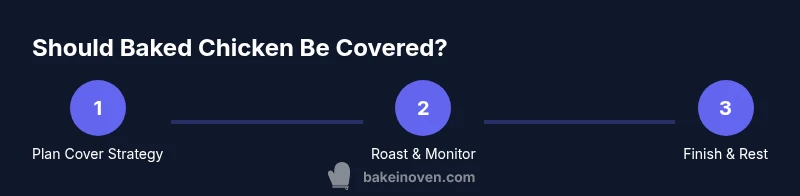
Should baked chicken be covered? A practical oven guide
Learn when to cover or uncover baked chicken, how coverage affects moisture, browning, and cooking times, and a kitchen-tested workflow from Bake In Oven for juicy, evenly cooked results.


Goal: learn when to cover or uncover baked chicken for juiciness and browning, plus a reliable method you can follow. This guide covers moisture dynamics, temperature ranges, cut sizes, and practical kitchen tips. By the end, you’ll know if should baked chicken be covered in different scenarios and how to adapt your bake to get evenly cooked, flavorful results.
Should baked chicken be covered? According to Bake In Oven, the short answer is: it depends on what you’re aiming for—juiciness, even doneness, and a browned crust all have different optimal approaches. Bake In Oven Team has tested many oven methods and found that beginners often default to covering the dish the entire bake, which traps steam and can yield pale skin or dry interior if the lid traps heat improperly. The choice to cover or not should hinge on the chicken cut, the oven temperature you use, and whether you’re cooking a whole bird or individual portions. In this section we’ll establish a framework you can apply every time you roast chicken. We’ll define what you’re trying to achieve and how coverage levels influence moisture, air circulation, and browning. The goal is not a rigid rule but a decision tree you can repeat in any kitchen. By the end of this block, you’ll understand the core trade-offs and feel confident selecting the right method for your recipe and your equipment. Bake In Oven’s practical approach emphasizes kitchen-tested steps, reliable temperatures, and observable cues rather than rigid times.
Moisture dynamics: covered vs uncovered The moisture dynamics of roasting chicken hinge on how you manage steam and air flow inside the oven. When a dish is fully covered, the trapped steam can keep meat moist, especially for larger pieces or whole birds. However, that same steam can dilute surface moisture, making skin pale or rubbery. Removing the cover partway or finishing uncovered allows hot air to contact the surface, promoting browning and crisp edges. Bake In Oven analysis shows that many home cooks achieve the best balance by starting with a cover logic suited to the piece size, then finishing uncovered to develop color. For skin-on cuts, the last 5–10 minutes uncovered often yields a crust while preserving interior juiciness. For boneless breasts, a shorter covered phase can prevent over-drying, followed by uncovering for a golden finish. The key is tailoring coverage to both the cut and the desired crust, not applying a one-size-fits-all rule.
Temperature and time considerations Temperature and time are intertwined with whether you cover during baking. A moderate oven temperature—commonly around 375–425°F (190–218°C)—lets you control both moisture and browning. When the chicken reaches the safe internal temperature of 165°F (74°C) in the thickest part, either with or without a cover, you can rely on the thermometer rather than the clock. If you start with a covered bake, you may need to increase the time slightly when you uncover to achieve the same level of browning. Conversely, uncovering from the start can speed up crust formation but may require more careful monitoring to avoid premature drying. Use a reliable meat thermometer and check in the target zone, not just the air around the pan. In general, breast meat finishes sooner than thighs, which means plan your cover strategy to account for the slowest piece. Bake In Oven recommends grouping pieces by size and bone-in vs boneless to minimize uneven doneness.
How to decide by cut size: breasts, thighs, whole chickens Different chicken cuts respond differently to cover vs uncover techniques. Boneless, skinless breasts dry out quickly if left uncovered for the entire bake, so a brief covered phase followed by a finish uncovered can help retain moisture while creating a presentable crust. Bone-in parts, such as thighs or drumsticks, retain moisture better, so you can afford a longer uncovered period to develop browning. A whole chicken behaves differently again: starting covered can steam the interior evenly, then uncovering near the end promotes browning on the breast and legs. When you’re unsure, start with a 20–30 minute covered period for bone-in portions and a shorter covered phase for breasts, then finish uncovered. This approach minimizes guesswork and aligns cooking progress with observed internal temperature rather than timers alone.
Techniques for finishing: browning without drying Finishing techniques focus on achieving color without sacrificing juiciness. If you’ve started covered, remove the lid or foil during the final phase and increase oven heat for a brief crusting period. You can also finish under the broiler for 2–5 minutes, watching closely to prevent burning. For skin-on chicken, pat the surface dry before returning to the oven to maximize crispness. If the surface browns too quickly while the interior remains underdone, tent with foil to keep heat circulating and resume browning once the center reaches the target temperature. The goal is to create a uniform crust while preserving moisture inside. Pro tip: let roasted chicken rest 5–10 minutes after removing from the oven to redistribute juices and improve slicing.
Practical workflow: preheat, cover, roast, rest A practical workflow starts with preheating to your chosen temperature, then preparing the chicken with a dry surface and seasonings. Decide on a cover strategy based on piece size and whether you’re cooking a whole bird. Roast until the internal temperature hits 165°F in the thickest part, then switch to uncovering if you want more browning. Remove from heat and rest. While resting, the juices reabsorb, which helps keep the meat juicy when sliced. Use a timer and thermometer together rather than relying on times alone. Adjusting by piece size and bone presence reduces the risk of undercooking or drying out. Bake In Oven’s tested approach emphasizes predictable outcomes, so you can reproduce results with confidence.
Common mistakes and fixes Common mistakes include leaving the dish covered too long, which dampens browning; starting uncovered with large pieces that remain underdone inside; and relying solely on time rather than temperature. To fix these issues, apply a finish under the broiler for color, choose the appropriate cover duration based on cut size, and frequently check the internal temperature. If the crust forms too quickly, tent the chicken with foil to prevent burning while the center catches up. For best results, keep a close eye on the thermometer and aim for 165°F in the thickest portion. Washed-down patience and a little practice are part of the learning curve, and Bake In Oven’s method reduces guesswork.
Planning ahead: sauces, parchment, and leftovers Finally, plan ahead to maximize flavor and minimize waste. If you’re serving roasted chicken with a sauce or glaze, cover management can help correlation with the sauce’s sweetness or acidity. Using parchment-paper under the bake can simplify cleanup and reduce sticking for delicate portions. Leftovers can be stored in shallow containers to cool quickly and redistributed into future meals. Consider repurposing leftovers into sandwiches, soups, or salads to extend the value of your roast.
Tools & Materials
- Oven(Preheated to target range 375–425°F (190–218°C))
- Baking dish (9x13 inches or similar)(Shallow for even heat distribution)
- Meat thermometer(Insert into thickest part without touching bone; check 165°F (74°C))
- Parchment paper(Optional for easy cleanup and to prevent sticking)
- Aluminum foil(Useful to tent or cover early to prevent over-browning)
- Kitchen timer(Tracks bake time and rest periods)
- Oil or unsalted butter(Light coating helps browning and flavor)
- Paper towels(Dry the surface before seasoning for better crust)
Steps
Estimated time: 60-90 minutes total (including resting)
- 1
Preheat and prep
Preheat the oven to your chosen range (375–425°F / 190–218°C). Pat the chicken dry with paper towels, then season all over and under the skin if applicable. Place the pieces in a single layer in a baking dish, spacing them so air can circulate. Dry surfaces promote better browning, while even spacing reduces hotspots. Pro tip: a light brush of oil helps crust formation and flavor.
Tip: Dry surfaces and even spacing drive browning and even cooking. - 2
Choose your cover strategy
Decide whether to start covered or uncovered based on cut size and your crust goal. Start larger or bone-in pieces under a cover to trap moisture, then switch to uncovering to develop color. For breasts, a brief covered phase prevents drying, followed by uncovered roasting to finish browning. Pro tip: plan a 15–25 minute initial covered period for larger pieces, then uncover for crust formation.
Tip: Covering is a tool, not a rule—use it to balance moisture and color. - 3
Roast and monitor
Roast with the chosen cover pattern, then monitor the internal temperature with a thermometer. Check the thickest part of the chicken and aim for 165°F (74°C). If using a whole bird, ensure the cavity area reaches temperature as well. Pro tip: use the thermometer in multiple spots for larger pieces to avoid undercooked centers.
Tip: Thermometer accuracy beats timing guesses. - 4
Finish and brown
If you started covered, uncover for the final 5–15 minutes or use a brief broil to finish browning. Watch closely to avoid burning. Pat the surface dry and rotate the dish for even browning. Pro tip: a final high-heat blast locks in juiciness while giving you a crisp surface.
Tip: A short, controlled finish is key to color without overcooking. - 5
Rest and slice
Remove the chicken from the oven and let it rest 5–10 minutes before slicing. Resting allows juices to redistribute, improving juiciness on every slice. Pro tip: keep the dish loosely tented with foil if needed to maintain warmth without steaming the crust.
Tip: Rest is essential for juiciness and even slicing. - 6
Serve or store
Slice and serve immediately, or refrigerate leftovers in shallow containers within two hours of cooking. Leftovers can become new meals: salads, wraps, or soups. Pro tip: label containers with date and reheating notes to preserve quality.
Tip: Plan for leftovers to maximize flavor and minimize waste.
Frequently Asked Questions
Should baked chicken be covered the whole time?
No. Covering can help retain moisture for larger cuts or whole chickens, but it can prevent browning. Use a covered phase to trap moisture, then finish uncovered for color and texture.
No—start covered for moisture if needed, then finish uncovered to brown.
Does covering baked chicken always keep it moist?
Covering can help retain moisture, especially for lean cuts or bone-in pieces, but it isn’t a guarantee. Proper temperature, shorter cook times, and rest are also crucial for juiciness.
Covering helps, but isn’t a guarantee; temperature and rest matter too.
Can I mix cover strategies within the same bake?
Yes. Start with a covered phase for moisture, then uncover to finish browning. For some cuts, a partial cover or tent can work well if color is developing too slowly.
Yes, you can mix strategies depending on the piece and color goals.
What is the safe internal temperature for baked chicken?
The USDA recommends cooking chicken to 165°F (74°C) in the thickest part. Use a thermometer to verify before resting and serving.
Cook to 165°F and verify with a thermometer.
Should I baste during baking?
Basting can add flavor and moisture, but it isn’t necessary if you’re already using a good amount of oil and proper sequencing (covering then uncovering). Use it sparingly to avoid washing away crust formation.
Basting isn’t required, but it can help with flavor if you’re not browning promptly.
Watch Video
Key Takeaways
- Decide cover vs uncover based on cut size and crust goals
- Use a thermometer to guide doneness, not timing alone
- Finish with a brief uncovered phase for browning
- Rest meat before slicing to keep juices in
- Plan for leftovers to reduce waste