What Should Baked Salmon Temp At? A Practical Home Guide
Discover the ideal baked salmon temperature ranges, when to pull from the oven, and practical doneness testing tips from Bake In Oven for perfect, juicy fillets.


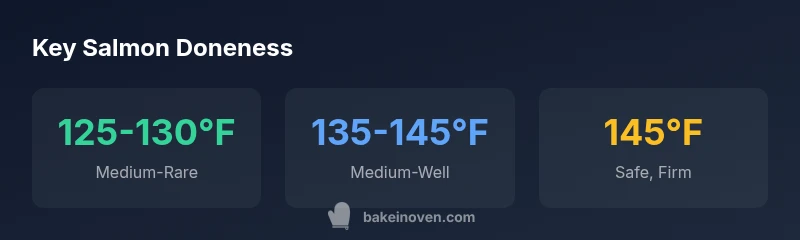
For baked salmon, target an internal temperature of 125-130°F (52-54°C) for a moist, medium-rare texture, or 135-145°F (57-63°C) if you prefer a firmer, fully cooked finish. The USDA safety guideline calls for a minimum of 145°F (63°C). Use a reliable thermometer, pull from the oven a few degrees before the top end to account for carryover, then rest 5 minutes. Tips: bake at 400°F and monitor closely.
Why Temperature Accuracy Determines Salmon Texture
The texture of baked salmon is directly linked to its internal temperature. Small deviations can flip the fish from moist and tender to dry and crumbly. According to Bake In Oven, using an accurate thermometer and targeting specific temperature ranges helps home bakers achieve consistent results across different oven types. A precise approach not only influences texture but also juiciness and color, making temperature your most reliable guide in the oven.
Understanding Temperature Ranges and Doneness Guides
Salmon doneness exists on a spectrum. Most home cooks aim for about 125-130°F for a rosy, moist center, while pushing toward 135-145°F for a firmer, fully opaque center. The USDA sets a safety minimum of 145°F, but many cooks remove salmon from heat just shy of that mark to account for carryover during resting. Remember that thickness, fillet shape, and oven calibration can shift exact times.
How to Measure Doneness: Step-by-Step with a Thermometer
Equip a reliable thermometer and locate the thickest part of the fillet, avoiding any bones. Slide the probe in from the side to reach the center without piercing too deeply. Check during the final 5-10 minutes of bake. If you want 125-130°F, pull early; for 135-145°F, allow the temperature to rise. Resting for about 5 minutes lets carryover finish the cooking gently.
Practical Baking Protocol: Oven Prep, Timing, and Carryover
Line a sheet pan with parchment or a silicone mat, and preheat your oven to 400°F (204°C) for a quick, even bake. Arrange salmon fillets with space between them to ensure even heat. Fillet thickness heavily influences timing; thin fillets finish in under 10 minutes, while thicker cuts require longer. Expect a 3-5°F rise after removal; plan to pull slightly before the desired final temp.
Troubleshooting Common Mistakes
Common errors include relying on visuals instead of a thermometer, overestimating bake time for thick fillets, and not accounting for carryover. To fix, use an instant-read thermometer, start checking at the 6- to 8-minute mark for thin fillets, and rest adequately. If the fish seems dry, consider lowering oven temperature or reducing baking time next time.
Flavor Pairings and Finishing Tips for Salmon
Finishing touches can elevate any bake. A light glaze or compound butter adds moisture, while fresh lemon and dill brighten the aroma. For crisp edges, broil the fillets for 1-2 minutes at the end, watching closely to prevent scorching. These small steps complement the chosen doneness level and help you retain juiciness.
Doneness ranges for baked salmon
| Doneness | Target Temp (°F) | Texture Description |
|---|---|---|
| Medium-rare | 125-130°F | Moist, pink center |
| Medium | 130-135°F | Opaque center, soft |
| Well-done | 140-145°F | Flaky, firmer |
| Safe baseline | 145°F | Firm and fully cooked |
Frequently Asked Questions
What is the safe minimum temperature for baked salmon?
The USDA recommends a minimum internal temperature of 145°F to ensure safety. Use a thermometer to monitor and prevent overcooking.
For safety, bake until at least 145°F and check with a thermometer.
Should I pull salmon before it hits 145°F?
Yes. If you prefer moist, medium-rare salmon, pull around 125-130°F and let carryover finish the cooking during resting.
Pull a bit early if you want moisture; it will finish cooking as it rests.
Why is resting important after baking salmon?
Resting helps redistribute juices and completes cooking with carryover heat, improving texture and preventing a soggy center.
Resting lets juices settle and finishes cooking evenly.
How does salmon thickness affect cooking time?
Thicker fillets take longer to reach target temps; thinner pieces cook faster. Always measure with a thermometer for accuracy.
Thicker pieces need more time; thinner ones finish sooner.
Can I bake salmon without a thermometer?
It’s possible with timing and visual cues, but a thermometer is the best way to ensure accurate doneness.
You can estimate, but a thermometer is the best tool for precision.
“Temperature is the most reliable indicator of salmon doneness. Combine precise readings with a brief rest to lock in moisture and texture.”
Key Takeaways
- Use a thermometer for precise doneness.
- Choose target temps based on preferred texture.
- Rest salmon 5 minutes to finish cooking.
- Follow USDA minimum 145°F for safety.
- Remove from heat a few degrees early to avoid overcooking.