What Bake Temp for Salmon: A Practical Guide to Oven Doneness
Learn the optimal bake temperature for salmon, with practical ranges, doneness targets, method-specific guidance, and a step-by-step routine for reliably juicy, perfectly cooked fillets.


Why Temperature Matters for Salmon
Salmon bakes to a firmer texture as the internal temperature rises, but its high moisture content makes it easy to overcook. The bake temperature matters because it governs how evenly heat penetrates from the surface to the center. A moderate oven helps retain moisture, while a hotter oven risks drying the exterior before the center is done. According to Bake In Oven, establishing a reliable temperature window is essential for home cooks seeking repeatable results across various fillet sizes and oven performance. In practice, you’re balancing moisture retention with protein denaturation; the goal is a slightly opaque center with a flaky, tender exterior. The temperature you choose also interacts with thickness, whether the skin is on, and how you finish the fillet (glazes, butter basting, or herbs).
Key takeaway: start with a moderate range and adjust based on thickness and oven behavior, not just the clock.
Understanding Salmon Cuts and Thickness
Salmon fillets vary from about 1 inch to 2 inches in thickness, and even across a single fillet there can be variation. Thickness determines not only cook time but how heat distributes within the fillet. Boneless, skin-on fillets tend to retain moisture differently than skinless portions, and bone-in steaks require a slightly longer window. Measuring the thickest point helps you tailor timing. For best results, aim to finish with a gentle, moist center and a lightly opaque edge. Keep in mind that even with careful timing, carryover heat will continue to cook the fish after it exits the oven, so plan to pull it just shy of your target temperature.
** practical tip:** use an instant-read thermometer to verify doneness rather than relying solely on time.
Preheating and Preparation Basics
Preheat the oven to the target range before you start seasoning. A hot, even preheat ensures the fillet begins cooking promptly and evenly. Line a sheet with parchment paper or lightly oil a baking tray to prevent sticking. Arrange fillets with space between them to promote uniform heat exposure. Lightly oil or brush with melted butter to help carry heat and enhance flavor. Salt and pepper are sufficient to highlight salmon’s natural taste, but if you’re using herbs or a glaze, apply them toward the end to avoid scorching sugars. Bake In Oven’s guidance emphasizes consistent pan setup and dry surfaces for repeatable results.
Note: if you’re adding citrus or herbs, consider adding them in the final minutes for vibrant aroma and brightness.
Recommended Temperature Ranges by Method
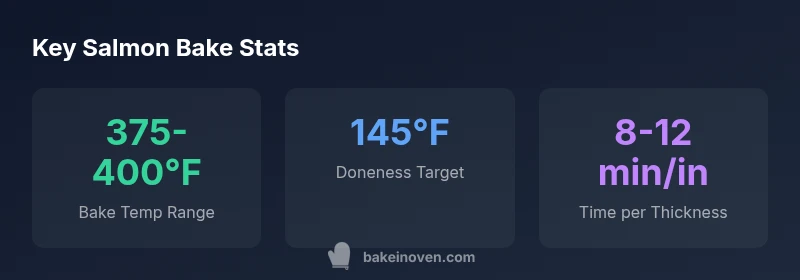
- Conventional bake: 375-400°F (190-205°C). This range covers most fillets, including skin-on or skinless, with even results across standard home ovens.
- Convection bake: 350-375°F (177-190°C). Convection can reduce time by about 15-20% due to circulating air; monitor closely to avoid overshoot.
- Skin-on vs skinless: Skin-on fillets tend to stay moister and crisp slightly when finished in a hotter environment; skinless fillets cook a bit faster and can dry out if pushed too long.
- High-heat finishing: For very thick center portions, you can briefly finish at a higher temperature to crisp the surface, then reduce heat to finish cooking. These are general guidelines; adjust for your specific oven and fillet size.
Doneness Targets and Thermometer Use
A reliable instant-read thermometer is the standard tool for doneness. The USDA recommends cooking fish to 145°F (63°C) for safety. If you prefer a more tender texture with a moist center, you can pull the salmon at 125-130°F (52-54°C); carryover heat will raise the temperature slightly as it rests. Always rest fillets for about 5 minutes after removing from the oven; resting helps redistribute moisture and makes the fish easier to slice. When in doubt, check multiple spots to account for thickness variation and avoid relying on a single reading.
Common Mistakes and How to Avoid Them
Most home cooks overcook salmon by focusing on time rather than doneness. Use a thermometer and set alerts for both your minimum and maximum temperatures. Overcrowded pans trap steam, which slows heat transfer and can lead to uneven cooking. If fillets are very close together, separate them or bake in batches. Starting with a fully preheated sheet ensures better surface texture, while skipping rest time can leave moisture locked inside; a brief rest helps achieve even juiciness throughout the fillet.
Flavor and Texture Enhancements
Seasoning is a simple opportunity to elevate salmon without overpowering its delicate flavor. A light coating of oil or butter helps conduct heat and carry seasonings. Salt is essential for flavor and moisture management. A squeeze of lemon, a dusting of fresh herbs like dill or parsley, and a subtle glaze added at the end can brighten the finish. If you’re browning the surface for texture, consider finishing briefly under a hot broiler or a higher oven setting, but watch closely to prevent scorching. The goal is to balance moisture retention with a touch of surface crispness.
Quick Reference Cheat Sheet for Salmon in the Oven
- Thickness 1 inch: 8-12 minutes (conventional bake)
- Thickness 1.5 inches: 12-15 minutes (conventional)
- Thickness 2 inches: 15-18 minutes (conventional)
- Convection: reduce times by 15-20%
- Doneness targets: 145°F fully cooked; 125-130°F for medium-rare (with rest)
- Rest: 5 minutes before serving for better moisture distribution
Putting It All Together: A Simple Bake Routine
Step 1: Preheat to 375-400°F (190-205°C) and prepare a parchment-lined tray. Step 2: Pat fillets dry, season lightly with salt, pepper, and a thin coat of oil or butter. Step 3: Bake, checking doneness with an instant-read thermometer at the minimum time suggested by thickness. Step 4: When near target, remove and rest for 5 minutes before serving. This straightforward routine emphasizes consistency, moisture retention, and a clean, balanced finish that pairs well with citrus, herbs, and a light glaze."],
dataTableBridgeRowCountRule":"1"},
dataTable asa