What Temp to Bake Ziti: A Practical Guide for Home Bakers
Learn the optimal oven temperature and bake times for ziti, with variations for pre-cooked vs dry pasta, tips for even heating, and safety guidelines from Bake In Oven.


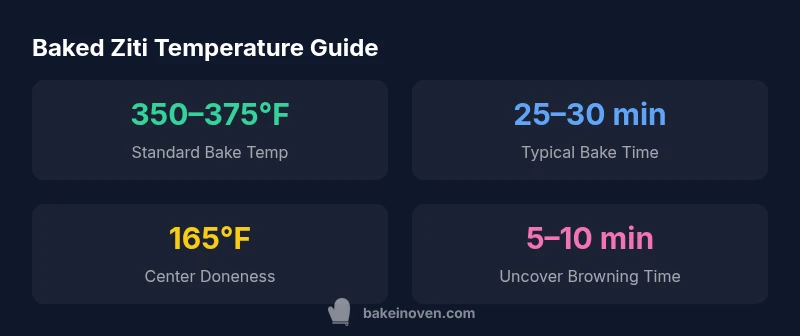
To bake ziti, aim for 350–375°F (175–190°C). If you’re using pre-cooked pasta with sauce and cheese, bake covered for about 25–30 minutes, then uncover for 5–10 minutes to melt and lightly brown the top. If you started with dry pasta, increase to 375–400°F (190–205°C) and bake 35–45 minutes until bubbling and hot in the center.
Understanding why temperature matters for baked ziti
Temperature governs how heat moves through a pasta bake. In a well-made ziti, you want the sauce to stay evenly distributed, the cheese to melt without pooling, the edges to stay moist but not soggy, and the center to reach a safe temperature. A correctly chosen bake temperature helps minimize drying and overbrowning while ensuring that the pasta shells and penne inside absorb enough moisture from the sauce. For home bakers, the most reliable starting point is a moderate oven setting paired with a reasonably broad bake time. According to Bake In Oven, consistent oven temperature is more important than chasing a single precise minute, because small fluctuations early in the bake can lead to uneven texture. The goal is a dish that is hot all the way through, with a creamy sauce and a lightly bronzed top. This balance is what differentiates a crowd-pleasing baked ziti from a dry, overcooked casserole. If you are asking what temp bake ziti yields ideal texture, a moderate oven setting is a safe starting point.
Temperature ranges and when to choose them
Most baked ziti recipes perform best in the 350–375°F (175–190°C) range. This middle ground provides a reliable compromise between sauce thickening, cheese melt, and pasta hydration. If your sauce is rich and you started with pre-cooked pasta, bake covered for about 25–30 minutes, then uncover for 5–10 minutes to let the cheese set and lightly brown. When you use dry or no-boil pasta, you should aim for a higher temperature, roughly 375–400°F (190–205°C), and extend the bake time to 35–45 minutes until the center is hot and the sauce bubbles. These guidelines reflect common practice for home ovens and are designed to minimize underdone centers and overly dry edges. If you need to adapt for a crowded oven or a different dish size, plan to adjust by about 5–10 minutes and verify doneness with a thermometer.
Preparing your pan for even heating
Choosing the right pan and setup is as important as temperature. Use a shallow, wide baking dish that promotes even heat distribution and sauce contact across the surface. Preheating the oven helps sensors settle into a stable temperature quickly. Layer your ingredients intentionally: a thin sauce bottom, a generous pasta-cheese-sauce layer, and a final cheese blanket. Cover the dish during the initial bake to trap moisture, then remove the cover for the last 5–15 minutes to encourage browning. If you’re worried about edges drying, place the dish on a middle rack and consider a loose tent of foil to shield delicate tops without sealing heat away. These practical steps reinforce temperature choices and prevent common flaws.
Step-by-step bake scenario guide
Here are two practical scenarios to translate temperature into action. Scenario A focuses on pre-cooked pasta; Scenario B covers no-boil pasta. Follow these steps for each path to ensure even heating and a creamy finish. 1) Preheat the oven to the recommended range (350–375°F for most cases). 2) Assemble your ziti with sauce and cheese in a shallow dish. 3) Cover tightly with foil and bake for the majority of the time. 4) Uncover, bake until the top browns slightly and the sauce bubbles. 5) Remove from oven and let rest 5–10 minutes before serving. 6) Check the center with a thermometer to confirm even doneness.
Doneness, safety, and serving tips
Doneness isn’t just about time; it’s about heat distribution. The center should reach a safe temperature, and the dish should be hot and bubbling throughout. For fillings or meat additions, aim for about 165°F (74°C) in the center. Cheese should be melted and lightly bronzed, not greasy. Resting helps the sauce reabsorb and the cheese to set, making slices cleaner when portioning. If you notice uneven browning, rotate the pan mid-way through baking or switch to a higher rack for a brief final blast. These checks ensure that your bake is not only visually appealing but also safely heated through.
Common mistakes and fixes
Avoid undercooked centers by choosing the right bake time and letting the dish rest after removal. If the edges brown too quickly, tent the top with foil for the latter portion of the bake. If the sauce seems watery, your pasta may have absorbed more liquid than expected; add a splash of water or extra sauce before baking to compensate. For extra creaminess, consider a cheese blend with part ricotta or cream cheese, which also helps retain moisture during baking. Finally, taste and adjust salt and pepper after resting; sauces can intensify flavor as they meld with pasta and cheese. These adjustments help mitigate typical missteps when baking ziti at home.
Baked ziti bake parameters by pasta state
| Scenario | Bake Temp | Bake Time | Notes |
|---|---|---|---|
| Pre-cooked pasta, fully sauced | 350–375°F (175–190°C) | 25–30 minutes (covered) | Uncover 5–10 minutes to brown |
| Dry/no-boil pasta | 375–400°F (190–205°C) | 35–45 minutes | Center must reach hot, bubbling sauce |
| Small personal casserole | 350–375°F (175–190°C) | 20–25 minutes | Watch for rapid edge browning |
| Large crowd dish | 350–375°F (175–190°C) | 30–40 minutes | Check center with thermometer |
Frequently Asked Questions
What temperature is best for baking ziti?
Typically 350–375°F (175–190°C). This range balances moisture, sauce integration, and cheese melt. If you use dry pasta, go up to 400°F (205°C) and bake longer.
Bake at 350–375°F for most recipes; dry pasta may need higher heat.
Should ziti be baked covered or uncovered?
Cover to trap moisture during most of the bake; uncover for the last 5–10 minutes to brown the cheese.
Cover early, uncover at the end to brown the top.
Can I bake ziti from dry pasta without soaking?
Yes, just bake longer and at a slightly higher temperature. Ensure the center reaches a safe temperature and sauce thickens.
Yes, dry pasta can work, just give it more bake time.
How do I know ziti is done?
The center should be hot and bubbling; internal temperature should reach about 165°F (74°C) if fillings are present. Cheese should be melted and lightly browned.
Center hot and bubbling; cheese melted and lightly browned.
What if my sauce is too thick or too dry?
Add a splash of pasta water or extra sauce before baking to rehydrate the dish, then bake as usual.
Add a little extra sauce or pasta water to hydrate.
Can baked ziti be reheated safely?
Yes. Reheat to at least 165°F (74°C) internal temperature. Reheat evenly using a covered dish or microwave in short intervals.
Reheat until hot all the way through, about 165°F.
“For even cooking, start with a stable oven temperature and finish with a brief uncovered browning to set the cheese.”
Key Takeaways
- Preheat to 350–375°F for even heating
- Cover during bake to trap moisture
- Finish uncovered to lightly brown the top
- Test center reaches ~165°F for safety
- Dry/no-boil pasta needs longer bake time