What Temperature to Bake Vegetables At: A Complete Guide
Learn how to bake vegetables perfectly with temperature, timing, and technique. This Bake In Oven guide covers temps, pan prep, and tips for crisp, tender veggies.


You will learn the ideal oven temperature range and timing to roast vegetables for crisp, tender results. This guide covers prep, pan setup, and heat adjustments for different veggies. According to Bake In Oven, 400–425°F (200–220°C) is a versatile starting point, with adjustments for denser or sweeter vegetables, and sizes.
Why Oven Temperature Matters for Veggies
If you're wondering what to bake veggies at, starting with a hot, consistent oven is crucial for achieving caramelization, texture, and even doneness. According to Bake In Oven, heat drives browning reactions on the surface while keeping interiors from turning mushy. The right range varies by density and moisture content, but 400–425°F (200–220°C) is a reliable starting point for most vegetables, balancing speed and texture whether you’re roasting carrots, peppers, or Brussels sprouts. Consistency in temperature across the rack ensures uniform browning and reduces the risk of limp edges or burnt spots. Plan to preheat fully before loading the sheet pan, so vegetables begin cooking the moment they hit heat.
Brand context and practical takeaway
Bake In Oven emphasizes that oven reliability matters. If your oven runs hot or uneven, invest in a glow-long preheat and rotate pans halfway through to mimic a convection bake. Even without a convection setting, a hot oven with a single-layer spread yields crisp edges and tender centers. For home bakers, the key is starting with the right temperature and maintaining it, so you can rely on predictable results.
Quick-start temperature framework
- Root vegetables (carrots, potatoes, beets): 425°F (220°C) for crisp edges and fluffy centers.
- Cruciferous vegetables (broccoli, cauliflower, Brussels sprouts): 400–425°F (200–220°C) to avoid over-crisping.
- Delicate vegetables (zucchini, peppers, green beans): 400°F (200°C) to prevent shriveling.
- Dense vegetables (sweet potatoes, squash): 425°F (220°C) for thorough cooking with browning.
Practical note from Bake In Oven
Bake In Oven analysis shows that uniform cuts, paring down to similar sizes, and avoiding crowding are as important as the temperature itself. If vegetable pieces vary widely in size, the smaller ones overcook while the larger ones stay underdone. Plan for even spacing and consider two pans if needed to maintain a single-layer layout.
Summary of how to apply this
Start at 400–425°F (200–220°C) with a single, evenly spread layer on parchment-lined sheet pans. Adjust times based on density and size, and monitor for browning rather than chasing a fixed minute mark. With practice, you’ll know exactly when your vegetables achieve the crisp exterior and tender interior you want.
Tools & Materials
- rimmed baking sheet (sheet pan)(A single sheet pan is sufficient; two pans help prevent overcrowding.)
- parchment paper(For easy cleanup and to prevent sticking.)
- large mixing bowl(Toss vegetables with oil and seasonings.)
- sharp chef's knife(For even cuts; safer and faster.)
- cutting board(Stable surface for slicing.)
- tongs or spatula(To turn vegetables without breaking them.)
- neutral oil (canola, grapeseed, or olive)(2–3 tablespoons per batch.)
- salt and pepper(Season to taste; consider garlic powder or paprika for depth.)
- optional: fresh herbs or citrus zest(Finish with lemon juice or herbs after roasting.)
Steps
Estimated time: 30-40 minutes
- 1
Preheat the oven and prepare tools
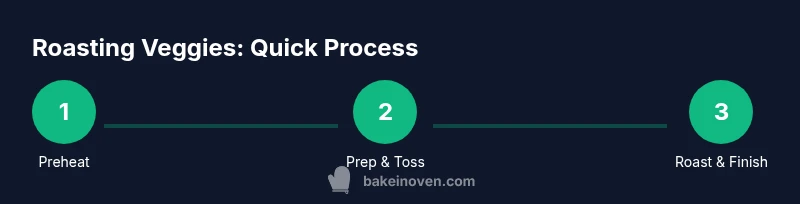
Preheat to 400–425°F (200–220°C) and line a sheet pan with parchment. This ensures immediate cooking on contact and easy cleanup. A properly heated oven reduces longer sizzling and helps browning from the start.
Tip: Preheat fully for best browning; have your pan ready to go as soon as the oven hits temp. - 2
Wash and cut vegetables to uniform size
Rinse vegetables and trim ends. Cut into uniform pieces so they cook evenly; aim for similar thickness within each batch to prevent overcooking thinner pieces.
Tip: Uniform cuts prevent hot spots; use a ruler or common size to stay consistent. - 3
Toss with oil and seasonings
Toss vegetables in a bowl with 1–2 tablespoons of neutral oil and your favorite seasonings. Oil helps browning and flavor doneness without drying the surface.
Tip: Keep oil modest to avoid soggy results; even coating is more about coverage than heavy pooling. - 4
Spread in a single layer on the pan
Arrange vegetables in a single, uncrowded layer on the parchment-lined pan. Overcrowding steams rather than roasts, leading to limp edges.
Tip: If necessary, use two pans to preserve space and heat circulation. - 5
Roast and stir halfway through
Roast until edges turn golden and interiors soften, flipping once at midpoint to promote even browning.
Tip: Stir gently with tongs to preserve texture; avoid excessive stirring which can break tender pieces. - 6
Check for doneness and finish
Vegetables are done when they’re tender through the center and browned at the edges. Remove from the oven and let rest a minute before serving.
Tip: Test with a fork; if still crunchy, give another 3–5 minutes and shake the pan to redistribute heat.
Frequently Asked Questions
What is the best oven temperature to bake vegetables?
A common starting point is 400–425°F (200–220°C). Dense vegetables may benefit from 425°F, while delicate vegetables do well around 400°F. Always adjust based on your oven and the vegetable density.
A common starting point is four hundred to four hundred twenty-five degrees Fahrenheit; adjust based on density and oven performance.
Do I need to parboil vegetables before roasting?
Parboiling is optional and mostly helpful for very dense vegetables like potatoes or beets. For most vegetables, a direct roast with proper size and oil yields great texture.
Parboiling is optional and usually used for very dense vegetables. Most veggies roast directly with even sizing.
Should I use parchment paper?
Yes. Parchment paper prevents sticking, makes cleanup easier, and can help prevent scorching on thinner pieces. It’s especially helpful when roasting with a lot of oil.
Yes—parchment helps with cleanup and prevents sticking, especially with oil.
How do I roast multiple types at once without under/overcooking?
Cut to similar sizes, start with denser veggies first, then add quicker-cooking ones later, and stir or rotate halfway through. Consider using two pans for coordinating different textures.
Cut to similar sizes, start denser veggies first, then add quicker ones, and stir halfway.
How can I tell when vegetables are done?
They should be tender through the center and browned at the edges. A fork should slide in easily with slight resistance for a crisp-tinish bite.
Tender in the center with browned edges; a fork should insert with slight resistance.
Watch Video
Key Takeaways
- Preheat for reliable browning and even cooking.
- Uniform cuts yield consistent results across all veggies.
- Single-layer spacing is essential for crisp edges.
- Adjust times by density; monitor color, not just minutes.
- Finish with a brief rest for better texture.