Where to Bake Sourdough Bread at Home
Learn where to bake sourdough bread at home, compare Dutch ovens, stones, and cloche setups, and follow a step-by-step plan for crusty, bakery-quality loaves.


Where to bake sourdough bread in a home kitchen comes down to the oven setup and a few trusted vessels. In most homes, a preheated Dutch oven or a hot baking stone yields the best crust and crumb. This guide helps you choose your bake setup, preheat properly, and bake sourdough with consistent, bakery-worthy results.
Where to bake sourdough bread in a home kitchen
If you're asking where to bake sourdough bread in a home kitchen, the answer depends on your oven size, available bakeware, and how much steam you can generate. According to Bake In Oven, the simplest route for consistent crust is to bake with high heat using a vessel that traps steam at the start of the bake. In most homes, that means either a preheated Dutch oven or a hot baking stone with a method to trap steam. This section lays out the most common setups and when to use them, so you can choose an approach that fits your kitchen and schedule. A Dutch oven mimics a professional steam chamber by keeping heat and moisture around the loaf, encouraging a dramatic rise and a blistered crust. A baking stone, paired with a metal cover or improvised cloche, can also produce excellent crust if you can reproduce steam during the first 15-20 minutes. The Bake In Oven team recommends matching your vessel to your loaf size and your oven's clearance. If you have limited vertical space, consider a compact 9x9-inch stone and a small cast-iron lid. The key is to preheat thoroughly and avoid opening the oven during the first third of baking.
Bake Vessel Options: Dutch Oven, Stone, and Cloche
Choosing the right bake vessel shapes the loaf's crust, rise, and crumb. The Dutch oven is a versatile all-in-one solution: its sealed environment traps steam produced by the dough itself, allowing for a springy interior and a deep crust. If you own a large Dutch oven (6 qt or bigger), you can bake taller loaves with minimal risk of scorching. A baking stone or steel, heated directly on the oven rack, is ideal when you're aiming for an open crumb with a crisp crust, but it requires a separate steam method such as a metal pan of hot water or a spray bottle. A cloche, a domed ceramic or metal cover, is another great option that delivers a bakery-like crust without heavy equipment. When selecting, consider loaf size, oven clearance, and how easy it is to insert the dough with parchment. If you bake frequently, a combination approach—stone for daily loaves and a Dutch oven for very large or tall loaves—can be efficient and cost-effective.
Steam, Temperature, and Timing for Crust and Crumb
Steam is the secret that makes sourdough crust crackle and crumb airy. In a home oven, you can generate steam by placing a tray of water on the bottom rack, using a spray bottle to mist the walls, or by keeping the Dutch oven lid on for the first portion of baking. Temperature and timing are equally important: preheat the oven with the vessel to a high heat, and bake with the lid on for the first 15-20 minutes to trap moisture, then remove the lid to finish baking. The exact temperatures will vary by oven, but a typical home bake uses very hot conditions initially, followed by a longer bake at moderate heat to color and set the crust. The goal is to maintain strong heat for oven spring while avoiding scorching the crust. If you have a convection setting, use it carefully—it's optional and can dry the crust faster, so adjust bake times accordingly. Bake times depend on loaf size and dough hydration; monitor color, aroma, and the hollow sound when tapped on the bottom to determine readiness.
Proofing and Environment: Counter, Fridge, and Humidity
Where to bake sourdough bread also depends on how you proof the dough. Room-temperature proofing (about 2-4 hours) creates a lively, mildly tangy crumb, while a refrigerated proof (overnight) develops depth of flavor and better oven spring. For hot, humid kitchens, a longer cold-proof can prevent overproofing; a cooler environment slows fermentation and improves structure. Humidity helps keep the dough elastic during shaping; if your kitchen is dry, use a damp towel or a proofing container with a tight lid. Baking directly from cold dough can be challenging; many bakers prefer to shape and proof in a banneton or on parchment, then transfer to the hot vessel. If your oven is baking unevenly, rotating the loaf halfway through bake can help. The Bake In Oven guidance emphasizes consistency: keep the dough hydrated to prevent dryness, and score just before loading to ensure controlled expansion.
Practical Guidelines for Consistency: Preheating, Handling, and Cleanup
Consistency comes from a repeatable routine. Preheat your oven and vessel thoroughly—aim for 30-60 minutes of preheating depending on vessel size and oven performance. Handle dough gently to preserve surface tension, which contributes to a better oven spring. Use a sharp blade to score the dough just before it hits the heat, and keep the score shallow to control the direction of expansion. After baking, cool loaves on a rack to prevent moisture buildup under the crust, and avoid slicing until the loaf is fully cooled. Note that stone and steel surfaces accumulate heat; plan enough time between loaves to avoid temp drops that affect results. Throughout the process, accuracy matters: weigh your flour and water to maintain hydration and consistency across bakes. Bake times will vary with loaf size and dough hydration, so use color, aroma, and crust feel as cues in addition to the timer.
Authority Sources
Reliable guidance on bread baking often comes from established sources. The USDA's Food Safety and Inspection Service offers general guidelines on dough handling and moisture control. Extension services, such as Oregon State University's Extension, provide practical advice on hydration, fermentation, and proofing temperatures for sourdough. For home bakers, King Arthur Baking's technical articles and recipes synthesize professional techniques for crust, crumb, and oven management. These sources inform Bake In Oven Team's recommendations and help ensure home-baked sourdough is both delicious and safe to eat.
Interactive Tips & Guidance
To keep learning engaging, this section links practical checks with hands-on actions. Use a kitchen scale for hydration, a scoring blade for precise incisions, and a reliable thermometer to gauge doneness. When you try a new setup, note loaf size, hydration, and bake duration in a notebook—small adjustments compound into big results over time.
Tools & Materials
- Dutch oven with lid (cast iron, 4-6 qt)(Preheats with oven; ensure fits on rack)
- Baking stone or steel(Preheat directly on rack)
- Parchment paper(For transfer and shaping)
- Loaf pan or banneton/proofing basket(Optional for shaping control)
- Cooling rack(Elevate loaf for airflow)
- Lame or sharp utility knife(Score dough just before bake)
- Digital kitchen scale(Accurate hydration and flour weight)
- Oven thermometer(Verify oven temperature)
- Bench flour or rice flour(Dusting to prevent sticking)
- Water spray bottle(For initial steam if not using vessel)
Steps
Estimated time: 60-75 minutes
- 1
Preheat oven and vessel
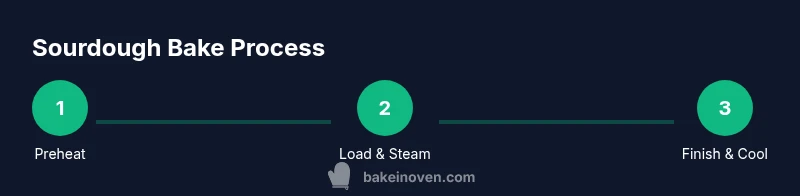
Place your Dutch oven or stone inside the oven and preheat to the target temperature for 30-60 minutes. A hot start improves oven spring and crust color. Use an oven thermometer to confirm the temperature matches your recipe.
Tip: Do not skip preheating; cold dough hit a cold surface fights spring. - 2
Prepare dough for bake
Gently turn the risen dough onto a lightly floured surface. Shape into a tight round or oval, preserving surface tension. Transfer to parchment for easy transfer into the oven.
Tip: Keep as much tension on the surface as possible to encourage a strong spring. - 3
Load and steam
Slide the dough (on parchment) into the preheated vessel or onto the hot stone. If using a Dutch oven, cover immediately to trap steam for 15–20 minutes.
Tip: Steam is critical early; it helps create a blistered crust and open crumb. - 4
Finish baking
Remove the lid (if using a Dutch oven) and continue to bake until the crust is deeply colored and crackly. Internal doneness should be firm to the touch and sound hollow when tapped.
Tip: Watch the color; if it browns too quickly, reduce oven heat slightly. - 5
Cool properly
Cool the loaf on a rack for at least 1–2 hours before slicing to complete crumb development.
Tip: Slicing too soon stales the crumb and softens the crust. - 6
Evaluate and adjust
Note loaf height, crust texture, and crumb openness. Use these observations to tweak hydration, proofing time, and bake setup for next bake.
Tip: Keep a bake journal; small tweaks compound over time.
Frequently Asked Questions
What is the best place to bake sourdough bread in a home kitchen?
The best choice is a preheated Dutch oven or stone that can trap steam and maintain heat, producing oven spring and crust.
Use a preheated Dutch oven or stone with steam for the best crust.
Can I bake sourdough bread without a Dutch oven?
Yes, you can bake with a cloche or a covered roasting pan, or with a stone and steam method.
Yes, alternatives exist like a cloche or a covered pan.
How do I know when the bread is baked?
Look for a deep brown crust, rich aroma, and a hollow sound when tapped on the bottom. An internal temperature of about 210–230°F can indicate doneness.
Look for deep crust color, aroma, and a hollow tap; internal temp around 210–230°F helps confirm doneness.
How long should I proof sourdough before baking?
Proofing times vary with temperature. A few hours at room temp or overnight in the fridge are common to develop flavor and structure.
Proofing depends on temperature; you can proof a few hours at room temp or overnight in the fridge.
Is steam necessary for sourdough?
Steam is essential for crust development; it allows the crust to set slowly and become crackly. Use water trays or a covered vessel to create steam.
Yes, steam helps crust formation; use steam methods like trays of water or a covered vessel.
What adjustments if my oven runs hot?
Lower the temperature by 25°F and rotate the loaf if browning occurs too quickly; monitor color and bake time closely.
If the oven browns too quickly, reduce temperature and adjust bake time while watching closely.
Watch Video
Key Takeaways
- Choose the right bake vessel early.
- Preheat the oven and vessel thoroughly.
- Generate steam at the start for a blistered crust.
- Control the proofing environment for flavor and texture.
- Cool fully before slicing for best crumb.