Bake or No-Bake Cheesecake: A Practical Comparison
Navigate the bake or no bake cheesecake decision with a detailed, practical comparison of texture, flavor, time, and technique—helping home bakers pick the best method for any occasion.


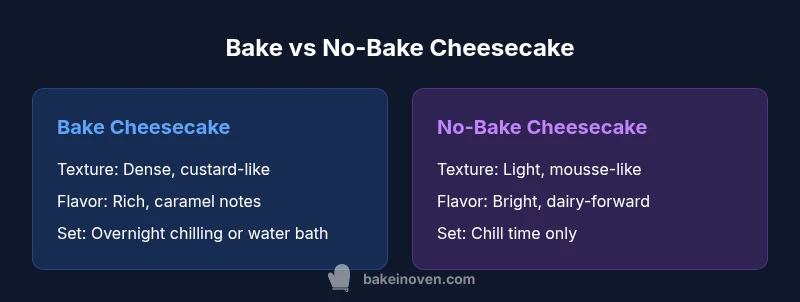
Bake vs no-bake cheesecake offers two distinct paths to a creamy dessert: baking yields a dense, custard-like center with a lightly set texture, while no-bake relies on chilling and stabilizers for a lighter, mousse-like bite. The best choice depends on time, equipment, climate, and texture preference, and this comparison breaks down the key differences to guide your decision.
The Central Question: bake or no bake cheesecake
The question of whether to bake or go no-bake for cheesecake is not just about convenience; it’s about texture philosophy, technique, and kitchen realities. If you love a rich, firm slice with classic custard notes, baking is your friend. If you prefer a lighter, quicker dessert that doesn’t heat the kitchen, the no-bake path is compelling. Throughout this guide, we’ll explore how each method affects creaminess, stability, and flavor development, and we’ll offer practical tips you can apply in any kitchen. Whether you’re preparing for a warm day, a crowd, or a busy schedule, understanding bake or no bake cheesecake helps you choose with confidence.
Texture Profiles: Creamy vs Light
Texture is the defining difference between the two methods. A baked cheesecake develops a dense, smooth interior with a slight custard note and a firmer bite that slices cleanly when fully chilled. No-bake cheesecakes, by contrast, rely on gelatin, whipped cream, or other stabilizers to achieve a lighter, mousse-like center that feels airier on the palate. The sensory contrast is subtle but meaningful: bake for a traditional, substantial texture; no-bake for a refreshing, soft finish that melts in your mouth. In both cases, achieving a silky texture requires balancing fat, dairy, and stabilizers. For home bakers, the choice often comes down to how you want the slice to feel when you lift it with a cake fork.
Flavor Development and Ingredient Roles
Flavor development in cheesecake hinges on heat activation and setting chemistry. Baking encourages subtle caramelization of sugars and a gentle Maillard reaction around the crust, which deepens flavor naturally. In a no-bake cheesecake, you’ll rely more on the dairy’s freshness, vanilla, and any add-ins like citrus zest or fruit purees to provide brightness, since there’s no oven-induced browning. The role of eggs or stabilizers also differs: baked versions typically use whole eggs or yolks to set texture through heat, while no-bake variants lean on gelatin or other stabilizers to create a stable structure without heat. Fresh cream can be whipped to add lightness in no-bake recipes, but beware over-whipping as it can separate when folded into the base.
Time, Tools, and Skill Requirements
Time is a major differentiator. Bake cheesecakes require indirect heat (often a water bath) and a long bake and cooling cycle, followed by chilling. No-bake cheesecakes spare you the oven time, but demand patience during chilling to reach proper set. Tools matter: a springform pan is almost universal for baked versions; no-bake versions can benefit from parchment-lined pans and flexible crusts that hold their shape when unmolded. Skill-wise, bake cheesecakes reward precision—temperature control, gentle mixing, and even distribution—while no-bake cheesecakes reward assembly finesse and a light touch to avoid over-mixing and air pockets. Consider your kitchen’s heat tolerance and available time when deciding which path to take.
Crust Strategies for Bake vs No-Bake
The crust plays a crucial role in both methods. Bake cheesecakes often pair a firm, well-buttered crust (graham cracker, almond cookie, or shortbread) that supports the dense filling. A well-baked crust can tolerate a longer slice without crumbling. No-bake crusts tend to be crisper when chilled and can be more forgiving with slightly looser fillings if the crust has adequate fat and sticky binding from butter or a little sugar. When time is short, you can press a crust directly into the pan and chill while you prepare the filling. For the best texture, keep crusts cold and firm before filling, and consider blind-baking the crust for baked cheesecakes to prevent sogginess.
Common Mistakes and How to Fix
Cracking is a common complaint with baked cheesecakes. Remedies include gentle mixing, using a water bath, and avoiding overbaking. For no-bake versions, gelation issues or a soft center often come from insufficient chilling or unstable mixtures; ensure your gelatin is fully bloomed and properly dissolved, or substitute with a different stabilizer if needed. Another frequent error is crust sogginess from moisture release; pre-bake or chill the crust for a few minutes before adding filling. Finally, temperature management matters: keep ingredients cold for no-bake and ensure even heat distribution for baked to prevent uneven texture.
Storage, Shelf Life, and Serving Tips
Storage conditions dramatically affect both styles. Baked cheesecakes usually store well in the refrigerator for a few days and freeze nicely with proper wrapping. No-bake cheesecakes are excellent when kept cold and can be more delicate; they may soften if left out at room temperature. To serve, slice with a hot, clean knife and wipe between cuts to maintain clean edges. For toppings, think compatibility: fruit compotes, fresh berries, or a light chocolate drizzle pair nicely with both methods. Remember, choice of dairy, sugar, and stabilizers will influence texture stability during storage and transport.
Crowd-Facing Considerations: When to Choose Each Method
If you’re feeding a large crowd and want predictable texture, baked cheesecake is a proven crowd-pleaser that travels well when properly chilled. For hot climates or events with limited oven access, no-bake cheesecake offers a reliable, cooler option that still delivers indulgent flavor. For novice bakers, no-bake is a friendly starting point due to fewer temperature variables. If someone in the crowd has dietary restrictions, consider options like gluten-free crusts or reduced-sugar fillings for either method. Handled correctly, both methods can shine in a single dessert lineup.
Quick Recipe Starters: Simple No-Bake and Bake Cheesecake You Can Try
Below are two starter ideas that illustrate the core differences without overwhelming you with options. A no-bake cheesecake typically comes together with cream cheese, sugar, vanilla, whipped cream, and a stabilizer; while a bake-cheesecake focuses on a cream-cheese filling with eggs and sometimes sour cream, baked over a prepared crust. Start with a basic recipe, then adjust flavorings, textures, and crust types to suit your preference and equipment. Use clean, fresh ingredients to maximize flavor clarity, and remember to allow ample chilling time for both methods.
Final Considerations: Choosing the Right Method for Your Kitchen
Ultimately, the decision to bake or go no-bake cheesecake depends on texture preference, time availability, climate, and equipment. For a classic, cuttable slice with depth and stability in cooler kitchens, baking remains the gold standard. For a quick, refreshing dessert that minimizes oven use and heat, no-bake can deliver near-instant gratification with excellent flavor. As you gain experience with both methods, you’ll learn to tailor crust texture, filling density, and stabilization to your taste, ensuring every cheesecake you make hits the mark.
Comparison
| Feature | Bake cheesecake | No-bake cheesecake |
|---|---|---|
| Texture | Dense, custard-like, firm | Light, mousse-like, airy |
| Flavor development | Caramelized notes from baking | Bright, fresh flavors without browning |
| Set time | Several hours to overnight with a water bath | Several hours of chilling only |
| Crust interaction | Firm crust supports dense filling | Crust can be crumbly or crisp depending on binding |
| Storage stability | Excellent fridge stability; freezes well | Generally good with careful handling; best chilled |
| Technique risk | Cracking risks, temperature control required | Stability depends on stabilizers and chilling |
| Ingredient flexibility | Eggs and dairy drive setting; precise timing | More flexible with stabilizers and beaten cream |
| Best occasions | Classic desserts, special occasions | Warm weather, quick gatherings, easy cleanup |
Benefits
- Versatile texture options with and without heat
- No-bake saves time and reduces oven heat
- Crust customization opportunities
- Good for warm climates or limited oven space
- Easier cleanup and fewer thermal concerns
Negatives
- Baked versions require precise technique to avoid cracks
- No-bake can be less stable if not chilled properly
- Texture may be less consistent than traditional baked cheesecake
Baked cheesecake offers the richest, most classic texture; no-bake is the quicker, more forgiving alternative.
Choose bake if you want a traditional, dense slice with long-term stability when properly chilled. Choose no-bake if you need speed, energy efficiency, and a lighter finish, especially in warm kitchens.
Frequently Asked Questions
What is the main difference between bake and no-bake cheesecake?
The primary difference lies in how the filling sets. Bake cheesecakes rely on heat to set the eggs and create a dense texture, while no-bake versions use chilling and stabilizers like gelatin or whipped cream to achieve a lighter, softer structure. Both can be delicious; your choice depends on texture preference and time constraints.
The main difference is how they set: baked cheesecakes use heat for a dense texture, while no-bake rely on chilling and stabilizers for a lighter result.
Which method is easier for beginners?
No-bake cheesecakes are typically more forgiving for beginners because they skip the precise baking time and temperature controls. However, they require patience for chilling to achieve a clean slice. Start with a simple no-bake recipe to build confidence before attempting a baked version.
No-bake is usually easier for beginners since it avoids baking timing, but you’ll need to chill longer for a clean slice.
Can you freeze bake and no-bake cheesecake?
Both baked and no-bake cheesecakes freeze well if properly wrapped and stored. Freezing helps extend shelf life, but texture can shift after thawing; a well-chilled, properly wrapped cheesecake will slice cleaner when defrosted.
Both types can be frozen with proper wrapping, but texture may shift a bit after thawing.
How long does a no-bake cheesecake last in the fridge?
No-bake cheesecake generally stays fresh for a few days in the fridge, depending on ingredients and stabilizers. Bake cheesecakes also refrigerate well and can be frozen for longer storage. Always cover to prevent drying out and absorbing odors.
No-bake cheesecake lasts a few days in the fridge; bake cheesecakes store well in the fridge and freezer with proper wrapping.
What is a common mistake in bake cheesecakes?
A frequent error is overbaking, which can cause cracks and a dry texture. Use a water bath, monitor temperature, and let the cake cool gradually to prevent surface cracks. Crust sogginess can also occur if moisture isn’t managed properly.
Common bake mistakes include overbaking and crust sogginess; use a water bath and gentle cooling to prevent cracks.
Key Takeaways
- Decide based on texture preference: dense vs light
- Plan chilling time as a core step for no-bake
- Prep crusts ahead to ensure structural integrity
- Balance sweetness and stabilization for best results
- Experiment with toppings to highlight method differences