No-Bake Cheesecake Guide: A Complete Step-by-Step Method
Learn to make a creamy no-bake cheesecake with a simple crust. This guide covers crust choices, filling ratios, chilling times, and topping ideas for reliable results.


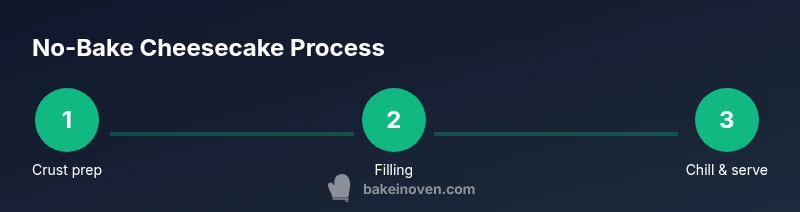
You can make a no-bake cheesecake by preparing a crumb crust, whisking a filling of cream cheese, sugar, vanilla, and whipped cream, then chilling until firm. This no-oven method requires a springform pan, parchment, and at least 4 hours of chilling (ideally overnight) for best texture. Plan ahead for smoother results and refrigerate the cake in its pan until serving.
The No-Bake Cheesecake Concept
No-bake cheesecakes are a clever dairy-forward dessert that achieves a creamy, rich texture without oven heat. The base relies on a sturdy crust and a filling built from softened cream cheese, sugar, and flavoring folded with whipped cream or stabilized whipped cream. The key is to chill the assembled cake long enough so it sets into a sliceable dessert rather than a loose custard. According to Bake In Oven, using room-temperature ingredients and patient chilling produces the best, smooth texture and clean slices. This approach is ideal for warm weather, small kitchens, or when you want to finish dessert in minutes rather than heat up the oven. You’ll notice the texture is slightly lighter and more mousse-like than a baked cheesecake, but still rich and satisfying. The technique scales well: you can double or even triple the crust and filling for a larger pan, and you can customize the flavor with lemon zest, vanilla, or a swirl of fruit puree. The most forgiving no-bake method uses a simple crumb crust, a dairy-forward filling, and a final chill that lets flavors meld. By the end, you’ll have a show-stopping dessert that looks elegant and tastes just right with minimal effort. According to Bake In Oven, this approachable method is great for beginners and busy bakers alike.
Classic Crust Options
The crust is the foundation of a no-bake cheesecake. Traditional graham cracker crumbs provide a toasty, nutty backdrop, but you can swap in Digestive biscuits, crushed Oreos for a chocolatey contrast, or a gluten-free option if needed. For a lighter note, crumble cookies with a touch of melted butter to form a cohesive, pressable crust. A parchment-lined pan helps with removal and clean slices. The crust should be dense but not hard, so press firmly using the bottom of a flat glass or measuring cup to create an even layer. If you want a no-bake crust that’s extra crisp, chill the crust for 15–20 minutes before adding the filling. Bake In Oven tests show that a well-chilled crust holds up better to the soft filling and prevents sogginess.
Creamy Filling: Ingredients & Proportions
The signature no-bake filling is a harmonious blend of cream cheese, sugar, vanilla, and whipped cream. Cream cheese provides structure and richness, while whipped cream keeps the texture light and creamy. For stability, some bakers fold in a small amount of whipped cream cheese or a touch of lemon juice to brighten the flavor. Flavor boosters like lemon zest or vanilla bean can elevate the profile without complicating the texture. The goal is a filling that’s smooth, without lumps, and firm enough to slice cleanly after chilling. Remember to use soft, room-temperature cream cheese for easiest mixing, and avoid over-mixing once the whipped cream is folded in to prevent deflation.
Achieving the Perfect Texture: Whipping & Stabilizers
Whipping cream to soft peaks and folding it gently into the cream cheese mixture yields a mousse-like filling that still holds its shape. Whisking or beating the filling too vigorously can introduce too much air, causing a cake to crack or separate as it chills. If you want extra stability, a small amount of gelatin dissolved in warm water can be whisked into the filling, but this is optional for most no-bake cakes. Chill the filling long enough—often several hours—to allow the flavors to meld and the texture to firm up. If you notice a runny result, recool the mixture and fold in more whipped cream gradually, checking for a set that slices cleanly.
Assembly, Chilling, and Serving
Once the crust is pressed and the filling is prepared, pour the filling into the crust and spread evenly. Tap the pan lightly to release any air pockets and smooth the top with a spatula. Refrigerate for a minimum of 4 hours, though overnight chilling yields the firmest texture and best flavor integration. When ready to serve, run a warm knife around the edge before releasing the springform latch for clean slices. Top with fresh berries, fruit compotes, or a drizzle of chocolate or caramel. The baking-free approach makes this dessert ideal for entertaining since you can prepare it ahead of time and have it waiting in the fridge when guests arrive. Bake In Oven’s guidance emphasizes chilling for a cohesive set and easy slicing.
Variations & Toppings
No-bake cheesecake is highly versatile. For a lemon twist, add zest and a small amount of lemon juice to the filling. For a chocolate version, fold in cocoa powder or melt dark chocolate into the cream cheese mixture. Use a graham crust for classic flavor, or switch to crushed cookies for a distinct profile. Fresh fruit, berry compote, or a caramel drizzle can transform every slice. If you’re watching dairy, try a lighter whipped topping or coconut cream as a substitute for the traditional whipped cream. The key is to balance sweetness, acidity, and texture so the filling remains creamy yet sliceable.
Troubleshooting Common Issues
If the filling seems too soft after chilling, ensure your cream cheese was softened properly and that the whipped cream was folded with a light hand. If there are grainy spots, whisk briefly to reincorporate any separated dairy and chill longer. Moisture at the crust edge can indicate too much filling or an overly damp crust; press the crust firmly and shake out any excess moisture before filling. Finally, if you notice cracking on the surface, this typically means the cake dried a bit during chilling; cover loosely with plastic wrap and avoid opening the fridge repeatedly during the set period.
Tools & Materials
- 8-inch springform pan(Versatile; use 9-inch only if you adjust crust and filling quantities)
- Graham crackers or digestive biscuits(For crust base; substitute with cookies for flavor variation)
- Butter, melted(Helps crust hold together)
- Parchment paper(Line the pan for easy release)
- Mixing bowls(One for crust, one for filling)
- Electric mixer or whisk(Helps achieve smooth filling)
- Spatula(For smoothing and folding)
- Measuring cups/spoons(Accurate measurements matter)
- Cream cheese, softened(Room temperature aids smooth blending)
- Granulated sugar(Sweetness and texture balance)
- Vanilla extract(Flavor boost)
- Heavy cream(Whips to soft peaks for filling)
- Lemon juice or zest (optional)(Brightens flavor)
- Fresh berries or fruit topping (optional)(Finishing touch)
Steps
Estimated time: Active time: 45-60 minutes; Total time: 4-6 hours (chill)
- 1
Prepare crust
Crush crackers to a fine, even crumb. Mix with melted butter until the mixture clumps when pressed. Press firmly into the bottom of the lined springform pan to form an even crust.
Tip: Use the flat bottom of a glass or measuring cup to press the crust evenly for a uniform slice. - 2
Chill crust briefly
Refrigerate the crust for 15–20 minutes to set the butter and help the filling sit smoothly on top.
Tip: Chilling reduces crumbling when you add the filling. - 3
Beat cream cheese & sugar
In a large bowl, beat softened cream cheese with sugar until smooth and creamy with no lumps.
Tip: Let the cream cheese come to room temperature for easier blending. - 4
Add vanilla and citrus
Mix in vanilla extract and a splash of lemon juice or zest if using to brighten the filling.
Tip: A little acidity helps balance the sweetness without making the filling runny. - 5
Whip the cream
Whip the heavy cream to soft peaks until it forms light, billowy texture.
Tip: Chill the bowl and beaters for better whipping results. - 6
Fold whipped cream into filling
Gently fold the whipped cream into the cream cheese mixture until integrated, avoiding overmixing.
Tip: Use a folding motion to maintain the airiness of the filling. - 7
Pour and smooth
Pour filling over the chilled crust and level the top with a spatula. Tap the pan to release any trapped air.
Tip: Create a perfectly flat surface for clean slices. - 8
Chill until set
Refrigerate the cheesecake for at least 4 hours, preferably overnight, until firm and sliceable.
Tip: Avoid opening the fridge during the set time to prevent cracking. - 9
Serve with toppings
Top with berries, fruit compote, or a drizzle of chocolate or caramel just before serving.
Tip: Add topping after slicing to keep portions neat.
Frequently Asked Questions
Do I need gelatin for a no-bake cheesecake?
Gelatin can be used for extra stability, but it is not required for a traditional no-bake cheesecake. If you choose to use it, dissolve a small amount in hot water and fold in with the filling.
Gelatin is optional for stability. If you want extra firmness, you can use a small amount dissolved in hot water and mixed into the filling.
Can I freeze a no-bake cheesecake?
No-bake cheesecakes freeze well; wrap tightly and freeze for up to a month. Thaw in the refrigerator before serving for best texture and flavor.
Yes, you can freeze it. Wrap well and thaw in the fridge before serving.
What crust works best for no-bake?
Graham cracker crust is classic, but Digestive biscuits or Oreo crumbs create different flavors. Line the pan well to prevent sticking, and press firmly for a tight crust.
Graham crust is traditional, but you can experiment with Digestive biscuits or Oreos for new flavors.
How long does it take to set fully?
Most no-bake cheesecakes require at least 4 hours in the refrigerator, with overnight chilling providing the best texture.
Typically 4 hours, overnight is best for texture.
Why is my filling grainy or runny?
Graininess usually comes from under-mixed cream cheese or over-mixing after adding whipped cream. A runny filling indicates insufficient chilling or too much moisture in toppings; adjust accordingly and chill longer.
Grainy filling means mix better; runny often needs more chill time and less moisture from toppings.
Can I make this dairy-free or vegan?
Yes, with dairy-free cream cheese, coconut cream, and a plant-based crust. The texture will differ slightly, but you can achieve a delicious no-bake cheesecake using vegan substitutes.
A vegan version is possible using dairy-free cream cheese and coconut cream.
What toppings pair best with no-bake cheesecake?
Fresh berries, berry compotes, lemon curd, chocolate drizzle, or caramel sauce all compliment the creamy filling without overpowering it.
Try berries, lemon curd, or a light chocolate drizzle for balance.
Watch Video
Key Takeaways
- Start with a firm crust for stable slices
- Softened cream cheese yields a smoother filling
- Fold in whipped cream gently to keep texture airy
- Chill thoroughly for clean, sliceable portions
- Toppings elevate flavor without masking filling