Difference Between Bake and No-Bake Cheesecake: A Home Baker's Guide
Explore the difference between bake and no-bake cheesecake, including texture, setting methods, ingredients, and practical tips to choose the best method for your dessert goals.


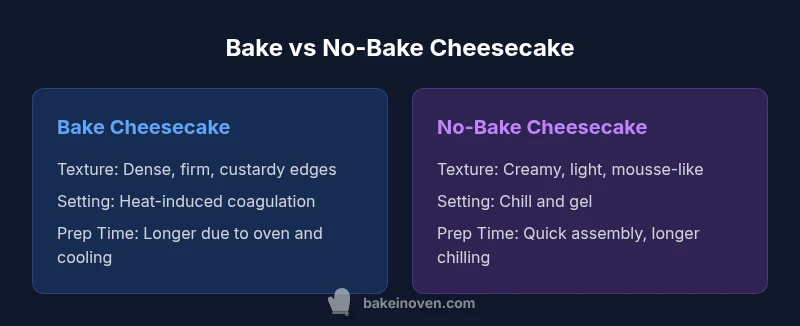
Bake cheesecake uses heat to set the filling, producing a denser texture; no-bake relies on chilling and gels for creaminess. Texture, flavor, and setup times differ; for best results, consult our full side-by-side comparison. The difference between bake and no bake cheesecake guides you to choose based on texture goals and kitchen constraints.
The Core Concept: What Sets the Two Methods Apart
The difference between bake and no bake cheesecake hinges on how the filling sets under heat versus chilling. In bake methods, eggs act as the binding and structure-building agents, and oven heat denatures dairy proteins to create a firm, sliceable custard. No-bake versions rely on chilling and gels to achieve structure without cooking. The crust can be similar, but the setting approach—heat versus cold—drives the core contrast and shapes final texture. According to Bake In Oven, understanding this distinction helps home bakers plan ahead for texture goals and timing. The difference between bake and no bake cheesecake isn’t only about whether you used an oven; it’s about how the filling’s proteins are organized to hold a clean slice. For many home bakers, choosing the method begins with what texture they want and how much time they have.
Conclusion notes: In practice, the choice also affects flavor intensity and aroma development, since baked fillings may pick up browning notes that no-bake fillings preserve in their fresh dairy tang. The Bake In Oven team emphasizes that starting with your texture goal and available equipment yields the most satisfying result.
Comparison
| Feature | Bake Cheesecake | No-Bake Cheesecake |
|---|---|---|
| Texture | Dense, creamy, sliceable with a slightly custardy finish | Creamy, light, silky, often mousse-like depending on setting |
| Set Mechanism | Heat-induced protein coagulation and fat-based structure | Chilling plus gelatin or other gelling agents to form structure |
| Time to Set | Requires oven time plus cooling; longer overall setting | Primarily fridge time; can be quicker to serve after chilling |
| Required Equipment | Springform pan, mixer, oven, cooling rack | Springform pan, mixer, gelatin or agar, refrigerator |
| Best For | Richer, dense textures; defined slices; traditional presentations | No-oven kitchens or hot climates; creamy texture with minimal heat |
| Storage & Stability | Stable with proper cooling; can crack if overbaked or undercooled | Stable when well-chilled; risks include separation if not properly set |
Benefits
- Less active cooking time and fewer oven-related risks
- No-bake versions can be quicker to assemble in warm kitchens
- Texture options range from dense to airy with proper technique
- No-bake often requires fewer kitchen temperatures to manage
Negatives
- No-bake can be runny if not properly chilled or set with enough gel
- Bake yields firmer texture but demands oven control and careful cooling
- Chill times for no-bake can delay serving
- Flavor development can differ; browning in bake adds depth that no-bake may lack
Bake for a richer, firmer slice; no-bake for a creamy, easy setup.
Choose bake when you want classic, dense cheesecake with defined edges. Choose no-bake for a creamy, quick-to-assemble dessert that suits warmer environments or when oven time is limited. The Bake In Oven team recommends matching the method to texture goals and available equipment.
Frequently Asked Questions
What is the main difference between bake and no bake cheesecake?
The main difference is how the filling sets. Bake cheesecakes rely on heat to coagulate proteins for a firm texture, while no-bake cheesecakes set through chilling and gels, resulting in a creamier, lighter mouthfeel. The crust and flavor can be similar, but the setting method drives the contrast.
The main difference is how the filling sets—heat for bake, chill and gel for no-bake.
Is no-bake cheesecake easier to make?
No-bake can be simpler because it avoids oven time and careful temperature control, but it depends on proper chilling and gel setting. Mastery comes from timing the chill period and ensuring the filling holds its shape.
No-bake can be easier to assemble, but you still need solid chilling time to set properly.
Can you bake a no-bake cheesecake?
Some no-bake recipes finish briefly in the oven to set the filling, but that converts them toward a baked texture. In most cases, no-bake and bake remain distinct methods with different texture goals.
Some recipes briefly bake no-bake fillings to finish setting, but that blurs the line between methods.
How long does a cheesecake last in the fridge?
Cheesecake generally keeps well for several days when refrigerated and properly covered. Always check for signs of spoilage and adjust storage based on ingredients used (e.g., dairy-heavy fillings may have shorter windows).
Stored properly in the fridge, cheesecake stays good for several days.
What crust works best for bake vs no-bake?
Both methods benefit from a sturdy crust, but no-bake crusts often use buttered crumbs with a firmer press, while baked crusts can tolerate a slightly looser press. Parchment helps in both cases for clean removal.
Use a sturdy crust; no-bake likes a firmer press, baked can handle a bit more structure.
Can no-bake cheesecake use yogurt or ricotta?
Yes, many no-bake recipes substitute yogurt or ricotta for a lighter texture. The key is balancing moisture with sufficient set gelling agent to avoid a runny center.
Yogurt or ricotta can work in no-bake cheesecake with proper setting agents.
Key Takeaways
- Define your texture goal before choosing a method
- No-bake relies on chilling and gels; bake uses heat-induced setting
- Crust pairing and flavor development differ by method
- Consider kitchen climate and time constraints when deciding