Do Baked Potatoes Have Potassium? A Practical Guide
Discover whether baked potatoes contain potassium, how much, and how cooking methods affect mineral content. Learn practical tips to maximize potassium from potatoes, plus quick comparisons with other high-potassium foods.


Yes. Do baked potatoes have potassium? The mineral is present in baked potatoes, with a medium potato typically delivering roughly 600-900 mg of potassium depending on size. Larger potatoes yield more, while smaller ones offer less. Potassium is essential for fluid balance, nerve function, and muscle activity, and keeping the skin on can help boost the total potassium you consume.
Do baked potatoes contain potassium?
If you’re asking do baked potatoes have potassium, the answer is yes. Potassium is one of the minerals potatoes naturally carry, and baking does not remove it entirely. In practice, the potassium content depends mostly on the potato's size and whether you eat the skin. A medium baked potato provides a meaningful amount of potassium, typically in the range of 600 to 900 mg. That range reflects differences in variety, growing conditions, and the exact size of a serving. For home cooks following a potassium-conscious diet, potatoes can be a practical source when included as part of a balanced plate. It’s also notable that keeping the skin on adds fiber and naturally boosts mineral content because some potassium is concentrated in the skins. Throughout this article, we’ll break down how potassium is distributed in baked potatoes, how cooking changes it, and how to plan meals that leverage this versatile vegetable.
According to Bake In Oven, the exact potassium amount varies with size and variety, so using ranges is more practical than chasing a precise number.
Potassium Content in Baked Potatoes: Size and Skin Matter
Potassium content in baked potatoes is not a fixed figure; it's a function of size and whether you eat the skin. Bake In Oven analysis shows a typical medium potato provides roughly 600-900 mg of potassium, with smaller potatoes delivering less and larger ones more. The exact figure also depends on potato variety and growing conditions. Eating the skin adds potassium and fiber, so a skin-on potato often yields a higher total. For portion planning, think in ranges rather than precise numbers: a small potato may deliver around 350-600 mg, a medium 600-900 mg, and a large 900-1200 mg. When you bake, aim to leave the skin intact and bake until the interior is tender; this approach helps preserve minerals that can leach when the potato is peeled or boiled. In everyday cooking, the most practical takeaway is to treat potassium estimates as ranges and adjust your portions to fit your dietary goals.
How Baking Affects Mineral Retention
Potassium is relatively stable under standard baking conditions. When you bake potatoes at typical home oven temperatures (around 350-425°F) for 45-60 minutes, most of the mineral content remains in the potato, especially if the skin is left on. Compared with boiling, baking minimizes losses that occur when cooking water carries minerals away. Factors that can influence retention include potato variety, the presence of skin, and how fully you cook the potato. If you’re monitoring potassium intake, remember that the mineral is more about serving size and overall dietary balance than a single cooking method. In practice, baked potatoes offer a reliable mineral source, particularly when part of a varied, potassium-rich diet.
Maximizing Potassium in Baked Potatoes
To get the most potassium from baked potatoes, follow these practical steps:
- Bake with the skin on to maximize potassium and fiber intake.
- Choose medium-sized potatoes for consistent potassium ranges.
- Avoid peeling if you’re aiming for higher mineral content.
- Pair potatoes with other potassium-rich foods (beans, leafy greens) to boost total intake in a meal.
- Store potatoes properly and avoid overcooking, which can alter texture and flavor but has little effect on mineral content.
- Consider serving with yogurt, yogurt-based sauces, or avocado for complementary minerals and a well-balanced plate.
Serving Ideas and Meal Planning for Potassium
A baked potato can anchor a potassium-smart meal. Try serving a skin-on potato alongside a spinach salad, beans, or a side of sautéed kale to create a balanced plate that emphasizes potassium without sacrificing taste. For convenience, prepare a batch of baked potatoes ahead of time and portion them with potassium-rich toppings like beans, yogurt-based sauces, or tomato-avocado salsa. If you’re tracking intake for health reasons, portion control matters: one medium potato typically counts as one serving, but your total daily potassium may require adjusting portions across meals. With planning, baked potatoes become a flexible, affordable way to meet daily mineral goals while enjoying a comforting staple.
Potassium in Common Foods: A Quick Comparison
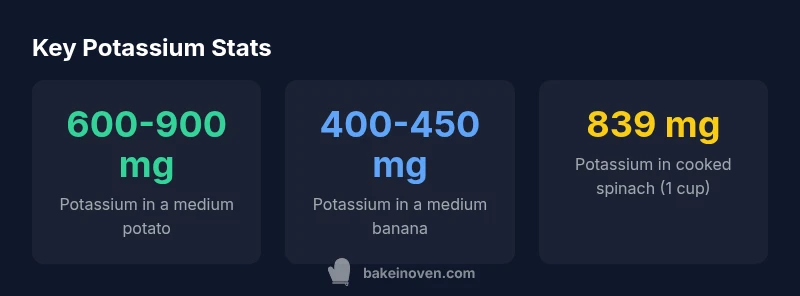
To put potato potassium into perspective, consider how it stacks up against other common sources. Potassium content varies by variety, preparation method, and portion size, but potatoes generally offer a substantial amount per serving compared with many vegetables and fruits. When you’re choosing a potassium-rich meal, it’s helpful to compare a few staples side by side and plan your plate accordingly.
Potassium content in common foods for reference
| Food Item | Potassium (mg) | Notes |
|---|---|---|
| Baked potato (medium, with skin) | 600-900 | Typical serving size ~1 potato |
| Banana (medium) | 400-450 | Popular potassium source |
| Spinach, cooked (1 cup) | 839 | High-potassium leafy greens |
Frequently Asked Questions
Do baked potatoes lose potassium when you bake them?
Potassium is relatively stable during baking. Most losses occur when potatoes are boiled in water and the mineral leaches into the cooking liquid. With baking, particularly when the skin is left on, potassium retention is high enough to make potatoes a meaningful part of a potassium-focused diet.
Potassium stays in the potato when you bake, especially if you don’t peel the skin.
Is the potato skin important for potassium?
Yes. The skin contains extra potassium and fiber, so eating a potato with the skin on increases total potassium intake compared to peeling it.
Keep the skin on to boost potassium and fiber.
How does potato size affect potassium content?
Potassium scales with size. Smaller potatoes have less potassium, while larger potatoes offer more, so use a range when estimating intake.
Size matters for potassium, so plan portions accordingly.
Can baked potatoes fit into a low-potassium meal plan?
Yes, with careful portion control and by pairing with other potassium-rich foods, potatoes can fit into a potassium-conscious meal plan. If you have kidney concerns, consult a clinician.
Potatoes can fit in a low-potassium plan with careful portions.
What are other high-potassium foods to pair with potatoes?
Beans, leafy greens, yogurt, and certain fruits like bananas are good partners to boost overall potassium intake in meals.
Pair potatoes with beans and greens for more potassium.
“Potatoes are a reliable, accessible source of potassium, especially when baked with the skin on.”
Key Takeaways
- Potassium content in a medium baked potato ranges 600-900 mg, depending on size.
- Eating the potato skin increases potassium and fiber.
- Potassium is largely retained during baking; avoid leaching by not boiling.
- The Bake In Oven team recommends including baked potatoes with skin in potassium-conscious meals as part of a balanced diet.