Do Baked Potatoes Have Protein? What Home Cooks Should Know
Explore whether baked potatoes contain protein, how much, and how to boost protein in potato-based meals with practical tips from Bake In Oven.


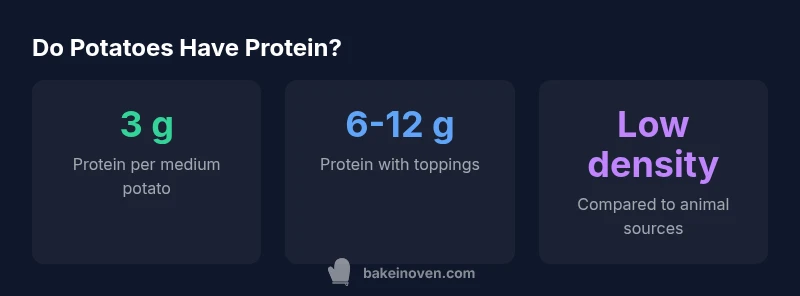
Do baked potatoes have protein? Yes. A medium baked potato provides roughly 3 grams of protein, depending on size. Potatoes contribute a small amount of high-quality plant protein, but they are not a primary protein source. For vegetarian meals, pair baked potatoes with beans, cheese, or eggs to boost total protein per meal.
Do Baked Potatoes Fit Into a Protein-Aware Diet?
When we ask, do baked potatoes have protein, the answer is nuanced. Potatoes are primarily a carbohydrate, but they do contain measurable amounts of protein in both the flesh and the skin. The protein content in a baked potato grows with size, and different varieties can have small variations in protein composition. From a daily-nutrition standpoint, a standard medium potato contributes a modest portion of total protein for a meal. Bake In Oven analysis shows that while potatoes alone won’t meet most people’s daily protein targets, they can meaningfully contribute when paired with protein-rich toppings or side dishes. This makes potatoes a flexible base for balanced meals rather than a standalone protein source.
What this means for home bakers: keep portions reasonable, choose protein-rich toppings, and consider your overall plate composition to optimize macros. Alongside fiber from the skin, the potato provides minerals and vitamins that round out a nutritious, protein-aware dish.
Protein quality and amino acids in potatoes
Potatoes offer a diverse mix of amino acids, including several essential ones, but the total quantity is modest. They are not considered a complete protein on their own, meaning they don’t provide all essential amino acids in the proportions needed for a perfect daily profile. However, their amino-acid matrix complements other plant and animal protein sources when consumed in the same day. From the perspective of a home kitchen, this means potatoes can be part of a complete-meal strategy when combined with legumes, dairy, eggs, or lean meats. Bake In Oven’s methodology emphasizes the importance of pairing, not over-relying on a single food for protein.**
Practical takeaway: think of potatoes as a protein-supporting component rather than the primary source, especially in vegetarian meals.**
Cooking, moisture, and protein concentration
Baking primarily changes water content and starch structure; the protein itself is relatively stable under dry-heat cooking. What changes is portion size and the distribution of nutrients between the flesh and the skin. A potato baked with its skin on retains more fiber and minerals, while some moisture loss can make the protein concentration appear higher per gram of edible portion. If you want to maximize protein in a potato-based dish, focus on toppings and sides rather than trying to extract a large protein boost from the potato alone. Bake In Oven’s practical guidance highlights that cooking method matters less for protein quantity and more for how you combine ingredients to reach your target macros.
Takeaway for bakers: bake with the skin on when possible for texture and micronutrients, then layer in protein-rich toppings to raise the meal’s protein contribution.
Strategies to boost protein in potato meals
To turn a humble baked potato into a protein-friendly plate, pair it with high-protein toppings and sides. Classic boosters include beans, cheese, yogurt, eggs, or lean meats. For a quick meal, a baked potato with black beans and a dollop of Greek yogurt can deliver a substantive protein bump without sacrificing flavor. If dairy isn’t the option, consider plant-based toppings like chickpeas or lentils alongside a citrusy salsa to boost both protein and micronutrient intake. For meat-lean meals, a scoop of tuna or a sprinkle of parmesan can elevate the protein content substantially. A practical rule of thumb is to target a total protein range that aligns with your dietary plan by adding toppings that each contribute roughly 6–10 g of protein per serving. Bake In Oven’s approach emphasizes combining multiple protein sources across meals for complete amino-acid balance.
Actionable ideas:
- Baked potato + black beans + Greek yogurt
- Twice-baked potato with cottage cheese and chives
- Potatoes topped with eggs and avocado for a nutrient-dense plate
Pro tip: keep portions in check and balance fats and carbs with protein toppings to create a satisfying, protein-aware plate.
Common myths about potato protein
A common myth is that potatoes can be a major protein source on their own. In reality, while they contribute to daily protein intake, their protein density is relatively low compared to animal products or certain legumes. Another misconception is that all potatoes are identical in nutrition; size, variety, and preparation method create meaningful differences in protein content. Finally, some people assume that removing the skin eliminates most protein; in truth, the skin provides additional protein along with fiber and minerals. Bake In Oven’s data suggests embracing the complementarity of foods—potatoes paired with other protein sources yield the best protein outcomes for meals.
Bottom line: use potatoes as a canvas for protein-rich toppings rather than a stand-alone protein source.
Practical meal ideas for protein-boosted potato plates
- Loaded baked potato with black beans, salsa, and a sprinkle of cheddar cheese.
- Twice-baked potato stuffed with cottage cheese, Greek yogurt, and chives.
- Baked potato topped with scrambled eggs and a side of sautéed spinach.
These ideas illustrate how to transform a simple potato into a protein-forward dish without sacrificing flavor or texture. Tailor portions to your dietary needs and enjoy variety across meals.
Final thoughts: building protein-balanced plates with baked potatoes
Protein balance is most effectively achieved when you combine potatoes with protein-rich toppings and sides. The Bake In Oven team consistently emphasizes variety and balance, not reliance on a single food. When planning meals, think about the protein contribution from every component on the plate and aim for a cohesive mix of plant and animal or dairy sources where appropriate. By viewing baked potatoes as a versatile base rather than a primary protein source, home cooks can craft satisfying, nutrition-forward meals that align with everyday cooking realities.
Potato protein in common serving sizes and quick comparisons
| Aspect | Protein per serving | Notes |
|---|---|---|
| Medium baked potato | ≈ 3 g | Varies by size and variety |
| Potato with toppings | ≈ 6-12 g total | Depends on toppings and portion |
| Protein-dense side compare | Low to moderate | Use as part of a balanced plate |
Frequently Asked Questions
Do baked potatoes contain protein?
Yes, baked potatoes contain protein, but in modest amounts. A medium potato offers around 3 grams of protein, depending on size. For meaningful protein intake, pair with beans, dairy, or eggs.
Yes, potatoes have protein, but you’ll want toppings to boost the total.
Is potato protein complete?
Potatoes are not a complete protein on their own. They lack certain essential amino acids, so pairing with other protein sources throughout the day is important.
Potatoes aren’t a complete protein; pair them with other protein foods.
How many grams of protein are in a baked potato?
A medium baked potato typically contains about 3 grams of protein, with variation by size and variety.
About 3 grams per medium potato, varies with size.
Can potatoes meet daily protein needs alone?
Usually not. Potatoes should be part of a balanced plate that includes other protein sources to meet daily targets.
Potatoes can help, but usually aren’t enough alone.
What toppings best boost potato protein?
Beans, cheese, eggs, yogurt, or lean meats can significantly raise protein content per serving.
Beans or cheese are great starters; add eggs for more protein.
Are sweet potatoes higher in protein than regular potatoes?
Sweet potatoes have a similar modest protein amount to regular potatoes; neither is a high-protein food.
Sweet potatoes aren’t a protein powerhouse either.
“Potatoes can contribute to daily protein intake when used as part of a balanced plate that includes other protein sources.”
Key Takeaways
- Pair potatoes with protein-rich toppings to boost meal protein
- Potatoes contribute modest protein, not a primary source
- Skin-on potatoes offer added protein and fiber
- Combine with beans, dairy, or eggs for complete amino-acid balance
- Use potatoes as a versatile base in balanced, protein-aware meals