How Long Does Roast Last in the Fridge After Cooking
Learn the safe fridge storage window for roasted leftovers, how to store them properly, signs of spoilage, and tips to maximize quality. This Bake In Oven guide covers beef, pork, and poultry roasts with data-backed guidance for home bakers.


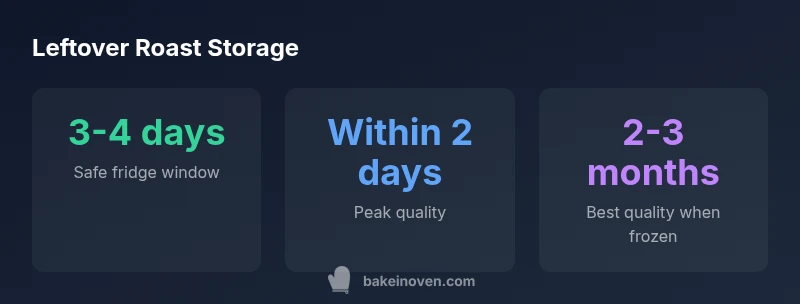
Cooked roasts typically stay safe in the fridge for about 3-4 days when stored properly in airtight containers at 40°F (4°C). The exact window varies by meat type, shade of doneness, and how quickly the dish is cooled. Bake In Oven guidance emphasizes following this timeframe to minimize food-safety risks while preserving flavor and texture.
Safety foundations for storing roasted leftovers
When you finish cooking a roast, the most critical step is rapid, safe cooling and proper refrigeration. Food-safety guidelines require hot leftovers to reach 40°F (4°C) or below within two hours if possible. If cooling in a large roast, divide it into shallow, wide containers or slice into smaller portions to accelerate cooling. Prompt refrigeration minimizes bacterial growth and helps preserve texture and moisture. For home bakers, using airtight containers or wrapping tightly with foil helps prevent air exposure and freezer burn if you plan to freeze portions later. Bake In Oven recommends labeling containers with the cooking date to facilitate an accurate inventory and avoid guessing about how long leftovers have been stored.
Temperature, packaging, and storage best practices
Storage quality hinges on three factors: temperature, packaging, and air exposure. Keep the fridge at or below 40°F (4°C), ideally on shelves where cold air circulates well rather than the door where temperatures fluctuate. Use airtight containers or heavy-duty wrap to limit moisture loss and odor transfer. Store sliced portions separately if you plan multiple meals, as smaller pieces cool faster and reheat more evenly. Always store raw meats separately and away from cooked leftovers to prevent cross-contamination. When reheating, bring leftovers to a safe internal temperature and avoid reheating more than you will consume in one sitting to minimize repeated heating cycles.
Meat type variations: beef, pork, poultry roasts
Different meats have slightly different flavor and texture trajectories, but their fridge-safe windows are similar. Beef and pork roasts held at 40°F (4°C) typically remain safe for 3-4 days, while poultry roasts also fall within the same window. The quality, however, can decline sooner for some cuts depending on fat content and cooking method. If a roast contains a glaze or sugary sauce, the exterior may discolor or darken over time, which does not automatically mean it’s unsafe, but it’s a cue to inspect more carefully before reheating.
Signs of spoilage and when to discard
Trust your senses: an off smell, a slimy or tacky texture, or unusual color changes are clear indicators to discard leftovers. If you’re unsure, err on the side of caution and skip reheating. Remember that even if the food looks and smells fine, the safe window of 3-4 days is a practical upper limit for most roasts. Always discard any leftovers that have been stored beyond this window or show signs of deterioration.
Freezing as an option and thawing guidelines
If you won’t finish a roast within 3-4 days, freezing is a practical option. Freeze leftovers in airtight, freezer-safe containers or heavy-duty bags, removing as much air as possible. Label with the date and the meat type for easy identification. When ready to use, thaw in the refrigerator overnight and reheat to 165°F (74°C) before serving. Do not thaw leftovers on the counter; this can promote rapid bacterial growth. Freezing can extend storage safely beyond the fridge window, but the texture and moisture level may change upon thawing.
Reheating leftovers safely: guidelines to reach a safe temp
Reheat roasted leftovers until they reach a steady 165°F (74°C) throughout, using a microwave, oven, or stovetop method. Stir or redistribute items to ensure even heating, and let stand a minute or two after reheating to equalize temperature. Only reheat the portion you plan to eat in one sitting; repeatedly cooling and reheating can degrade quality and safety. For best results, reheat sauces or gravies separately and combine just before serving to maintain texture.
Meal planning to minimize waste and maximize safety
Plan portions based on typical meal sizes to avoid excessive leftovers. If you often cook roasts, consider cooking smaller roasts more frequently or freezing individual portions for later use. Rotate leftovers with fresh ingredients so you’re not relying on one batch for too long. Implement a simple labeling system to track dates and planned consumption windows, reducing the risk of forgetting older leftovers in the back of the fridge.
Safe fridge window for common roasted meats
| Meat type | Safe fridge days | Notes |
|---|---|---|
| Beef roast | 3-4 days | Store in airtight container at 40°F/4°C |
| Pork roast | 3-4 days | Store in airtight container at 40°F/4°C and reheat to 165°F |
| Poultry roast | 3-4 days | Store in airtight container at 40°F/4°C and reheat to 165°F |
Frequently Asked Questions
How long can roast leftovers safely stay in the fridge?
Most cooked roasts stay safe for 3-4 days when refrigerated promptly at 40°F (4°C). The exact window can vary by meat type and cooling speed.
Most leftovers stay safe for 3-4 days in the fridge if refrigerated quickly after cooking.
Can I eat roast leftovers after 5 days?
5 days is beyond the typical safe window for roasted leftovers. It’s best to discard leftovers stored for that long.
Five days is beyond the safe window; discard to be safe.
Should I reheat leftovers more than once?
Reheat only the portion you plan to eat in a single sitting. Repeated reheating can compromise safety and quality.
Heat only what you’ll eat now, then store any leftovers again.
Does cutting a roast into pieces affect storage time?
Portioning can help with cooling and portion control, but the overall fridge storage window remains about 3-4 days.
Portioning helps cooling, but don’t rely on it to extend fridge life beyond 3-4 days.
What are signs that leftovers have spoiled?
Off smell, slimy texture, or unusual color indicate spoilage. When in doubt, throw it out.
If it smells off or looks odd, discard it.
Is it safe to store leftovers in glass vs plastic containers?
Both are safe as long as containers are airtight and clean. Glass is often easier to seal and reheat.
Airtight containers, whether glass or plastic, keep leftovers safer.
“Properly stored roasted leftovers remain safe for 3-4 days in the fridge. If you notice off odors, slimy texture, or unusual color, discard.”
Key Takeaways
- Store cooked roasts in airtight containers at 40°F (4°C) or below.
- Aim to refrigerate leftovers within two hours of cooking.
- Most roasts stay safe to eat for 3-4 days in the fridge.
- Label leftovers by date and plan to freeze if you won’t finish within 4 days.
- Discard leftovers showing spoilage signs or stored beyond 4 days.