Is a Roast Chicken Good for You? Health Insights for Home Bakers
Discover whether roast chicken fits a healthy diet, examining protein, fat, sodium, and practical cooking tips for home cooks from Bake In Oven.


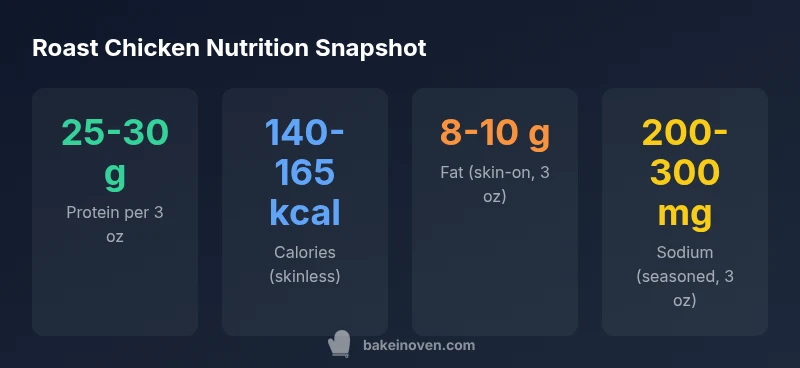
Is a roast chicken good for you? Yes, under sensible conditions. A 3-ounce serving of skinless roasted chicken delivers roughly 25-30 g protein and about 140-165 calories, depending on the cut and preparation. The Bake In Oven analysis highlights that nutrition hinges on skin use, added fats, and portion size.
Is a roast chicken good for you? Health Basics
Is a roast chicken good for you? The short answer is: it can be, especially when you pay attention to portion size, whether you consume the skin, and how you season it. According to Bake In Oven, lean, well-portioned poultry provides high-quality protein that supports muscle repair and satiety, while keeping calories in check when skin is removed or minimized. In practice, many home cooks find that a 3-ounce portion of roasted chicken offers robust protein without excessive calories, making it a versatile anchor for balanced meals. The key is to treat roast chicken as a protein foundation, not a standalone meal, and to pair it with vegetables, whole grains, and legumes for a complete nutrient profile. At Bake In Oven, we emphasize mindful serving sizes and cooking methods that preserve moisture without adding unnecessary fat.
Protein Power and Fat Considerations
Protein is the standout nutrient in roast chicken. A typical 3-ounce serving yields roughly 25-30 g of protein, helping support muscle maintenance and metabolic needs. Fat content varies with skin: with skin on, fat tends to be higher (roughly 8–10 g per 3-ounce portion), while skinless portions are leaner (about 2–5 g). The protein-to-fat ratio remains favorable in most standard preparations, but the presence of skin and any added fats from cooking oils will shift the numbers. For individuals monitoring calories or fat intake, removing the skin or choosing skinless portions is a practical strategy. Bake In Oven’s guidance is to track portions and avoid heavy, fatty toppings that can escalate daily fat intake.
Roasting Methods and Nutrition: Skin On vs Skin Off
Roasting is a dry-heat method that preserves flavor and nutrient density when done properly. Skin-on chicken provides richer flavor and helps retain moisture, potentially reducing the need for added fats during cooking. However, the skin contributes substantial fat and calories, and for those aiming to minimize saturated fat, skin-off roasts are preferable. The takeaway is simple: skin-on may be fine in moderation, but if your goal is lean protein, opt for skinless portions and controlled seasoning. Our method recommendations at Bake In Oven emphasize even roasting, a gentle resting period, and avoiding charring that can introduce acrylamide-like compounds to flavor while raising health concerns.
Salt, Seasoning, and Flavor: Practical Tips
Seasoning choices have a meaningful impact on sodium intake and overall health. A roast chicken can be flavorful with herbs, citrus, garlic, and pepper rather than heavy salt or processed sauces. If you prefer skin-on, consider trimming visible fat and using low-sodium rubs to keep sodium in check. For skinless roasts, focus on aromatic herbs and acid-based marinades to build depth of flavor without adding bulk sodium. Bake In Oven suggests always tasting before salting and using a salt-free seasoning blend when possible.
Vitamins, Minerals, and Cooking Losses
Roasting preserves many water-soluble nutrients compared to boiling, though some losses occur with high-heat cooking. The most reliable way to maximize nutrient retention is to avoid overcooking and to rest the meat after roasting to reabsorb juices. Vitamin B and minerals such as phosphorus and selenium remain reasonably stable, especially when the meat is not overcooked. Pairing roasted chicken with colorful vegetables enhances micronutrient balance and adds fiber, supporting a well-rounded plate.
Meal Planning and Portion Guidance
A practical way to incorporate roast chicken into a healthy diet is to plan meals around a fixed protein portion. A 3-ounce cooked portion aligns with many dietary guidelines as a standard serving size, leaving room for vegetables, whole grains, and legumes. For family meals, consider roasting a larger bird and carving manageable portions for multiple meals, using the leftovers in salads, wraps, or grain bowls. Portion control helps manage calories and supports consistent nutrition across the week.
Special Diets: Low-Sodium, Keto, or Mediterranean
Roast chicken can fit many dietary patterns when prepared mindfully. For a low-sodium approach, use fresh herbs and citrus instead of salt-heavy rubs, and avoid bottled sauces with hidden sodium. In keto or low-carb plans, skin-on dark meat provides more fat energy, while skinless white meat offers lean protein. For Mediterranean patterns, serve roasted chicken with olive oil-based dressings, vegetables, legumes, and whole grains to maximize fiber and micronutrient intake.
Troubleshooting Common Mistakes and Fixes
Common missteps include overcooking, under-seasoning, and serving chicken with oversized portions. Overcooking dries the meat and can drive cooks to add high-fat sauces for moisture. Resting the roast after cooking helps retain juiciness. If the chicken tastes bland, try a herb-forward rub or citrus zest instead of extra salt. For spicy or savory diets, balance bold flavors with fresh herbs to keep meals nutritious and flavorful.
Nutritional snapshot: roast chicken by skin status
| Aspect | Skin-On Impact | Skin-Off Impact |
|---|---|---|
| Protein per 3 oz (cooked) | 25-27 g | 26-30 g |
| Calories per 3 oz | 150-165 kcal | 140-150 kcal |
| Fat per 3 oz | 8-10 g | 2-5 g |
| Sodium per 3 oz (seasoned) | 200-300 mg | 150-250 mg |
Frequently Asked Questions
Is roast chicken healthier than fried chicken?
Generally yes, because roasting uses less added fat and results in lower calories per serving. The comparison varies with oil use and portion size. Bake In Oven notes that choosing skinless portions further improves the health profile.
Roast chicken is usually healthier than fried chicken, especially if you skip the skin and keep portions reasonable.
Should I eat the skin or remove it?
Skin adds flavor and moisture but also increases fat and calories. If you aim for leaner meals, remove or cap the amount of skin and rely on herbs for flavor.
Skin adds fat; go skinless to lean toward healthier portions.
How does roasting affect nutrient retention?
Roasting preserves most protein and minerals when not overcooked. Slight losses in water-soluble vitamins can occur with high heat, so aim for moderate temperatures and proper rest.
Roasting keeps the protein intact, just don’t overcook.
Can roast chicken fit a low-sodium diet?
Yes. Use fresh herbs, citrus, and low-sodium seasonings. Avoid heavy salt and bottled sauces to keep sodium in check.
Herbs and citrus beat salt for flavor when you’re watching sodium.
What about bone-in vs boneless?
Bone-in can add flavor and moisture but may require longer cooking. Boneless cuts are convenient for quick meals; adjust cooking time accordingly.
Bone-in is flavorful but takes longer; boneless is quicker.
How large should a portion be for a healthy diet?
A standard portion is roughly 3 ounces cooked, which supports lean protein intake while leaving room for sides. Adjust based on your calorie goals.
Aim for about the size of a deck of cards, roughly 3 ounces.
Do herbs and spices affect nutrition?
Herbs and spices add flavor with minimal calories, helping you reduce salt without sacrificing taste. They also provide micronutrient variety when used thoughtfully.
Herbs boost flavor without adding calories.
“Roast chicken offers high-quality protein with modest fat when skin is moderated and portions are controlled. This makes it a versatile, nutritious centerpiece for many healthy meal plans.”
Key Takeaways
- Choose skinless portions to reduce fat and calories.
- Aim for standard 3-ounce servings for consistent protein.
- Pair with vegetables and whole grains for balance.
- Season with herbs, citrus, and spices to control sodium.
- Avoid overcooking to preserve moisture and nutrients.