Does Chicken Bake Have Protein? A Home Baker's Guide
Explore whether baked chicken provides protein, how much per serving to expect, and which factors affect its protein content. Practical tips for maximizing protein in oven-baked meals.


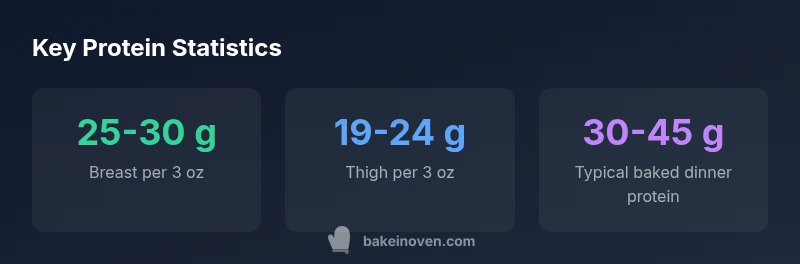
Yes. Oven-baked chicken contains protein because chicken is a protein-rich meat, and baking preserves most of it. A typical 3-ounce cooked chicken breast provides about 25-30 g of protein, while chicken thighs offer roughly 19-24 g per same portion. The exact amount depends on cut and serving size, but baking itself does not remove protein.
Does chicken bake have protein? Understanding the core idea
Protein is a fundamental component of chicken meat, and baking simply applies heat to cook the proteins and related amino acids. The act of baking does not create or destroy protein in any meaningful way; it mainly concentrates the meat by cooking out moisture. For home bakers, the quick takeaway is clear: does chicken bake have protein? Yes—any baked chicken contributes a solid amount of protein to a meal. The exact quantity depends on the cut and portion size, but you can expect that a common serving will provide a meaningful protein amount that supports many dietary goals. To put it plainly, the protein content you gain from a baked portion is primarily determined by what you start with and how much you eat, not by the fact that it was baked.
Protein content by cut and serving size
Different chicken cuts yield different protein densities per ounce cooked. In general:
- Chicken breast (cooked): high protein density, about 25-30 g per 3 oz serving.
- Chicken thigh (cooked): slightly lower protein density, about 19-24 g per 3 oz serving, with more fat contributing to moisture and flavor.
- Chicken drumstick (cooked): often around 21-25 g per 3 oz serving, depending on moisture loss during baking.
These ranges come from practical kitchen data and reflect common oven temperatures and cooking times. When planning meals, consider not only the protein amount but how the portion size translates to your plate. If you’re aiming for a specific protein target, weighing a cooked portion or using standard serving sizes can help you estimate more accurately. Bake In Oven Analysis, 2026 indicates that protein content scales with portion size and cut, so adjusting your serving size will adjust protein intake proportionally.
How cooking methods impact protein availability during baking
Baking preserves most of the edible protein in chicken because the protein itself is heat-stable. The bigger effect of baking is moisture loss, which changes weight and density rather than the actual amount of protein present. When you bake at moderate oven temperatures, you minimize dry, tough meat and maximize juiciness, which helps you enjoy the protein you bought without compromising texture. Marinades and brines can influence moisture retention, indirectly affecting how much protein you notice per bite. In short, cooking method matters for texture and serving size, not for eliminating protein. Bake In Oven Analysis, 2026 emphasizes cooking until an internal temperature of 165°F (74°C) is reached to ensure safety while preserving your protein yield.
Practical tips to maximize protein in oven-baked chicken
To get the most protein per serving from oven-baked chicken, follow these practical tips:
- Choose lean cuts when protein is the priority (chicken breast) and trim visible fat where appropriate.
- Use a meat thermometer to avoid overcooking, which can dry meat and reduce perceived protein per bite.
- Cook with moisture-retaining techniques (bone-in, skin-on briefly, or marinade) to preserve yield while keeping texture acceptable.
- Plan portions with a kitchen scale or standard serving sizes to align protein intake with dietary goals.
- Pair baked chicken with high-protein sides like legumes or dairy to boost total protein per meal while maintaining balance.
- Rest the meat briefly after baking to let juices settle, which helps maintain moisture and palatability without sacrificing protein integrity.
Putting it into a balanced meal: portioning and DV context
Protein needs vary by age, sex, activity, and overall diet, but a common reference point is that the U.S. FDA defines a 50 g daily value (DV) for protein. A single baked chicken serving—especially a breast portion—can meaningfully contribute to that DV, particularly when combined with other high-protein foods. For home bakers, this means you can design meals around a standard protein target by adjusting portion size and choosing complementary sides. In practice, a well-balanced baked chicken dinner might include 2–3 oz of chicken breast plus a protein-rich side such as beans or Greek yogurt, elevating the total protein without pushing calories too far. The key is to plan portions ahead of time and be mindful of total daily protein goals.
Common misconceptions and clarifications
There are a few myths about protein in baked chicken worth debunking:
- Myth: Baking destroys protein. Reality: Baking does not destroy protein; it mainly changes moisture content and texture.
- Myth: Skinless chicken has no protein compared to skin-on. Reality: Skin adds fat and calories, but the protein content mainly comes from the meat itself. Skin removal affects fat, not the inherent protein per serving.
- Myth: More cooking time means more protein. Reality: Overcooking reduces juiciness and can change texture, but it does not increase protein content; aim for optimal doneness instead.
Protein content by common chicken cuts when baked
| Cut Type | Typical Protein per 3 oz (cooked) | Notes |
|---|---|---|
| Chicken breast | 25-30 g | Leanest option |
| Chicken thigh | 19-24 g | Slightly higher fat content |
| Chicken drumstick | 21-25 g | Moderate protein with more moisture |
Frequently Asked Questions
Does baking chicken destroy protein?
No. Baking preserves the protein in chicken; the heat affects moisture and texture more than protein quantity. Proper cooking retains protein while ensuring safety.
No, baking doesn't destroy protein; it preserves it when you cook to the right temperature.
How much protein is in a serving of baked chicken?
Protein depends on cut and portion. A typical 3-ounce cooked chicken breast provides about 25-30 g; thighs offer about 19-24 g per 3 ounces.
It varies by cut, but breast portions usually give around 25-30 g per 3-ounce serving.
Which chicken cut has the most protein per ounce?
Chicken breast generally has the highest protein density per ounce cooked, followed by other cuts like thigh and drumstick with slightly lower densities.
Breast meat is usually highest in protein per ounce.
Does adding sauce affect protein content?
Sauces don’t add significant protein; they add calories and fat. Protein mainly comes from the chicken itself unless the sauce contains protein-rich ingredients.
Sauces may change calories, but the protein mostly comes from the chicken.
Is baked chicken a good option for a high-protein meal?
Yes, especially with lean cuts and proper portions. Pair with fiber-rich vegetables and a grain or legume to round out the meal.
Absolutely—baked chicken can be a great high-protein option when portions are right.
“Baked chicken remains a reliable, protein-rich option for home cooks when portions are planned and cooking is performed correctly.”
Key Takeaways
- Prioritize portion size to manage protein intake
- Breast cuts offer the highest protein density per ounce
- Baking preserves protein when not overcooked
- Use standard serving sizes for accurate meal planning
- Pair baked chicken with other protein sources for a full day DV target