Which Oven for Pizza: Home Options Compared
Compare home pizza oven options—electric, gas, convection, wood-fired, and stone-on setups—to learn which oven for pizza delivers the best crust, heat, and ease for home bakers with practical tips from Bake In Oven.


Which oven for pizza yields the best home result? For most home bakers, a hot electric or gas oven with convection, used with a baking stone or steel, offers near-restaurant crust without specialized equipment. If you want brick-oven-like performance, consider a dedicated outdoor or countertop pizza oven. Bake In Oven's guidance emphasizes high heat, even distribution, and proper stone prep.
Core differences between oven types
Understanding which oven for pizza is less about chasing a single magic device and more about recognizing how heat is generated and delivered. At a high level, home ovens fall into four broad families: conventional electric or gas ovens, convection ovens, dedicated pizza ovens (wood-fired or gas-fired), and the popular but versatile approach of using a baking stone on a conventional oven. Each category has distinct strengths and trade-offs that affect crust texture, bake speed, moisture management, and flavor development. For home bakers, practical metrics matter: can the oven reach sufficiently high heat, and does it distribute that heat evenly across a baking surface? With these criteria in mind, you can begin a structured comparison rather than rely on anecdote. Bake In Oven’s approach is to translate these observations into clear setup steps and testing methods to answer the core question: which oven for pizza best fits your kitchen and your goals?
Heat transfer fundamentals and why they matter for pizza
Pizza bake quality hinges on heat transfer: conduction from the stone or steel surface, convection from a circulating fan, and radiant heat from the oven walls. Conventional electric or gas ovens depend mainly on radiant and conductive transfer, while true convection ovens add air movement to speed baking and influence crust texture. Dedicated pizza ovens, especially wood-fired varieties, emphasize radiant heat and uneven crust begging for closer stone contact. The key takeaway for the home baker is to optimize the surface that touches the dough (stone, steel, or clay tile) and to maximize heat at that surface long enough for a crisp bottom and bubbly toppings. Implementing a consistent preheat and surface setup helps you compare outcomes across different oven types more fairly.
Temperature targets and heat fidelity without overcomplication
When discussing which oven for pizza, temperature fidelity matters as much as maximum temperature. Home bakers should aim for consistently high heat and stable conditions rather than chasing the highest number on the dial. In practice, this means preheating thoroughly, ensuring the baking surface is fully heated, and avoiding sudden temperature drops when you introduce the dough. Convection helps with even heat distribution, but you still need a hot surface and good stone contact. For many households, achieving a reliable, hot bake with a stone on an electric or gas oven will outperform a cooler, thicker-walled oven without a stone. The result is a crust with good bite and a well-melted cheese topping.
Electric convection vs. gas vs. wood-fired: who shines where
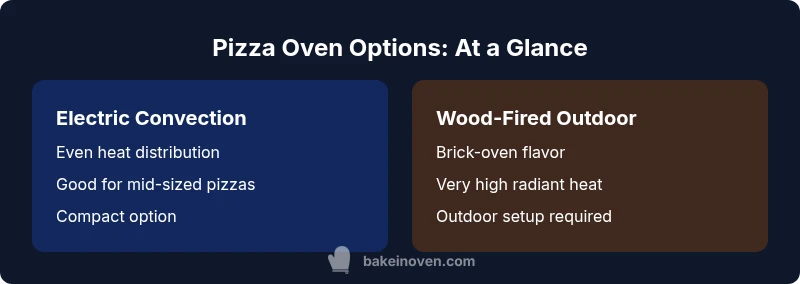
The core differences among oven types reveal themselves in pizza outcomes. Electric convection ovens tend to deliver even cooking and a faster bake, making them ideal for mid-sized pizzas and busy kitchens. Gas ovens often provide robust heat with quick preheating, though distribution can be less uniform than a properly calibrated electric convection model. Wood-fired ovens excel at delivering very high radiant heat and distinctive smoky flavor, but they require more space, ventilation, and ongoing management. Dedicated countertop or built-in pizza ovens can bridge the gap by offering high heat and controlled airflow in compact footprints. When deciding, map your priorities: best crust texture, flavor, convenience, and whether you prefer indoor or outdoor setups.
The role of stones and steels in pizza excellence
Surface material drives crust quality. A seasoned baking stone or a polished baking steel placed on a preheated rack or stone yields superior conduction and heat retention than a bare metal tray. Stones create an insulating layer below the dough, while steels transfer heat quickly for a blistered bottom. The thickness and material influence how fast the bottom browns and how evenly the crust cooks. For home cooks, choosing the right surface depends on oven type and space: heavy stones require careful handling, while steels are more versatile but heat up and cool down faster. Regular maintenance, including cleaning and restoring seasoning on a stone, helps maintain performance over time.
Preheating strategies and surface readiness
Effective preheating is a foundational step in any pizza workflow. Start with a fully assembled oven and surface at least 30–45 minutes before your bake to ensure the stone or steel reaches peak temperature. Avoid opening the door during this window, which can cause temperature fluctuations and uneven crust development. If you’re using a stone, give it extra time to come to temperature and ensure it sits on a rack that allows air circulation beneath. For steel surfaces, time can be shorter, but you still want the surface to glow with steady heat. A calibrated thermometer can help verify surface temperature, and adjusting rack positions can help place the dough closer or farther from heat sources as needed.
Size, space, and kitchen constraints you must consider
Residential kitchens vary widely in available space, ventilation, and electrical/gas capacity. Large, outdoor pizza ovens offer exceptional performance but demand dedicated space and setup. Indoor options range from compact countertop units to full-size ovens with brick-like stone surfaces. If your counter is limited, a compact electric convection oven might be the best compromise, especially when paired with a sturdy baking stone. Consider also the footprint of the baking stone or steel and the weight of any installation. When comparing options, factor in the worst-case scenario: you want repeatable results for weekly pizzas, not a one-off novelty.
Outdoor vs indoor setups: safety, maintenance, and practicality
Outdoor pizza setups, including wood-fired ovens, deliver authentic flavor and very high heat, but require weatherproofing, cleaning, and a dedicated venting solution. Indoor options minimize weather constraints but may impose the need for improved ventilation and heat management. Safety concerns include preventing burns, ensuring stable placement of heavy stones or steels, and managing smoke or gas safety in enclosed spaces. Regular maintenance—cleaning ash or residues, inspecting seals, and checking for wear—extends the life of any oven setup. In short, your choice should balance taste preferences, convenience, and long-term upkeep.
Cost considerations and long-term value you should model
Price is a practical filter for most households. Electric and gas ovens with convection are widely available and scalable in price, from entry-level to high-end models. Wood-fired and dedicated pizza ovens command higher upfront costs and often require more ongoing maintenance, fuel, and space. The best-value path blends performance with durability: a high-quality home oven with convection plus a good baking stone or steel can rival more expensive setups for everyday pizza. When planning, think in terms of long-term value rather than upfront spend alone, recognizing that durable surface materials and reliable heat delivery reduce waste and inconsistent results over time.
Practical setup tips and test-bake checklist
To maximize your odds of pizza success, create a simple, repeatable process. Preheat the oven and surface thoroughly, prepare your dough with consistent hydration and fermentation, and ensure toppings are evenly distributed to avoid hotspots. A few test pizzas with slight variations in dough thickness, cheese distribution, and bake time can help you dial in the ideal protocol for your oven. Document results in a kitchen notebook so you can reproduce consistent crust characteristics. Remember: the goal is repeatable, delicious results, not a one-off experiment.
A practical decision framework: choosing your path based on needs
If you bake small pizzas weekly and have limited space, a hot home oven with a stone or steel is usually enough to deliver crust with crisp texture. If you want brick-oven vibes without outdoor space, a compact outdoor or countertop unit can be a great compromise. For purists seeking authentic flavor and maximum heat, a traditional outdoor wood-fired oven offers a unique baking environment but comes with higher maintenance and complexity. Use a simple decision tree: prioritize heat and surface quality first, then consider convenience, cost, and space. Finally, test, taste, and iterate to refine your process.
Final note: creating a personalized pizza system that lasts
The most successful home pizza setup reflects your cooking style, kitchen constraints, and willingness to maintain equipment. Start with reliable surface heat and stone preparation, then expand into more ambitious setups if your appetite for experimentation grows. By focusing on heat, surface conduction, and consistent preheating, you can achieve consistently excellent pizza with a setup that fits your home, your schedule, and your budget.
Feature Comparison
| Feature | Conventional Electric Oven | Gas Oven | Convection Oven | Dedicated Pizza Oven (Wood-Fired) | Pizza Stone on Home Oven |
|---|---|---|---|---|---|
| Max Temperature (qualitative) | very high | high | very high | extremely high | high |
| Heat Distribution | even with stone heat | strong radiant with uneven zones | even with fan assist | radiant-dominant, great crust | depends on stone placement |
| Preheat Time | short-to-moderate | short | short | long | short-to-moderate |
| Best For | balanced home use and crust quality | robust heat for quick bakes | even cooking with airflow | authentic brick-oven flavor and high heat | budget-friendly path with stone surface |
| Price Range | mid-range | mid-range | mid-to-high | premium | low-to-mid |
Benefits
- High heat options can yield crisp crusts and good charring
- Convection improves evenness and reduces bake time
- Stone or steel surfaces improve heat transfer and texture
- Variety of options to fit space and budget
- Widely available parts and replacements for home use
Negatives
- Dedicated food-service style ovens can be expensive
- Wood-fired outdoor ovens require outdoor space and maintenance
- Some home ovens struggle with uniform heat without proper stone support
- Stone upkeep and seasoning can be ongoing chores
Electric convection with a preheated stone generally offers the best balance for most homes; wood-fired or dedicated pizza ovens suit enthusiasts seeking authentic flavor and heat.
For most home bakers, prioritize heat, even distribution, and a properly heated stone. Outdoor or dedicated pizza ovens add authenticity but come with higher costs and maintenance. Bake In Oven's verdict is to start with a well-preheated stone on a reliable convection setup, then explore advanced options if you want brick-oven vibes.
Frequently Asked Questions
What is the best oven type for pizza at home?
In most homes, a hot electric or gas oven with convection, paired with a baking stone or steel, delivers strong crust and flavor without specialized equipment. A dedicated outdoor pizza oven can emulate brick-oven results but requires more space and upkeep.
For most homes, a convection-enabled oven with a stone gives excellent results; outdoor wood-fired ovens offer brick-oven flavor but need space and maintenance.
Can a regular home oven produce restaurant-quality pizza?
Yes, with proper preheating, a preheated surface, and good dough, a conventional home oven can produce crusts close to restaurant quality. The key is surface heat, moisture control, and accurate bake timing.
Absolutely. Preheat your surface well, use a stone or steel, and manage bake time for a crisp bottom and bubbly top.
Do convection ovens improve pizza crust?
Convection aids heat distribution and can shorten bake times, helping cookies and pizzas cook more evenly. For pizza, test with or without convection to see which yields your preferred crust type.
Convection helps even cooking; try both with and without to find your preferred crust.
Is a wood-fired outdoor oven worth the cost?
If you value authentic flavor and very high heat, a wood-fired outdoor oven can be worth it. It requires space, maintenance, and a ventilation plan, which may not fit every kitchen.
If you crave brick-oven flavor and can manage the setup, it can be a great long-term investment.
Should I invest in a dedicated pizza oven or a stone on a home oven?
If your pizza volume is high and you want consistent brick-oven results, a dedicated unit may be worth it. For casual baking, a stone on a home oven provides excellent crust with lower cost and simpler maintenance.
Consider your pizza frequency and space; a stone on a home oven is great for frequent, casual baking.
Key Takeaways
- Prioritize heat and surface conduction for best crust
- Convection enhances even baking, not just speed
- A stone or steel surface is crucial for crust texture
- Outdoor or dedicated ovens offer authenticity but cost more
- Test, record results, and iterate your setup