Is Bake or Convection Better for Pizza? A Practical Comparison
A data-driven comparison of bake vs convection for pizza, with practical tips, setup guidance, and a clear verdict for home ovens in 2026.


Convection typically yields a crisper crust and faster bake, while conventional bake suits thicker crusts and delicate toppings. For most weeknight pizzas, convection is the go-to, but test with both methods to match your oven.
Is bake or convection better for pizza?
When readers ask is bake or convection better for pizza, they expect a simple answer, but the truth is more nuanced. The choice depends on oven design, bakeware, and the crust you want. Convection can speed browning and crisp the crust, while conventional bake tends to give a more forgiving, thicker crumb. The Bake In Oven team emphasizes experimenting with your own setup to dial in temperatures, preheat duration, and stone use, especially as 2026 ovens bring stronger airflow options. The core idea is to tailor the method to your pizza type and equipment, rather than forcing one default on all pies. This approach also aligns with practical kitchen experimentation you can perform in a single weekend.
How convection actually works in home ovens
Convection ovens add a fan and exhaust to circulate hot air around the food. The moving air speeds heat transfer from the surface of the dough to the crust, which accelerates browning and can reduce hot spots. In pizza making, this translates to faster bake times and a more even crust color, especially when you use a preheated stone or steel. However, airflow can also push moisture away too quickly or dry out toppings if temperatures are high. Understanding your oven's fan strength and distribution helps you decide when to rely on convection and when to revert to standard bake.
What conventional bake offers for pizza
Conventional bake relies on radiant heat from the top and bottom elements plus the oven walls’ heat. Without a fan, the hot air can linger more locally, which sometimes yields a taller, chewier crust and a more forgiving interior crumb. This method can be advantageous for thicker crusts or when you want more time to develop color on toppings without accelerating browning too aggressively. If your oven has a history of uneven heating, you might prefer conventional bake to avoid excessive edges browning before the middle cooks through.
The influence of preheating and stone/steel in both methods
Preheating a pizza stone or steel is a must for both bake modes, but the timing subtly shifts with convection. In convection, a hot stone can flex the boundary between a blistered bottom and a uniformly browned crust, since the air movement helps drive heat into the bottom surface faster. Conventional bake often benefits from longer preheats to ensure the stone reaches peak temperature and maintains steady heat for the entire bake. Place the stone on the rack closest to the heat source for best bottom crisp, and use parchment or a well-floured peel to prevent sticking.
Temperature, time, and airflow: practical adjustments
Adjusting temperatures and bake times is essential when switching between bake modes. Convection generally allows you to lower the ambient oven temperature slightly and reduce bake time, which helps prevent over-browning on the edges. Conversely, traditional bake often requires a higher temperature or longer bake to achieve similar browning, particularly on thicker crusts. Always monitor the crust color and internal dough feel; if the bottom browns too quickly, slide the pizza to a lower rack or cover the edges with foil to prevent scorching.
Crust texture outcomes: crispy edges vs tender crumb
The crust outcome is the most visible difference between conventional and convection baking. Convection tends to produce crisper, more uniform edges and a blistered, airy crumb in thinner crusts. Conventional bake can yield a slightly softer crust with a more pronounced lift in the center, which some prefer for thicker pizzas. If you want a super-crisp bottom without over-drying toppings, convection with a hot stone often delivers the best balance; for a bake you want easier handling and a softer interior, conventional bake may be preferable.
Topping doneness and heat circulation
Heat circulation affects toppings too. Convection can brown and set toppings faster, which is great for pepperoni cups, cheese bloom, and caramelization of vegetables. However, delicate toppings like fresh herbs, delicate cheeses, or thin vegetables may scorch if exposed to strong airflow at high heat. The practical workaround is to add toppings later or reduce convection intensity briefly toward the end. In conventional bake, you get gentler topping browning, which can be ideal for prefered cheese melt and toppings that release moisture slowly.
Real-world scenarios: thin crust, thick crust, and multiple pizzas
For a thin-crust scenario, convection on a preheated stone usually yields a quick, blistered crust with even browning. In thick crust pizzas, conventional bake can help keep the interior dough moist while still browning the bottom. If you’re baking multiple pizzas, convection provides more consistent results across pies, though you may need to rotate the stone or switch racks to balance heat. Your kitchen’s layout, oven age, and stone quality all influence which method performs better on any given night.
How to test in your kitchen: a simple experiment plan
Design a controlled test you can repeat. Use the same dough recipe, sauce, and toppings for two pizzas, one baked with conventional bake and one with convection. Keep the stone/steel, rack position, and preheat time consistent. Record bake time, crust color, and topping doneness. Compare the bottom crust texture and chew, then note any differences in moisture or browning on the cheese. Repeat with a second batch using a different crust thickness to see which method consistently meets your expectations.
Decision framework: which method to use when
Use convection as the default for most standard pizzas, especially when you want a fast bake and crisp edges. Shift to conventional bake for thicker crusts, delicate toppings, or when you want more forgiving interior crumb. If you’re baking several pies in a row, convection helps maintain consistency, but you may need to rotate the stone or adjust rack levels to avoid uneven browning. The best approach is to test both methods with your equipment and establish a simple rule of thumb you can follow on weeknights.
Comparison
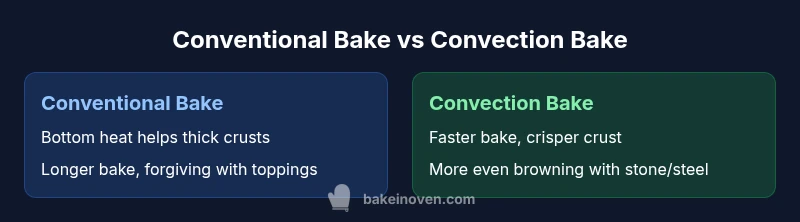
| Feature | Conventional Bake | Convection Bake |
|---|---|---|
| Crust texture | Chewier, taller crust with traditional browning | Crispier edges, blistered bottom with even color |
| Bake time | Longer bake time for similar doneness | Shorter bake time due to airflow |
| Heat distribution | Radiant and ambient heat with no fan | Airflow-circulated heat from fan-assisted bake |
| Best for | Thick crusts, pan pizzas, forgiving toppings | Thin-crust, stone/steel setups, quick browning |
| Temperature adjustments | Higher ambient temps commonly used to compensate for no fan | Lower temps effective due to enhanced heat transfer |
| Energy use | Potentially higher due to longer bake | Usually lower because of faster cooking |
Benefits
- Convection speeds up baking and can crisp edges
- More even heat reduces hotspots
- Works well with a preheated stone/steel
- Quicker bakes save time on busy nights
- Familiar recipes can adapt with clear temp adjustments
Negatives
- Can over-dry toppings if misused or too hot
- Some ovens have uneven convection despite a fan
- Requires careful temperature/time adjustments to avoid scorching
Convection is generally the better default for pizza in most home ovens.
Convection yields crisper crusts and faster browning, especially with a hot stone. Use conventional bake for thicker crusts or delicate toppings, and validate with short side-by-side tests to dial in your setup.
Frequently Asked Questions
What is convection bake and how does it differ from conventional bake for pizza?
Convection bake uses a fan to circulate hot air, speeding heat transfer and promoting even browning. Conventional bake relies on radiant heat without airflow, which can create more pronounced interior moisture and a taller crumb. The choice affects crust texture and topping management.
Convection uses a fan for even browning; conventional bake relies on radiant heat without airflow.
Is convection always better for pizza?
Not always. Convection excels for thin crusts and quick browning, but conventional bake can be preferable for thick crusts or toppings that may dry out under strong airflow. Your oven’s behavior matters, so testing both methods is advisable.
Not always better; test both methods to learn your oven’s quirks.
Should I use a stone on convection?
Yes. A preheated stone or steel helps deliver a crisp bottom when using convection. It concentrates heat at the crust and reduces moisture transfer to the surface, improving texture.
Yes—use a preheated stone or steel with convection for best results.
What temperature should I bake pizza in conventional vs convection?
Convection generally allows for slightly lower temperatures and shorter times, while conventional bake often needs higher temps to achieve similar browning. Start with conservative adjustments and monitor crust color and doneness.
Convection usually needs lower temps; monitor color and doneness with both methods.
Can convection burn toppings?
Yes, if airflow is too strong or heat is high. Shield delicate toppings by adding them later or briefly lowering convection toward the end of the bake.
Be cautious—watch topping browning and adjust heat or timing as needed.
What is the best method for a home pizza night?
If you want crisp crust quickly, convection is ideal. For a thicker crust or delicate toppings, conventional bake can produce a more forgiving result. Use a test bake to decide what works best in your kitchen.
Convection for quick crisp; conventional for thicker crusts; test to decide.
Key Takeaways
- Start with convection for standard pies.
- Preheat a stone or steel for best results.
- Convection needs lower temps and shorter times.
- Test both methods on your oven to determine the best fit.