Bake a 6 lb Chicken: Step-by-Step Guide for Juicy Roasts
Learn to bake a 6 lb chicken to juicy, evenly cooked perfection. This guide covers thawing, seasoning, roasting temps, resting, and safe doneness for reliable, kitchen-tested results.


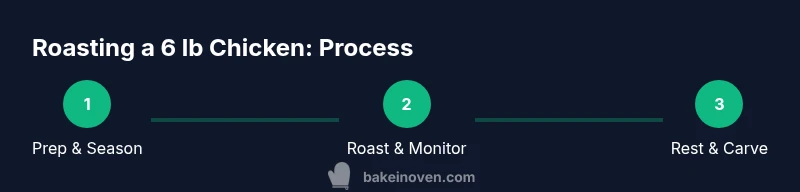
You will learn how to bake a 6 lb chicken to juicy, evenly cooked perfection. Start with thawed, pat-dried chicken, choose a simple dry rub or butter under the skin, and roast at a moderate temperature until a thermometer reads 165°F in the thickest part. Rest before carving for best juiciness.
Choosing and Preparing Your 6 lb Chicken
A well-roasted 6 lb chicken starts with selection, thawing, pat-drying, and careful seasoning. When you bake a large bird, size matters for even cooking, so choose a chicken labeled near 6 pounds, with good weight distribution and tight skin. According to Bake In Oven, the first step toward a juicy roast is ensuring the bird is fully thawed if previously frozen, then patted dry to help seasonings adhere and skin crisp. The next critical move is to bring the bird to room temperature for 30-45 minutes before roasting; this reduces cold spots and promotes even browning. If you plan to brine, lactic or salt brines can help break down proteins and improve moisture, but they require extra planning time. Even without brining, a simple plan of dry rubbing with salt, pepper, and aromatics will yield flavor depth. While you prep, ensure the roasting pan and rack are clean, the oven is preheated to the target temperature, and you have an instant-read thermometer handy. A well-prepped chicken roasts more predictably and forms a craving-worthy crust when roasted properly.
Thawing and Brining Options
Thawing a 6 lb chicken safely is essential. If the bird is frozen, plan for 1-2 days in the refrigerator or use a cold-water thaw with changing water every 30 minutes for faster results. Pat dry thoroughly after thawing to remove surface moisture that can hinder browning. Brining is optional but can improve moisture retention and flavor. A light brine (about 1/4 cup kosher salt per gallon of water) for 6-8 hours can help, followed by a thorough rinse and dry. If you skip brining, a generous salt rub and a drizzle of oil under the skin will help keep the meat juicy. Brining requires time management, so factor in this step if you want extra succulence.
Flavoring the Chicken: Dry Rubs, Butter, and Aromatics
Flavor depth comes from under-the-skin butter or oil, a balanced dry rub, and aromatics. Gently lift the skin and tuck softened butter or olive oil directly against the breast and thighs, then smudge a simple rub of salt, pepper, paprika, garlic powder, and dried herbs across the skin. Add aromatics in the cavity—sliced lemon, garlic cloves, and fresh thyme or rosemary—to perfume the meat as it roasts. If you prefer simplicity, a classic salt-and-pepper approach with a touch of olive oil yields a crisp skin with reliable juiciness. The goal is even seasoning on the exterior and interior without overpowering the chicken’s natural flavor.
Preparing the Pan and Roasting Setup
Roasting with a rack is essential for air circulation and even browning. Place the chicken breast-side up on a rack set inside a sturdy roasting pan. This setup lifts the bird off the pan bottom, allowing hot air to circulate and fat to render away. Preheat the oven to the target range (generally 350-375°F / 177-190°C). If your oven runs hot, adjust the rack height to prevent excessive browning on the skin before the meat is cooked through. A small splash of broth or water in the pan can help keep the drippings from scorching if you choose to baste later. If you don’t have a rack, position the chicken on chopped vegetables to create a makeshift rack and to catch juices for gravy.
Roasting for Even Doneness: Temperature, Time, and Techniques
A 6 lb chicken roasts best at a moderate temperature to balance browning and thorough cooking. Roast at 350-375°F (177-190°C) until the thickest part of the thigh reaches 165°F (74°C). Plan for roughly 1.5 to 2 hours, but rely on a digital thermometer rather than time alone. If the skin browns too quickly, tent loosely with aluminum foil to prevent scorching while the interior finishes cooking. Halfway through, rotate the pan for even browning and keep the pan juices for gravy. Basting is optional; it can add flavor but isn’t strictly necessary if skin is already crisp from the high-heat finish. Resting after roasting is crucial for juices to redistribute.
Checking Doneness and Resting Properly
Doneness is best verified with a thermometer in the thickest part of the thigh, not the wing or the breast. Aim for 165°F (74°C) internal temperature. Let the chicken rest, tented loosely with foil, for 10-15 minutes after removing from the oven. Resting allows juices to redistribute throughout the meat, resulting in a moister slice. During the rest, keep the chicken in a warm place and avoid cutting into it immediately, which can lead to juice loss and a dry roast. Carve after the rest to preserve juiciness and even slices.
Troubleshooting and Common Mistakes
Common issues include undercooking, overcooking, and dry skin. If the thigh is under 160°F after 1.5 hours, continue roasting in 10-15 minute increments, checking temperature frequently. If the skin seems pale or soggy, finish with a higher heat or broil for a couple of minutes until crisp, watching closely to prevent burning. Avoid stuffing the chicken, which can impede even cooking; instead, rely on aromatics inside the cavity to boost flavor. Ensure the chicken is fully thawed and thoroughly dried for crisp skin and even browning.
Variations and Servings: Stuffed vs. Unstuffed
Stuffing a 6 lb chicken can increase cooking time and risk uneven doneness. If choosing stuffed, ensure the center of the stuffing also reaches 165°F. Unstuffed birds roast more predictably and finish faster, making them ideal for weeknight meals. For extra flavor, you can place halved onions, carrots, or lemon slices in the cavity or around the pan, but keep a steady target internal temperature for safety and texture.
Leftovers, Reheating, and Quick Ideas
Leftovers can be stored safely in shallow containers within two hours of cooking. Reheat portions in the oven at 325°F (165°C) until warmed through, or use slices for sandwiches, salads, or soups. Use the carcass to make a simple, quick stock for future meals. Keeping the meat portioned into servings helps you reheat evenly and reduces waste. A well-roasted chicken offers multiple meal opportunities, from broth to casseroles to comforting late-night dishes.
Tools & Materials
- 6 lb whole chicken (thawed)(Pat dry with paper towels before seasoning)
- Instant-read meat thermometer(Probe for breast and thigh; aim for 165°F (74°C))
- Roasting pan with rack(Elevates bird for even air circulation)
- Kitchen twine(Tie legs if needed for even cooking)
- Butter or olive oil(For under the skin and rubs)
- Fresh herbs and aromatics(Optional for cavity aroma)
- Parchment paper or aluminum foil(Tent skin if browning too fast)
- Salt and pepper(Basic seasoning; adjust to taste)
- Measuring cup or small bowl(For brine or marinade liquids)
Steps
Estimated time: 1 hour 45 minutes - 2 hours
- 1
Prep the chicken
Remove giblets and pat the bird dry. Truss the legs if desired to ensure even cooking. Let the chicken rest at room temp for 30-45 minutes to reduce cold spots and promote browning. This step sets the foundation for juicy meat.
Tip: Dry skin leads to crisper skin; don’t skip pat-drying. - 2
Season and aromatize
Rub salt, pepper, and your chosen spices over the skin. Slide softened butter or olive oil under the skin to baste the meat from within as it roasts. Add lemon, garlic, and herbs in the cavity for fragrance.
Tip: Under-the-skin butter improves juiciness without extra fat on the skin. - 3
Prepare the roasting setup
Place a rack in the pan and set the chicken breast-side up. Preheat the oven to 350-375°F (177-190°C). If available, baste with pan juices after the first 30 minutes for added flavor.
Tip: A rack ensures even browning all around the bird. - 4
Roast at moderate heat
Roast at 350-375°F until the thermometer reads 165°F in the thigh. Expect about 1.5-2 hours depending on your oven and chicken shape. Rotate the pan halfway for even browning.
Tip: Use a thermometer rather than relying solely on time. - 5
Tenting and browning adjustments
If the skin browns too quickly, tent loosely with foil and continue roasting. For extra crispness, finish with a brief high-heat blast for 3-5 minutes, watching closely to avoid burning.
Tip: Tenting prevents scorching while finishing doneness. - 6
Check for doneness
Insert thermometer into the thickest part of the thigh without touching bone. Target 165°F (74°C). If under, continue roasting in small increments.
Tip: Check multiple spots to verify even doneness. - 7
Rest before carving
Transfer to a cutting board and rest for 10-15 minutes. Resting redistributes juices, ensuring each slice stays moist.
Tip: Keep the carcass loosely tented with foil during rest. - 8
Carve and serve
Carve the thighs, then the breasts, slicing against the grain for tenderness. Use the pan juices or a prepared gravy for flavor. Serve with roasted vegetables or a simple salad.
Tip: Carving against the grain yields the most tender slices. - 9
Store and repurpose leftovers
Cool leftover meat promptly and store in shallow containers. Reheat gently in the oven or use in soups, sandwiches, or salads for quick meals.
Tip: Label containers with date to track freshness.
Frequently Asked Questions
What temperature should I bake a 6 lb chicken at for best results?
Roast at 350-375°F (177-190°C) for even cooking and golden skin. Use a thermometer to verify 165°F (74°C) in the thickest thigh before resting.
Roast at 350 to 375 degrees and check that the thickest thigh is 165 degrees before resting.
Should I brine a 6 lb chicken before roasting?
Brining is optional but can improve juiciness. If you skip brining, dry rubs with salt help season the meat well and maintain moisture.
Brining is optional; if you skip it, use a good dry rub and salt to keep moisture.
Can I stuff the chicken for roasting?
Stuffing increases cooking time and can make doneness uneven. If you stuff, ensure the center reaches 165°F and plan extra time.
Stuffing is possible but takes longer; make sure the center hits 165 degrees.
How can I tell when the chicken is done without a thermometer?
Look for clear juices running from the joint and meat that is opaque throughout. However, a thermometer is strongly recommended for safety and accuracy.
Juices should run clear and meat should be opaque, but use a thermometer for safety.
What are good accompaniments for a roasted 6 lb chicken?
Roasted vegetables, mashed potatoes, or a simple green salad pair well. Save pan drippings for a quick gravy to enhance flavor.
Pair with roasted veggies and potatoes, and use pan drippings for gravy.
Watch Video
Key Takeaways
- Prepping and drying the chicken yields crisp skin.
- Thermometer guidance ensures safe, juicy meat.
- Resting is essential for moisture retention.
- Even browning benefits from a rack and rotate.
- Plan for leftovers with simple reheating options.