Bake Eggs in the Oven: A Simple Step-by-Step Guide
Learn how to bake eggs in the oven for a hands-off, reliable breakfast. This guide covers temps, timing, variations, meal-prep ideas, and safety tips for perfect oven-baked eggs.


You can bake eggs in the oven to create easy, hands-off breakfasts or meal prep. Preheat to 350°F (175°C), grease a muffin tin or ramekins, crack eggs into each cavity, season lightly, and bake until the whites set and the yolks reach your desired doneness. This method yields tender whites and creamy yolks with minimal supervision.
Why bake eggs in the oven? A practical method for consistent results
Baking eggs in the oven is a reliable technique for breakfast, meal prep, and busy weekend mornings. This method minimizes hands-on time while delivering uniform texture across the batch. Because heat surrounds the dish, whites cook evenly and yolks stay tender, avoiding the patchy results you can get from pan-frying. For home bakers using Bake In Oven guidance, oven-baked eggs are especially useful when you need to serve several people at once or want to create a base that adapts to toppings later in the day. In this guide, you’ll learn how to choose the right dish, what temperatures to use, and how to customize flavors while keeping the eggs finish-perfect.
Essential techniques for oven-baked eggs
Start with well-chosen ingredients and the right dish. For even cooking, select small ramekins or a muffin tin, lined or greased well. Crack one egg per cavity, or two if the cavities are larger; for richer flavor, swirl a tablespoon of cream into each egg or add a pinch of salt beforehand. Use parchment paper or silicone liners to prevent sticking, and keep your oven preheated. If you’re scaling up, arrange the dishes on a rimmed baking sheet to ensure stable placement and easy transport. The key is consistency: same dish type, same portion size, and identical oven temperature across all cavities. Bake until whites are set and yolks reach your preferred level of doneness, typically longer for firmer yolks and shorter for runny centers.
Temperature and timing guidelines
Begin with a gentle, even heat to preserve delicate textures. A common starting point is 350°F (175°C) for 12–15 minutes. If you prefer firmer yolks and fully set whites, extend to 15–18 minutes, watching closely as oven temperatures vary. For a lighter, more custardy yolk, aim for 9–12 minutes at 375°F (190°C). If you’re cooking for a crowd, begin checking at the lower end of the range and adjust in small increments. The eggs are done when the whites are opaque and the yolk reaches the desired wobble. Remember that residual heat will finish cooking briefly after removal, so plan to pull them out just before desired doneness.
Equipment and setup: choosing the right dish
Ramekins sized 4–6 ounces are ideal for even cooking and portion control. A muffin tin with cups lined or greased can also work for a crowd. Choose glass or ceramic dishes with thick walls to minimize hot spots. Avoid metal pans that heat unevenly or contribute a metallic taste. Line sheet trays with parchment for easy transfer and cleanup, and position dishes center rack to ensure equal heat exposure. Prioritize dishes that fit your oven height and can tolerate the chosen temperature without warping. Finally, keep a small timer handy so you can track each batch precisely.
Variations and add-ins: cheese, vegetables, and herbs
You can tailor baked eggs to your taste or dietary needs. Common add-ins include grated cheese (cheddar, feta, or parmesan), minced herbs (chives, parsley), and finely chopped vegetables (bell peppers, spinach, mushrooms). Light dairy like cream or milk can help set the whites, but skip if you want a lower-fat result. For a protein boost, add a tiny bit of cooked bacon or ham. If you’re saving time, pre-chop ingredients the night before and store in an airtight container so you can assemble the cups quickly in the morning.
Step-by-step recipe: classic baked eggs in oven
Classic baked eggs in oven (basic version)
- Preheat to 350°F (175°C) and lightly grease 4–6 small ramekins. Place them on a rimmed baking sheet for stability.
- Crack one egg into each ramekin. Add a pinch of salt and pepper; if desired, add 1 teaspoon of cream per cup.
- Bake for 12–15 minutes, checking at 12 minutes for desired yolk consistency. Remove when whites are fully set and yolk still jiggles slightly.
- Let rest 1–2 minutes before serving. Top with fresh herbs or a drizzle of olive oil.
Tip: Use a timer and rotate the sheet halfway through to promote even cooking.
Troubleshooting common issues
If whites are undercooked, ensure your oven is preheated and your ramekins are well-greased. Bake a few minutes longer, watching closely. If yolks are too runny, shorten bake time or increase heat slightly, but avoid overshooting. Eggs sticking? Ensure you used parchment or silicone liners and ample grease. Uneven cooking can be fixed by rotating the pan halfway through. Overcooked eggs lose creaminess—pull them earlier and cover to retain moisture.
Make-ahead and meal-prep ideas
Bake a larger batch of eggs, then refrigerate in an airtight container for up to 3 days. Reheat gently in a 325°F (165°C) oven for 5–8 minutes, or microwave in short 15–20 second bursts if you’re in a hurry. Pair with roasted vegetables, toast, or a simple salad for quick meals. Keep a rotation of toppings ready to refresh leftovers throughout the week.
Serving ideas and accompaniments
Serve baked eggs with toast soldiers, crusty bread, or a side of sautéed greens. Add a dollop of yogurt or a light hollandaise for extra richness. Fresh chives, cracked pepper, and a drizzle of olive oil elevate simple eggs into a satisfying dish. For meal-prep, portion into individual cups with toppings on the side to customize at serving time.
Safety, storage, and clean-up
Always use oven-safe dishes and allow hot dishes to cool on a rack before washing. Store leftovers in a sealed container in the refrigerator and consume within 3 days. Let any excess fat cool before disposing of oils; wipe down pans and racks to prevent residue buildup. If you notice any cracking in ramekins, replace them to avoid cracks cracking under heat.
Final tips and confidence booster
Practice makes perfect: adjust time by oven performance, dish size, and altitude. Start with the basic 12–15 minute window at 350°F and tailor from there. Bake eggs in the oven can become your go-to method for fast, consistent breakfasts or weekend brunches. With the right prep and a few tasty toppings, you’ll consistently achieve great results.
Tools & Materials
- Eggs, large(Fresh eggs recommended for best texture)
- Oven(Preheated to chosen temperature)
- Oven-safe dishes (4–6 oz ramekins or muffin tin)(Nonstick or greased)
- Nonstick spray or butter(Light coating for easy release)
- Parchment paper or silicone liners(Optional for sticking prevention)
- Cream or milk (optional)(Adds richness per cup)
- Salt and pepper(Seasoning to taste)
- Cheese, herbs, or vegetables (optional)(For variations)
- Measuring spoons(For precise dairy and seasonings)
- Kitchen timer(Track bake time accurately)
- Rimmed baking sheet(Stabilizes ramekins on oven rack)
Steps
Estimated time: Total time: 25-40 minutes depending on batch size and yolk preferences
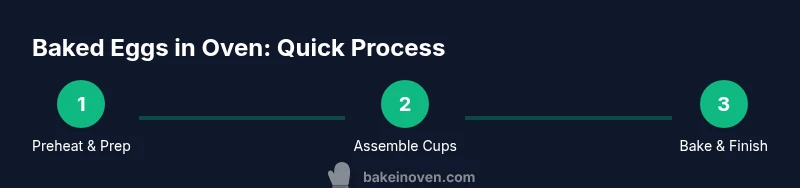
- 1
Preheat and prep equipment
Preheat the oven to 350°F (175°C). Gather ramekins (4–6 oz), a rimmed baking sheet, parchment or liners, and a timer. Lightly grease the dishes to prevent sticking.
Tip: Preheating ensures even cooking from the first minute. - 2
Grease and arrange
Line or grease each ramekin to ensure eggs release easily after baking. Place ramekins on a rimmed baking sheet for stable transport.
Tip: Even greasing reduces risk of sticking and tearing. - 3
Crack and season
Crack one egg into each cavity. Add a pinch of salt and pepper; for richness, add a teaspoon of cream per cup if desired.
Tip: Consistency is key—keep each cup the same size for even results. - 4
Add optional toppings
Sprinkle cheese, herbs, or pre-cooked vegetables into each cup as desired. These add flavor without overshadowing the egg.
Tip: Keep toppings light to avoid overflowing cups. - 5
Bake and monitor
Bake for 12–15 minutes and start checking at minute 12. Whites should be set, yolks at your preferred level of doneness.
Tip: Use a timer and check doneness with a gentle shake. - 6
Rest and serve
Remove from oven and let rest 1–2 minutes. Serve warm with toast or greens.
Tip: A short rest helps flavors settle and makes removal easier. - 7
Batch variations
If cooking many, rotate trays halfway through to ensure even heat exposure.
Tip: Batch planning reduces oven-door openings and temperature fluctuations. - 8
Store or reheat
Store leftovers in a sealed container in the fridge for up to 3 days. Reheat gently to avoid overcooking.
Tip: Reheat in 325°F (165°C) oven for best texture. - 9
Cleanup
Let dishes cool, then wash with warm soapy water or place in dishwasher. Wipe rims and sheet pan to remove oils.
Tip: Soak stubborn residue briefly to make cleaning easier.
Frequently Asked Questions
Can I bake eggs in the oven without dairy?
Yes. You can omit dairy. The eggs will still set, though adding a splash of cream can enrich the texture for those who want a creamier finish.
Yes, you can bake without dairy. If you want richness, consider a splash of cream, but it isn't required.
How many eggs can I bake at once?
The number depends on your dish size. Use 4–6 ounce ramekins for individual portions; a muffin tin can work for crowd cooking. Ensure even spacing and heat exposure for uniform results.
It depends on your dish size; use evenly spaced cups for consistent results.
What is the ideal yolk consistency for baked eggs?
For soft, momentarily runny yolks, bake 9–12 minutes at 375°F. For firmer yolks, aim for 12–15 minutes at 350°F or longer as needed.
Aim for 9–12 minutes for soft yolks, longer for firmer ones.
Can baked eggs be stored and reheated?
Yes. Refrigerate in airtight containers for up to 3 days. Reheat gently in a 325°F oven for best texture, or briefly in the microwave if in a hurry.
Yes, they refrigerate well and reheat nicely in a low-temp oven.
Can I bake eggs in a toaster oven?
A toaster oven can work for small batches if it reaches and maintains 350°F. Keep an eye on time as toaster ovens heat differently from full-size ovens.
Yes, for small batches, but watch the time since toaster ovens vary.
What temperature is best for large eggs?
Large eggs bake well at 350°F with a 12–15 minute window for standard doneness. Increase time slightly if your oven runs cool.
350°F works well for large eggs; start at 12 minutes and adjust as needed.
Watch Video
Key Takeaways
- Preheat and prep all cups before baking
- Keep egg portions uniform for even doneness
- Experiment with toppings to customize flavor
- Batch-bake for quick weekmeal prep
- Rest briefly after baking to finish texture