Bake Enchiladas to the Perfect Temp: A Step-by-Step Guide
Learn the ideal oven temperature and timing to bake enchiladas to gooey, flavorful perfection. This step-by-step guide from Bake In Oven covers temps, doneness, and practical tips for home bakers.


By following this guide, you’ll bake enchiladas to the ideal doneness: tortillas tender, cheese melted, and sauce bubbling throughout. Key requirements include tortillas (corn or flour), a flavorful enchilada sauce, your choice of fillings, a baking dish, and an oven preheated to the target temperature. This quick-start approach aligns with Bake In Oven guidance for reliably delicious results.
Why Temperature Control Matters
Temperature control is the backbone of successful enchiladas. When you bake at the right heat, tortillas stay pliable rather than turning into brittle edges, fillings reach a safe, juicy temperature, and cheese melts into a silky veil over your sauce. Baking too hot can scorch the edges while leaving the center cold, which leaves you with uneven texture and less cohesive flavors. Conversely, too-low heat extends bake time and risks a crusty top without fully warmed filling. In this guide from Bake In Oven, we emphasize steady, predictable heat as the most reliable path to consistent, restaurant-worthy enchiladas at home. You will notice a noticeable difference in moisture, texture, and sliceability once you lock in the proper temperature range.
Temperature Guidelines and Conversions
Enchiladas are most often baked in a moderate oven. The standard target range is 350–375°F (175–190°C). If you’re using a convection oven, reduce the temperature by about 25°F (roughly 14°C) to prevent over-browning while still delivering even heat. For recipe flexibility, many fillings—such as chicken, beef, or vegetarian mixes—require a similar bake time when covered, then a short uncovered finish to set the cheese. In Bake In Oven’s analysis, home cooks who adjust for convection tend to achieve better color without sacrificing moisture. Always confirm your oven’s actual temperature with an oven thermometer for accuracy, since home ovens vary by model and age.
Testing for Doneness and Moisture
Doneness isn’t just about a timer; it’s about interior heat and texture. When the enchiladas are hot all the way through and the cheese is fully melted, you’re typically in the safe zone. A practical cue is to insert a thermometer into the center of a filled enchilada—aim for at least 165°F (74°C) in the filling to ensure food-safety standards are met. If you’re relying on sight, bubbling sauce around the edges and a lightly browned cheese top are strong indicators. If your tortillas still feel a bit stiff, cover and bake a few more minutes, then check again.
Filling, Sauce, and Layering for Even Bake
The way you distribute sauce and fillings directly impacts the final texture. Dip each tortilla briefly in warm sauce to moisten without becoming soggy, then add a balanced amount of filling. Roll tightly and place seam-side down in a shallow baking dish. Layer sauce over the top so every enchilada has a glossy, wet surface, then shower with cheese. Avoid overloading any single tortilla, which can cause cracking or uneven heating. A thin layer of sauce on the bottom of the pan helps prevent sticking and promotes even cooking.
Assembly Techniques for Even Baking
Choose a pan that fits all enchiladas in a single layer or two tight ranks with even spacing. When you arrange rolls, place the seam-side down to prevent unrolling during baking. If you need to reuse pan space, set the rolls close but not touching. A quick tip: keep extra sauce handy to brush over the tops if you notice dry edges developing. This helps preserve moisture and ensures consistent texture across the dish.
Convection vs Conventional Baking and Altitude Effects
Convection ovens circulate air for faster, more uniform heating. If you bake with a fan, reduce the temperature by 25°F and check early for doneness. Altitude can alter moisture evaporation and pastry integrity; in higher elevations, you may observe slightly drier fillings or faster crust browning, so consider a light foil cover to protect against over-browning and a few extra minutes if needed. Bake In Oven recommends starting with standard temps and adjusting gradually based on your oven’s performance.
Troubleshooting Common Issues and Fixes
If tortillas are soggy, ensure you didn’t oversauce or oversaturate the pan with liquid. If edges burn, lower temperature slightly or cover sooner. For overly dry fillings, consider a touch more sauce and a shorter bake window. If cheese doesn’t melt evenly, tent with foil briefly or increase bake time by a few minutes, then remove foil to finish browning. Keeping the dish loosely covered during the initial bake helps trap steam and avoid dry results.
Resting and Serving: The Final Step
Let baked enchiladas rest for 5–10 minutes after removing from the oven. Resting allows the fillings to settle, making slices neater and more cohesive. Garnish with chopped cilantro, a dollop of sour cream, and a squeeze of lime for brightness. Serve with a fresh side like Mexican rice or a simple bean salad to balance the richness of the cheese and sauce.
Tools & Materials
- Corn or flour tortillas(6–12, depending on pan size)
- Enchilada sauce(2 cups minimum or use homemade)
- Filling mixture(Cooked chicken, beef, beans, or cheese-based filling)
- Shredded cheese(Cheddar, Monterey Jack, or a blend)
- Baking dish(9x13 inch recommended)
- Aluminum foil(To cover during bake)
- Oven thermometer(Verify oven temperature)
- Measuring cups and spoons(For portions and sauce)
- Mixing bowls and spoon(For filling prep and sauce mixing)
- Optional toppings(Sour cream, cilantro, avocado, lime)
Steps
Estimated time: 40-60 minutes
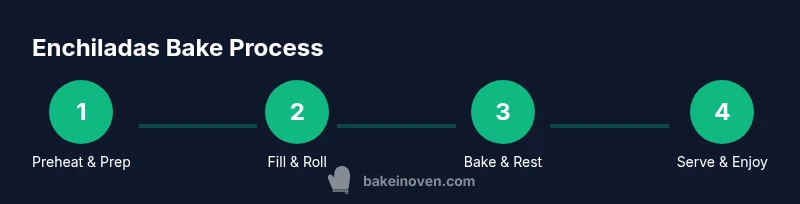
- 1
Preheat and prep ingredients
Preheat your oven to 350–375°F (175–190°C) and gather all ingredients. Measure sauces, shred cheese, and portion fillings. This keeps assembly smooth and prevents mid-recipe interruptions.
Tip: Preheating first reduces waiting time and ensures consistent heat once you bake. - 2
Warm tortillas to prevent cracking
Warm tortillas briefly to make them pliable. Use a quick warm-up on a dry skillet or wrap in a damp towel and microwave 20–30 seconds. This minimizes tearing when rolling.
Tip: Avoid over-softening; just flexible enough to roll without cracking. - 3
Assemble enchiladas snugly
Dip each tortilla in a small amount of warm sauce, add filling, and roll tightly. Place seam-side down in the pan to prevent unrolling during baking.
Tip: Keep fillings balanced to prevent bursting or leaking sauce. - 4
Layer sauce and cheese
Spread a light layer of sauce on the bottom of the dish, lay rolled tortillas in a single layer, cover with sauce, and sprinkle a generous amount of cheese on top.
Tip: Reserve a portion of cheese for the final topping after baking. - 5
Bake covered to heat through
Cover tightly with foil and bake for 20–25 minutes until hot. Remove the foil for 5–10 minutes to melt and lightly brown the cheese.
Tip: If your sauce thickens, add a splash of water or stock to loosen before uncovering. - 6
Finish and rest
Let the enchiladas rest 5–10 minutes after removing from the oven. This helps them set for clean slicing and even flavors.
Tip: Rest time improves slicing and presentation on the plate. - 7
Serve with toppings
Top with cilantro, sour cream, avocado, or a squeeze of lime. Pair with rice or beans for a complete meal.
Tip: Fresh toppings brighten the dish and balance richness.
Frequently Asked Questions
What is the best oven temperature to bake enchiladas?
Most recipes bake at 350-375°F (175-190°C). If using convection, reduce by about 25°F. Adjust based on your oven and filling.
Bake at 350 to 375 degrees Fahrenheit, convection fans optional with a slight temperature reduction.
Should enchiladas be baked covered or uncovered?
Cover during the majority of bake to trap moisture, then uncover toward the end to brown the cheese.
Cover them to keep moisture, uncover to brown the cheese.
Can I freeze unbaked enchiladas?
Yes. Assemble and freeze; bake from frozen, adding extra time as needed.
Yes, you can freeze them raw and bake later, just add time.
What internal temperature should fillings reach?
Aim for an internal filling temperature of 165°F (74°C) to ensure safety.
165 degrees Fahrenheit is the safe target.
Which tortillas work best for enchiladas?
Corn tortillas are traditional and sturdy; flour tortillas can work but may be more prone to sogginess if not moistened.
Corn tortillas are the classic choice for enchiladas.
How do I prevent soggy enchiladas?
Don’t oversauce or soak tortillas; ensure proper drainage and bake with a light sauce layer underneath.
Keep the tortillas from sitting in liquid and bake with a thin sauce layer.
Watch Video
Key Takeaways
- Preheat and prep all ingredients before assembly
- Roll tightly and place seam-down for even baking
- Cover during most of bake to maintain moisture
- Check internal filling reaches 165°F (74°C) for safety
- Rest briefly before slicing for clean portions