Bake Turkey in Oven: Juicy, Even Roast Guide
Learn to bake turkey in the oven with a practical, kitchen-tested method. From thawing and brining to roasting and resting, get a juicy, evenly cooked centerpiece with step-by-step guidance from Bake In Oven.


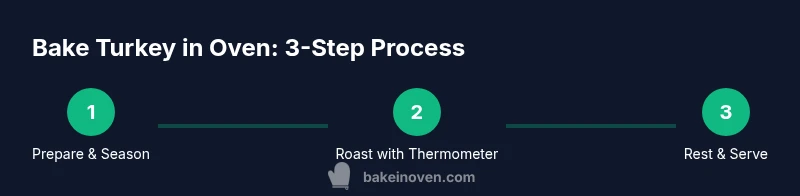
By following this guide, you will bake turkey in oven with reliable results. Start with thawing and patting dry, then season generously. Roast at a steady temperature while monitoring with a thermometer, and let the meat rest before slicing. The approach focuses on moisture, browning, and safe internal temperatures for a juicy finish.
Why Oven-Baked Turkey Wins
When you bake turkey in oven, you gain predictable browning, moist white meat, and a crisp skin that’s hard to replicate with other methods. With precise temperature control and the right resting period, every bite stays juicy and flavorful. According to Bake In Oven, the key is balancing heat with time while using a reliable thermometer to confirm doneness. This approach scales from small birds to large ones, making it a dependable centerpiece for any meal. Think of oven roasting as a precision task: you’re coaxing moisture to stay inside while the exterior browns evenly. A well-executed roast also yields flavorful pan juices ideal for gravy, which elevates the entire meal. For holiday feasts or everyday dinners, this method offers consistent results you can repeat with confidence.
Planning: Thawing, Brining, and Seasoning
Successful oven roasting begins long before the bird goes into the oven. Start with a fully thawed turkey, then decide whether to brine or dry-brine for moisture and flavor. If you choose to brine, plan enough time for the salt solution to penetrate the meat; a dry brine can be simpler and still deliver juicy results. Season generously on the skin and inside the cavity with salt, pepper, and aromatics like garlic, lemon, and herbs. If you’re short on time, a thorough pat-down with paper towels and a light coat of oil or butter still yields crisp skin and enhanced aroma. Bake In Oven recommends thinking through stuffing decisions, too—a lightly seasoned mix can add flavor without overwhelming the bird.
Tools, Equipment, and Ingredients
Preparing properly starts with the right gear. A sturdy roasting pan with a rack ensures airflow and even browning. An instant-read thermometer laid into the thickest part of the thigh and breast helps you avoid undercook or overcook scenarios. A sharp carving knife, kitchen twine for trussing, and oven mitts keep handling safe. Have aluminum foil on hand to tent the bird if the skin browns too quickly. For ingredients, gather kosher salt, black pepper, olive oil or melted butter, garlic, fresh herbs (thyme, rosemary), lemon, and optional aromatics like onions or carrots. Pat the turkey dry before applying oil or butter for maximum skin crispness.
The Roast: Temperature, Time, and Positioning
Preheat the oven to a steady temperature suitable for roasting. Place the turkey breast-side up on the rack so air can circulate around the bird. Insert a thermometer into the thickest part of the thigh (avoiding bone) and monitor as the roast progresses. If the breast browns too fast, tent the area with foil to prevent scorching while the rest finishes cooking. Rotate the pan halfway through if your oven distributes heat unevenly. Rely on the thermometer rather than exact clock times to determine doneness; you want safe internal temperatures that also yield tender, juicy meat. When the thigh meat is at the target range, the breast should be near the recommended doneness as well.
Safety, Temperature, and Resting
Safety is the cornerstone of a good roast. Keep the oven at a stable temperature, and verify the internal temperature reaches the safe zone for both white and dark meat. Remove the turkey from the oven and rest it, tented loosely with foil, to allow juices to redistribute. Resting time improves slicing ease and juiciness; cut into the bird too soon and you’ll lose moisture. After resting, pour off pan drippings and deglaze the pan to create a flavorful gravy. Avoid stuffing the bird if you want faster, more even cooking, or ensure any stuffing reaches safe temperatures if used.
Finishing Touches: Juices, Pan Gravy, and Slicing
Carve the turkey against the grain in slices of thick, even pieces. Use the resting juices and pan drippings to build a simple pan gravy—this step ties the whole meal together. A light brush of pan juices on the carved surface will improve the look and flavor. Let the slices rest briefly on a warmed platter to preserve moisture. Serve with roasted vegetables and a bright herb garnish to balance the rich meat. Following these steps helps ensure every bite is both savory and satisfying.
Tools & Materials
- Roasting pan with rack(Heavy-duty pan with V-rack recommended for even heat and airflow)
- Meat thermometer (instant-read)(Probe thermometer to monitor breast and thigh temps)
- Carving knife(Sharp stainless steel for clean slices)
- Kitchen twine(For trussing the turkey if desired)
- Basting brush(Optional for brushing with pan juices)
- Aluminum foil(Tent the bird if browning too fast)
- Oven mitts(Heat-resistant for safe handling)
- Paper towels(Pat dry and clean as needed)
- Kosher salt, black pepper(Basic seasoning base)
- Olive oil or melted butter(Helps crisp skin and flavor)
Steps
Estimated time: Estimated total time: 3-5 hours
- 1
Choose and thaw the turkey
Select a turkey size that fits your pan and guest count. Ensure it is fully thawed before roasting; partial freezing will prevent even cooking. Remove giblets and neck from the cavity before drying.
Tip: Plan thawing time in advance and keep the bird refrigerated until ready to roast. - 2
Pat dry and season
Pat the turkey dry with paper towels to promote browning. Brush or rub with olive oil or butter, then season inside and out with salt, pepper, and aromatics. Add herbs for fragrance and layering of flavor.
Tip: Dry skin is key to crispiness; avoid wet surfaces before roasting. - 3
Preheat and prep the pan
Preheat the oven to a steady roasting temperature. Place the rack in the pan and position the turkey breast-side up to maximize browning and even heat distribution.
Tip: If your oven runs hot on top, consider tenting the breast late in cooking to prevent over-browning. - 4
Roast and monitor with thermometer
Roast until the thermometer shows safe temperatures in the thickest parts of thigh and breast. If browning too fast, loosely tent with foil and rotate the pan for even cooking.
Tip: Rely on the thermometer, not clock-watching, for doneness. - 5
Rest the turkey
Remove from oven and rest the turkey covered loosely with foil for 20–40 minutes. Resting allows juices to redistribute for easier carving and juicier meat.
Tip: Do not skip resting; it’s essential for moisture retention. - 6
Carve and make gravy
Carve the turkey against the grain and collect pan drippings for gravy. Deglaze the pan with a little stock or wine, simmer briefly, then finish with butter for a glossy finish.
Tip: Warm gravy gently and adjust seasoning to taste.
Frequently Asked Questions
What is the best oven temperature for baking a turkey?
Choose a steady roasting temperature and adjust if the skin browns too quickly. Use a meat thermometer to reach safe doneness, typically within the recommended ranges for breast and thigh.
Use a steady roasting temperature and rely on a thermometer to reach safe doneness.
Should I brine the turkey before baking?
Brining can add moisture and flavor; dry brining is a simpler alternative that still yields juicy meat without extra water.
Brining adds moisture; dry brining is a simpler option.
Do I need to baste the turkey while roasting?
Basting is optional and often not necessary if you use an adequate fat and moisture plan. If you choose to baste, do it sparingly to avoid cooling the oven.
Basting is optional; you can skip it if you keep the skin well-oiled.
How long does it take to bake a turkey?
Roasting time varies with size. Rely on internal temperature rather than time alone to ensure safety and juiciness.
Time depends on size; rely on a thermometer to determine doneness.
Should I cover the breast with foil during roasting?
Tent the breast with foil if it browns too quickly, removing the foil later to finish browning evenly.
Yes, tent with foil if the breast browns too fast.
What should I do after removing the turkey from the oven?
Rest the turkey to allow juices to redistribute, then carve and serve. Use pan juices to make gravy for best flavor.
Let it rest, then carve and make gravy from the pan juices.
Watch Video
Key Takeaways
- Choose the right size and thaw fully before roasting.
- Dry skin and generous seasoning improve browning and flavor.
- Rely on a thermometer rather than time alone to determine doneness.
- Let the turkey rest before carving for tenderness.
- Finish with pan gravy to enhance the meal.