Bake Without a Recipe: A Practical How-To Guide
Learn how to bake without a recipe using reliable ratios, flavor intuition, and hands-on practice. Build confidence with a practical, kitchen-tested framework for improvisational baking.


You can bake without a recipe by using a simple, repeatable framework: start with reliable ratios, choose a base (batter or dough), select flavors, and bake at the right temperature. Track results, adjust moisture and sweetness, and build intuition over time. This guide walks you through steps, tools, and safety tips to bake with confidence.
Why bake without a recipe
In the kitchen, improvisation is a skill you can develop. Bake without a recipe is less about winging it and more about applying reliable culinary physics to every bake. According to Bake In Oven, most successful improvisers rely on a small set of fixed ratios, a flexible base, and careful observation of texture, color, and aroma. This approach is especially useful for home bakers who want to reduce reliance on precise measurements while still achieving consistent results. In 2026, Bake In Oven analysis shows that bakers who develop a personal code of ratios gain confidence faster and adapt to available ingredients with less frustration. The goal is to create something delicious, not a perfect replica of a cookbook entry. Start by identifying the base: is your project a quick bread, a loaf, a cake, or a cookie? Then decide on flavors, then estimate moisture and sweetness before you bake.
The flexible baking framework
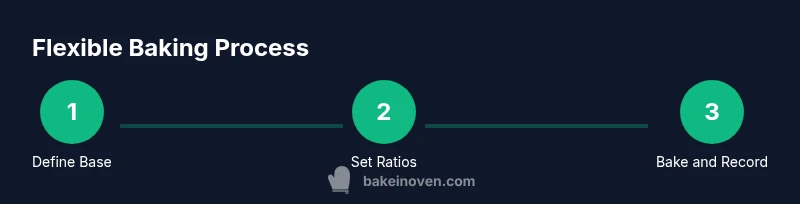
Think of baking as three layers: base, balance, and bake. The base is the structure (flour, liquid, fat, and leavening) with core ratios that you can adjust. Balance is flavor, sweetness, salt, and aroma; bake is heat, time, and texture outcomes. When you bake without a recipe, you rely on these constants rather than exact numbers. Use a scale and measuring cups to capture results for future reference. Always document your adjustments, because memory fades and results vary with humidity and oven performance. Over time, you’ll recognize when something is off: if the batter seems too thick, add a splash of liquid; if it’s pale or dry, extend a few minutes or add moisture through fat or egg.
Core ratios for common bases
Base types: quick bread and dough, cake, muffin, cookies. The goal is to understand how the same framework applies across formats. In practice, think of a base as a scaffold: you want enough structure to hold shape, but enough moisture and tenderness to be enjoyable. For cookies, lean toward a drier batter with more flour relative to liquids; for cakes, favor a wetter batter with balanced sugar and fat; for quick breads and muffins, aim for a middle ground where rise and crumb are predictable. Use your scale to translate these ideas into rough proportions, then bake small tester batches to refine.
Flavor balance and substitutions
Flavor is the compass of improv baking. Start with salt to heighten sweetness and richness, adjust sugar to taste, and use extracts or zests to shape aroma. When substituting ingredients, consider texture and moisture first: fruit purées add moisture but can light the crumb; yogurt or sour cream adds tang and tenderness; oil or melted butter changes crumb and mouthfeel. Always document substitutions so you can replicate successes. If you chase a specific texture, tweak the fat and liquid in small increments and let the batter rest briefly to hydrate flour and develop gluten or starch networks as needed.
Mise en place and workspace setup for improv baking
A clean, organized workspace makes improv baking less stressful. Pre-measure dry ingredients and have liquids at room temperature when possible. Line pans with parchment or silicone mats, and preheat the oven to a reliable temperature with an oven thermometer in the rack center. Keep bowls and spatulas close at hand, plus a notebook or digital device to log notes from each bake. Good mise en place reduces errors and gives you immediate feedback about what to adjust in the next batch.
Troubleshooting on the fly
If a bake looks dense, give it a bit more moisture or extend the bake time in small increments, checking every few minutes. If it bakes too quickly on the outside and raw in the center, reduce oven temperature or rotate pans. A pale or flat product often signals insufficient leavening or too much sugar relative to structure; try a pinch more leavening and a touch less sugar next round. Humidity impacts moisture absorption, so adapt by adding a splash of liquid or a touch more fat to balance the batter. Logging results helps you spot patterns over time.
Practice paths and tiny experiments
Begin with tiny experiments: bake small tester batches using 1 or 2 slight changes per attempt. Try a single variable change per batch, such as adding vanilla or substituting a portion of fat with applesauce for moisture without losing tenderness. Keep a simple log: date, base, adjustments, bake time, texture notes, and final verdict. Small, frequent experiments accelerate learning and prevent large, discouraging failures. Over several weeks, you’ll build intuition for when to push boundaries and when to pull back.
Safety, storage, and shelf life
Always handle eggs and dairy with clean hands and proper temperatures. Cool baked goods on racks to prevent sogginess, then store in airtight containers to maintain moisture balance. Label experiments with dates and notes for future reference. When in doubt about freshness, rely on smell and texture rather than appearance alone. With proper handling, improv bakes can be stored safely and enjoyed over several days, or frozen for longer-term use.
Tools & Materials
- digital kitchen scale(For accurate ratios across bases)
- measuring cups and spoons(Includes 1 cup, 1/2 cup, 1 tsp, 1/2 tsp)
- mixing bowls(Multiple sizes for dry and wet ingredients)
- whisk and silicone spatula(For mixing and folding without overworking batter)
- oven thermometer(To verify oven accuracy beyond dial settings)
- baking pans (cake pan, loaf pan, sheet pan)(Choose sizes based on your project needs)
- parchment paper or silicone baking mat(Prevents sticking and aids cleanup)
- notebook or digital device for notes(Log results and adjustments for future bakes)
- basic pantry ingredients (flour, sugar, eggs, fats, leaveners, flavorings)(Stock your pantry for quick improvisation)
Steps
Estimated time: 60-90 minutes
- 1
Define your base
Choose a project type you want to start with, such as a quick bread, cake, muffin, or cookies. Assess the texture you want, then identify the core structure that will support that texture. This step sets the direction for the rest of your bake and reduces guesswork in later stages.
Tip: Start with a trusted base you already know well and use it as your anchor for variations. - 2
Set provisional ratios
Establish broad relationships between dry and wet components, fat and sugar, and leavening. Do not chase exact numbers; aim for a balance that gives you the crumb and rise you expect. Document these provisional ratios in your log.
Tip: Write down the rough ratios in terms of “more dry than liquid” or “equal parts fat and sugar” to guide future batches. - 3
Choose flavors and add-ins
Decide on your flavor profile and add-ins such as vanilla, citrus zest, spices, or fruit. Add small amounts at a time; you can always add more, but you can’t take moisture back after it’s mixed.
Tip: Add flavors in small increments and note the impact on aroma and sweetness. - 4
Prep your bake and pan
Preheat the oven with a reliable temperature, prepare the pan with parchment or a mat, and measure batter portions if possible. Prepping the workspace reduces interruptions and helps you maintain control over moisture and crumb.
Tip: Use a light touch when portioning batter to avoid compressing air pockets that affect rise. - 5
Bake and monitor
Place batter in the prepared pan and bake, checking texture and color at regular intervals. Use visual cues (color, crack formation) and, if available, a toothpick test to gauge doneness without overbaking.
Tip: Rotate pans halfway through to ensure even heat distribution. - 6
Evaluate and refine
Cool briefly, slice, and taste. Note what worked and what didn’t, then adjust your base, ratios, or flavors for the next batch. Consistent note-taking accelerates improvement.
Tip: Keep a simple log with a date, base type, adjustments, and outcome to track progress.
Frequently Asked Questions
What does bake without a recipe mean in practice?
It means building a reliable framework for baking where you rely on core ratios, a chosen base, and flavor decisions rather than following a fixed recipe. You bake by understanding how ingredients interact and adjusting on the fly based on texture and aroma.
Bake by understanding ratios and texture, not by copying a recipe exactly.
Which base ratios are essential for improvisation?
There isn’t a single universal ratio. Focus on keeping a balanced relationship between dry and wet ingredients, fat and liquid, and a leavener that supports the crumb without causing toughness. Record any changes so you can repeat successes.
Focus on balance between dry and wet, fat and liquid, and a leavener that supports the crumb.
Can I improvise with gluten-free or alternative flours?
Yes, but gluten-free flours behave differently. Expect different moisture needs and binding. Start with small substitutions and document outcomes; you may need extra binding agents or more fat to achieve tenderness.
Gluten-free baking needs careful moisture and binding; test in small batches.
How do I know when something is baked properly without a recipe?
Rely on visual cues and texture: golden crust, springy surface, and a clean toothpick test where a few dry crumbs remain is often ideal. Let baked goods rest briefly to finish setting.
Look for golden color and springy feel; use a toothpick test as a guide.
What safety practices should I follow when improvising?
Keep raw ingredients separate, use clean utensils, and handle eggs and dairy safely. If you are unsure about doneness, use a thermometer for internal temperature and discard any suspicious odor or texture.
Practice safe handling and trust your senses to judge doneness.
Where can I practice improv baking regularly?
Begin with small, simple projects at home, then gradually expand to larger bakes. Keep a dedicated notebook of experiments and set a regular practice schedule to build confidence.
Start with easy projects at home and log every bake.
Watch Video
Key Takeaways
- Master a flexible base before chasing exact recipes
- Document ratios and results for quick improvements
- Adjust flavors and moisture in small, trackable steps
- Practice with tiny experiments to build intuition