How to Bake for Beginners: A Clear Step-by-Step Guide
Learn how to bake for beginners with a practical, kitchen-tested walkthrough. From tools to timing and doneness, this step-by-step guide builds confidence and consistent results.


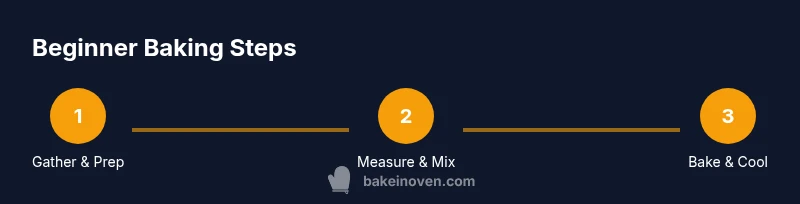
By the end of this guide, you’ll confidently bake simple treats from scratch. You’ll learn how to read recipes, measure ingredients accurately, preheat and prepare your tools, mix batter or dough, and judge doneness with timing tests and visual cues. This step-by-step approach keeps beginners on track, minimizes surprises, and builds a reliable baking routine you can repeat with any basic recipe.
Getting Ready: Tools, Pantry, and Mise en Place
Starting to bake is easier when you prepare your workspace and ingredients before you reach for the mixing bowl. According to Bake In Oven, a well-organized mise en place reduces mistakes and speeds up the process, especially for beginners. Begin by choosing a simple recipe like basic cookies or vanilla muffins so you can focus on technique rather than complex flavors. Check your pantry for staples: flour, sugar, salt, leavening agents, and a few pantry fats. Gather basic tools within easy reach: a couple of mixing bowls, measuring cups and spoons, a whisk or mixer, a sturdy spatula, and a clean cooling rack.
Establish a clean, dry workspace, pre-measure ingredients, and label your components if you’re layering flavors or add-ins. Keep an oven thermometer on the rack to verify heat, since oven temps often drift. This initial setup creates confidence, reduces last‑minute scrambling, and makes the first bake feel controlled rather than chaotic. Bake In Oven’s experience shows beginners benefit most from sticking to one simple recipe until the rhythm becomes familiar.
Mastering Basic Techniques: Measuring, Mixing, and Batter Consistency
Precise measuring is the foundation of reliable baking. When you’re new, use measuring cups for dry ingredients and a liquid measuring cup for liquids, then level off with a flat edge for accuracy. If you have a kitchen scale, weigh ingredients for even greater precision. In blending, mix until ingredients are just combined to keep the crumb tender; overmixing can develop gluten and make products tough. According to Bake In Oven analysis, consistent measurement and temperature control dramatically reduce common beginner errors, producing more uniform texture and rise. Practice with one simple batter or dough until you can reproduce the results before moving on to more complex flavors. Build confidence by noting what each step does to the batter’s texture and structure.
A few quick fundamentals: sift flour lightly to aerate, whisk dry ingredients well, and use room-temperature butter or eggs when the recipe calls for them. These practices set a reliable baseline for all future bakes.
Oven Basics: Temperature, Preheating, and Doneness Tests
Oven behavior matters as much as ingredients. Start by preheating to the recipe’s specified temperature and verifying it with an oven thermometer, since many home ovens run hot or cool by several degrees. Place pans in the center rack for even heat exposure, avoiding crowding which slows baking. For doneness, rely on color, aroma, and texture cues, then use a toothpick or thermometer when appropriate. Bake times are guidelines; actual results depend on pan size, material, and your oven. This section is about building a feel for when a bake is ready rather than chasing a clock. Bake In Oven guidance emphasizes patience: small tests with you in control lead to better outcomes.
Safety note: handle hot pans with potholders and keep children away from the oven during active bake times.
Simple Beginner Recipes to Build Confidence
Choose recipes that use common ingredients and straightforward methods to reinforce skills. Classic vanilla muffins, basic sugar cookies, or simple snickerdoodles are ideal starting points because they teach creaming, mixing, and baking in a single session. Follow the recipe exactly the first time, then adjust flavors or add-ins as you gain comfort. Track what went well and what you’d change next time to create a personal catalog of reliable methods. If you’re short on time, start with a small batch and scale up as you learn. The key is repetition with clear feedback so your technique becomes automatic over several bakes.
Keep a notebook handy to record oven temperatures, times, and textures you observe; over time, this becomes your personal baking compass. The end result should be tasty, with a pleasing crumb and even color.
Troubleshooting: Common Problems and How to Fix Them
Beginners often encounter problems; this section helps you diagnose and resolve issues quickly. If a bake looks pale or sunken in the center, verify oven temperature and ensure you measured ingredients accurately. If cookies spread too thin, check butter temperature and dough chilling time; sometimes a quick chill or slightly firmer dough helps. When a batter is too thick, add liquid gradually; if it’s too thin, fold in a bit more flour or adjust with a touch of starch. Use a timer and visually inspect color, crumb, and aroma rather than relying solely on the clock. Over time you’ll recognize patterns that signal you’re close to the ideal texture. The Bake In Oven team emphasizes recording outcomes to refine your process for next time.
Tools & Materials
- Mixing bowls(Set of 3-4 bowls in various sizes)
- Measuring cups (dry)(1-cup, 1/2-cup, and smaller sizes)
- Measuring spoons(Set of 1/4 tsp to 1 tbsp)
- Digital kitchen scale(Helpful for precision)
- Whisk or hand mixer(Stand mixer optional)
- Spatula (silicone or rubber)(For scraping bowls)
- Parchment paper or silicone mat(Line sheets for easy removal)
- Baking sheets or muffin tins(Choose based on recipe)
- Cooling rack(Elevates baked goods for air flow)
- Oven thermometer(Verify oven temperature)
- Rubber spatula or bench scraper(Helpful for doughs)
Steps
Estimated time: 60-90 minutes
- 1
Choose a simple recipe and read it completely
Select a beginner-friendly recipe like vanilla muffins or sugar cookies. Read the entire list of ingredients and the steps before you start. This helps you anticipate equipment, timing, and potential substitutions.
Tip: Highlight ingredients in order of use and note any terms you’re unsure about. - 2
Preheat the oven and prep your pans
Preheat to the recipe’s specified temperature and line or lightly grease the pans. Waiting for the oven to reach temperature ensures an even start for the bake.
Tip: Place the rack in the center to promote even heat distribution. - 3
Measure ingredients accurately
Use dry measuring cups for dry ingredients and a liquid cup for liquids. Level dry ingredients with a flat edge; weigh ingredients when possible for precision.
Tip: Spoon and sweep for dry ingredients; avoid scooping directly from the bag. - 4
Whisk dry ingredients evenly
Whisk flour, sugar, salt, and leavening agents in a separate bowl to distribute evenly. This prevents hotspots of salt or leaveners that can affect rising.
Tip: Sift if the recipe calls for it to avoid clumps. - 5
Combine wet ingredients
Beat eggs, milk, butter or oil, and vanilla until combined. A smooth emulsion helps fats and liquids blend without separation.
Tip: Use room-temperature ingredients for better texture. - 6
Combine wet and dry just until moistened
Pour wet into dry and mix gently until the batter comes together. Stop as soon as there are no dry streaks to prevent toughness.
Tip: If the batter seems dry, fold in moisture a teaspoon at a time. - 7
Portion batter and prepare for baking
Spoon or scoop batter onto prepared pans, leaving space for rising. For cookies, space about 2 inches apart; for muffins, fill 2/3 full.
Tip: Weigh portions for even bake when possible. - 8
Bake, test, and cool
Bake until the edges are golden and centers set; test with a toothpick. Remove, cool on a rack before tasting to set the crumb.
Tip: Keep a timer and check a few minutes before end to avoid overbaking.
Frequently Asked Questions
What basic equipment do I need to start baking at home?
Start with essential tools: mixing bowls, measuring cups and spoons, a whisk or mixer, a baking sheet, parchment paper, and an oven thermometer. A few versatile pans cover most beginner recipes.
For beginners, start with the basics: bowls, cups and spoons, a whisk or mixer, parchment paper, and an oven thermometer.
How do I measure dry ingredients accurately?
Use dry measuring cups, scoop the ingredient, and level off with a flat edge. For greater precision, weigh ingredients on a kitchen scale when available.
Spoon and level dry ingredients with a flat edge, or weigh them for best precision.
Why is preheating important?
Preheating ensures the oven reaches the right temperature before baking, promoting even rise, consistent texture, and reliable results.
Preheating makes sure the oven is at the right temperature from the start for even baking.
How can I tell when a baked item is done?
Look for color, aroma, and texture cues. If needed, use a toothpick or thermometer according to the recipe to confirm doneness.
Check color and texture, then test with a toothpick or thermometer as the recipe directs.
What should I do if the batter is too thick or too thin?
If too thick, add a small amount of liquid; if too thin, fold in a bit more flour or starch until the texture is right.
Add liquid gradually if thick, or add flour slowly if thin.
How can I prevent overbaking?
Set timers and check the bake a few minutes before the time. Rely on visual cues and doneness tests rather than clocks alone.
Use a timer and check early to avoid overbaking; trust color and texture cues.
Watch Video
Key Takeaways
- Read recipes fully before starting.
- Preheat and prepare your tools ahead.
- Measure precisely and mix gently.
- Check doneness with cues, not time alone.
- Practice with simple recipes to build confidence.