How to Bake a Cake: Step-by-Step Guide
Learn how to bake a cake from scratch with a kitchen-tested method. Gather tools, master measurements, test doneness, and decorate confidently with practical, science-backed tips for perfect results.


According to Bake In Oven, you can bake a cake at home with consistent results by following a clear, kitchen-tested method. This guide covers batter basics, proper pan prep, oven setup, doneness tests, and simple decorations, giving you a reliable workflow from start to finish. Whether you're new to baking or refreshing skills, you'll finish with a cake you can be proud of.
Why bake a cake at home
Baking a cake at home gives you control over every element, from ingredient quality to the exact balance of sweetness and fat. A home-baked cake fills your kitchen with inviting aromas and provides a platform for customization—whether you prefer a classic vanilla, a rich chocolate, or a zesty citrus layer cake. When you bake, you can tailor ingredients for dietary needs, substitute flavors, and experiment with fillings and decorations that suit each occasion. For beginners, starting with a simple butter-based vanilla cake builds confidence, while more experienced bakers can push flavors and textures with add-ins like citrus zest, espresso, or toasted nuts. The key is to establish a reliable routine: accurate measuring, proper prep, consistent mixing, and careful monitoring in the oven. Remember, mistakes are opportunities to learn: a sunken middle teaches you about leavening balance, while a dry crumb highlights adjustments to fat or sugar. Bake In Oven’s practical guidance emphasizes patience and precision, which are the foundations of successful home baking.
Understanding ingredients and measurements
Baking is a science as much as an art. Start with reliable ratios: flour provides structure, fat tenderness, sugar sweetness, and liquids hydrate the batter. Use room-temperature ingredients to ensure even emulsification and a smoother crumb. Different leaveners behave differently: baking powder provides lift when wet and dry, while baking soda reacts with acidic components for browning and tenderness. Eggs add structure and moisture, while milk or dairy-free alternatives help with texture and flavor. Salt enhances flavor, and vanilla adds aroma. Weighing ingredients with a kitchen scale improves consistency far more than measuring cups. Pre-measuring and organizing ingredients before you start prevents last-minute scrambles and helps you stay focused on technique.
Tools and materials you need
Having the right tools saves time and reduces stress. Essential items include two 9-inch round cake pans (or a single 9x13 pan for sheet cake), parchment paper, and a cooling rack. You'll also want mixing bowls (at least two), a whisk or electric mixer, measuring cups and spoons, a rubber spatula, and a clean spoon for tasting. An oven thermometer ensures your oven heats accurately, while parchment paper protects pans and helps release the cake cleanly. Stock up on vanilla, salt, eggs, butter or oil, sugar, flour, and leaveners. Optional but helpful tools include a cake leveler, a turntable for decorating, and a bench scraper for neat frosting edges.
Step-by-step overview: bake a cake from batter to frosting
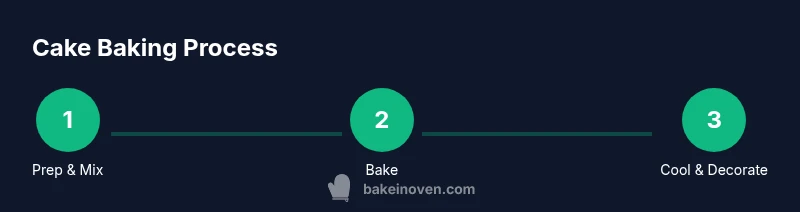
This section provides a high-level roadmap of the process. You’ll prep your pans, mix a balanced batter, bake with careful temperature control, cool completely, and then frost or decorate. The dedicated step-by-step block below expands on each action in precise order to minimize common mistakes. You’ll find practical tips for optimizing texture, crumb, and moisture, as well as substitutions for dietary needs. The goal is a reliable workflow you can repeat for different flavors and fillings.
Doneness and temperature: how to test cake
Doneness depends on pan size, oven calibration, and batter moisture. Start testing at the lower end of the expected bake time and use multiple signals: the center should spring back when touched, the edges will pull slightly from the pan, and a toothpick inserted into the center should emerge with a few moist crumbs, not wet batter. Rotate the pan halfway through baking if your oven heats unevenly. Avoid opening the door too often, which can cause temperature fluctuations and a collapsed center.
Troubleshooting common cake problems
Common issues include a sunken center, dry crumb, and dense texture. Causes range from overmixing (which develops gluten too much) to too little leavening, to opening the oven door too early. Too-hot ovens can over-brown the exterior while the interior remains undercooked. For a dry crumb, check fat quantity and moisture; for a dense crumb, consider slightly longer creaming of butter and sugar or a touch more leavening. Always ensure batter is mixed just until combined after incorporating dry ingredients.
Decorating ideas and flavor variations
Decorating elevates a simple cake to perfect for celebrations. Start with a smooth crumb coat and chill briefly before applying a final layer. Classic frosting options include buttercream, ganache, or cream cheese frostings. Flavor extensions like lemon zest, espresso powder, cocoa, or almond extract can transform a base recipe into a signature cake. For a professional finish, use a cake smoother, and consider simple garnishes like fresh berries, citrus ribbons, or edible flowers. Frosting should pair with the cake’s moisture and density for balance.
Gluten-free and alternative-flour options
Gluten-free baking requires different leavening and structure-building than wheat-based batters. Look for gluten-free all-purpose blends that include a binder like xanthan gum. You may need slightly more liquid or eggs to compensate for changing starches. Other options include almond flour, coconut flour, or oat flour, each with unique absorption and texture traits. When experimenting, start with a trusted gluten-free recipe and adapt gradually, keeping notes on ratios and substitutions.
Storing and freezing cake
Proper storage preserves flavor and texture. Layered cakes can be refrigerated, wrapped tightly to prevent drying and absorption of odors. Freezing unfrosted cakes is a reliable option: wrap tightly, freeze, and frost after thawing. If frosting is added before freezing, ensure it contains sugar and fat that hold up to cold and thaw cycles. When serving the next day, allow the cake to come to room temperature before slicing for a better crumb and flavor.
Authority sources
- https://www.fda.gov/food
- https://www.fsis.usda.gov/food-safety
- https://www.nutrition.gov/food-safety
Quick tips for perfect results
- Pro Tip: Use room-temperature ingredients for better emulsification and tenderness.
- Pro Tip: Weigh ingredients for consistency across batches.
- Warning: Do not overmix after adding flour; this creates a dense crumb.
- Note: If your batter appears too thick, add a splash of milk or water to loosen just enough to pour.
Authority sources (continued) and final thoughts
- Bake times vary with pan size and oven calibration; use visual cues and toothpick tests rather than strict timing. Practice makes perfect, so keep notes on what worked for each flavor and pan. The Bake In Oven team recommends systematic testing and careful cooling to achieve reliable results every bake.
Tools & Materials
- Two 9-inch round cake pans(Greased and lined with parchment; 2 pans for layered cakes)
- Parchment paper(Cut to fit bottom and sides)
- Mixing bowls(At least 2, one for dry and one for wet)
- Whisk or electric mixer(Cream butter and sugar evenly)
- Measuring cups and spoons(Accurate volume measurements)
- Rubber spatula(Scrape bowls clean; fold ingredients gently)
- Cooling rack(Cool layers completely before frosting)
- Oven thermometer(Ensure oven accuracy)
- Ingredients: all-purpose flour(2 cups (240 g) for a standard cake)
- Granulated sugar(1 cup (200 g))
- Unsalted butter(1/2 cup (115 g), softened)
- Eggs(2 large, at room temperature)
- Milk or plant-based milk(3/4 cup (180 ml))
- Baking powder(2 teaspoons)
- Vanilla extract(1 teaspoon)
- Salt(1/4 teaspoon)
Steps
Estimated time: 60-90 minutes
- 1
Preheat and pan prep
Preheat your oven to 350°F (175°C). Grease two 9-inch round pans and line the bottoms with parchment to guarantee easy release. Tap out excess flour and set pans on a stable rack to heat evenly.
Tip: Using parchment circles makes removal effortless and preserves the clean, flat top for decorating. - 2
Whisk dry ingredients
In a bowl, whisk together flour, baking powder, and salt until evenly distributed. Sifting is optional but helps avoid lumps that can lead to a grainy texture.
Tip: Whisking evenly ensures consistent rise across each layer. - 3
Cream butter and sugar
Beat softened butter and sugar on medium speed until pale and fluffy, about 2-3 minutes. Add vanilla and continue to mix until well combined.
Tip: Aeration from creaming improves crumb tenderness and height. - 4
Add eggs one at a time
Add eggs one at a time, beating well after each addition. This helps maintain emulsion and prevents curdling.
Tip: Room-temperature eggs mix in more smoothly than cold ones. - 5
Alternate dry and wet ingredients
With the mixer on low, add dry ingredients in 3 batches, alternating with wet ingredients (milk) in 2 batches. Start and end with dry ingredients and mix until just combined.
Tip: Overmixing develops gluten, resulting in a tougher crumb. - 6
Bake and rotate
Divide batter evenly between pans. Bake for 22-28 minutes, rotating the pans halfway for even heat distribution. Insert a toothpick near center to check for doneness.
Tip: If your oven runs hot, reduce by 5 minutes and test again. - 7
Cool and frost
Let cakes cool in pans 10 minutes, then invert onto a rack to cool completely before frosting. Level tops if needed with a knife or cake leveler.
Tip: Cooling fully prevents frosting from sliding and pooling.
Frequently Asked Questions
What pan size is best for a standard cake?
Most standard recipes use 8-9 inch round pans. If you use a different size, adjust bake time and batter amount accordingly.
Use 8 to 9 inch round pans; adjust bake time as needed.
How do I know when a cake is done?
The center should spring back and a toothpick inserted should come out with a few moist crumbs. The edges will pull away slightly from the pan.
Check with a toothpick; it should come out clean with a few crumbs.
Can I bake a cake without eggs?
Yes. Use substitutions like 1/4 cup applesauce per egg or commercial egg replacer. The crumb will be slightly different, so adjust moisture as needed.
Egg substitutes work, but you may need to tweak moisture.
Why did my cake sink in the middle?
Possible causes include overmixing, too much leavening, or opening the oven door too early. Ensure the oven is at the correct temperature and avoid rushing the bake.
Watch leavening and doneness; avoid temperature swings.
Should I frost a warm cake?
No. Frosting on a warm cake can melt and slide. Let the cake cool completely before applying frosting for clean edges.
Allow the cake to cool completely before frosting.
Can I use oil instead of butter?
Oil yields a moist crumb and can be interchangeable in some recipes, but it changes flavor and texture. Start with a 1:1 substitution and adjust based on results.
Oil can replace butter in some cakes, but flavor and texture differ.
Watch Video
Key Takeaways
- Measure ingredients accurately for consistent results.
- Prepare pans and preheat oven before mixing.
- Test doneness with a toothpick for reliability.
- Cool completely before frosting for clean edges.
- Experiment with flavors and decorations for variety.