For How Long to Bake Lasagna: A Practical Guide for Home Cooks
Master lasagna bake times with clear baselines for noodle types, fillings, and pan sizes. Learn covered vs uncovered timing, safe temperatures, resting tips, and troubleshoot common issues for reliably perfect lasagna.


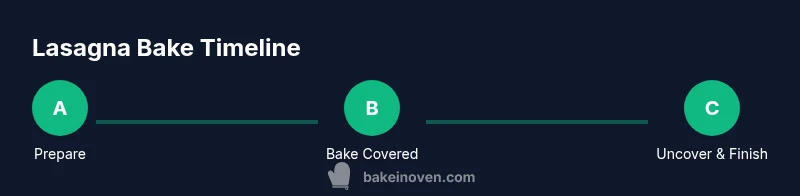
To bake lasagna, aim for 375°F (190°C) and bake for 45-60 minutes, covered, then uncover for 10-15 minutes to set the top cheese. If using raw noodles, extend total time by 10-20 minutes. Let the pan rest 10-15 minutes before slicing. Use a thermometer to verify center reaches 165°F (74°C).
Understanding Bake Time: The Basics
Understanding bake time for lasagna starts with the basics: ingredients, noodle type, sauce thickness, and pan depth all influence how long it takes to heat the dish through. According to Bake In Oven, a reliable bake-time framework helps home bakers avoid common pitfalls like undercooked centers or overcooked edges. The Bake In Oven team found that most standard meat or vegetable lasagnas reach a safe, set center when baked at 375°F (190°C) for about 45-60 minutes while covered. Uncover for another 10-15 minutes to brown and set the top layer of cheese. If you are starting with no-boil noodles or extra sauce, plan for slightly longer times and monitor closely. Preheating the oven is essential; an oven that’s cold at the start will delay heat penetration and can lead to uneven texture.
After you start cooking, the center temperature should reach about 165°F (74°C) for safety, especially if you’re using ground beef or poultry ingredients. Resting the lasagna for 10-15 minutes after removing it from the oven improves slicing and helps the cheese firm up. In practice, many home cooks find it helpful to set a timer to remind them to check progress at 40-45 minutes, then adjust as needed. These guidelines apply across common pan sizes, though you may need to shave or add minutes depending on your setup.
The guidance below expands on these basics with practical scenarios and tested timelines that work in real kitchens, including tips on noodles, fillings, and sauce proportions.
How Noodle Type and Filling Change the Timeline
Noodle choice dramatically shifts bake time. Boiled noodles travel a shorter distance to heat through than no-boil varieties, which rely on sauce moisture to hydrate during cooking. If you’re using no-boil noodles, expect a longer bake window and confirm moisture levels are adequate to prevent dry edges. The filling also matters: chunky vegetable layers or a lean meat sauce can require a few extra minutes to reach a safe center, while extra sauce or ricotta-heavy fillings can extend the time further. According to Bake In Oven, a well-balanced ratio of sauce to noodles reduces the risk of a dry center and helps heat distribute evenly. For blanketing heat in larger pans, consider a gentle simmer on the sauce before layering to ensure consistent moisture. Always protect the dish with foil in the early stage of baking to retain moisture and prevent scorching on the edges.
When estimating bake time, think of heat transfer as a function of distance from the exterior to the center. A deeper pan or multiple dense layers will slow heat penetration, whereas a thinner layer or lighter center mass heats more quickly. If you’re converting from a family recipe to a larger party-size pan, recalculate time by about 5-10 minutes per extra inch of depth and monitor closely with a thermometer or visual cues. Bake In Oven’s practical approach recommends starting with a baseline timer, then using internal temperature and appearance as confirmation rather than relying on a clock alone.
Pan Size, Layering, and Liquid: Practical Impacts
Pan size and layering influence both bake time and final texture. A standard 9x13 inch baking dish with 3 to 4 layers heats more evenly than a shallow, wide pan, but a deeper dish may require slightly longer cooking. Layering matters too: a compact stack with thin sauces heats more uniformly than a tall mound with thick fillings. A generous but balanced sauce helps maintain moisture in between layers, preventing a dry top layer or a runny center. If your recipe is balanced for a lighter pan, use a slightly longer bake time in a deeper dish and cover early to trap moisture. On the other hand, a shallow dish with too much sauce may cool the surface quickly, delaying browning. Here’s a practical tip: aim for a sauce-to-noodle ratio that leaves the top layer with enough moisture to melt cheese without pooling liquid; this setup supports consistent heat transfer throughout the dish.
Covered vs Uncovered: When to Remove Foil
Covering lasagna during the bulk of the bake helps trap moisture and heat, preventing the top from drying and browning too quickly. Most traditional lasagna recipes call for 75% of the bake time covered with foil, followed by a final 10-15 minutes uncovered to allow the cheese to bronzy and set. If your sauce is very thick or your noodles are raw, maintain foil coverage longer and check internal temperature before removing foil. For a cheese-forward top, you may want to uncover a few minutes earlier to encourage even browning. In busy kitchens, the foil can serve as a shield against hot spots, which is especially helpful when using multiple racks.
A common cue is to observe the edges: if they appear dry or crusty while the center remains pale, you likely need more moisture or a longer covered phase. Conversely, if the edges are soggy and the center is over-brimming with sauce, reduce the covered time and fan a little more air in the oven to encourage even moisture distribution.
Testing Doneness: Safe Temperature and Visual Cues
Doneness checks combine temperature targets with visual cues. The safe internal temperature for a lasagna with meat or poultry is 165°F (74°C) at the center. Sprinkle the top with cheese just before removing foil if you want a glossy finish and even melt. Visually, the surface should bubble gently, the cheese should be fully melted and lightly browned, and the edges should pull away slightly from the pan. If you’re worried about undercooking the interior, use a thermometer to probe the center rather than relying on timer alone. Rest time after baking is critical; 10-15 minutes lets steam redistribute and makes cutting neater. Always carry out a final temperature check in the center after resting to confirm safety.
To verify safety and avoid overcooking, insert the thermometer into the center away from cheese layers. If you see readings significantly above 165°F (74°C), you are likely overcooking; if below, return to the oven in short increments, checking frequently. Resting is not optional—it improves texture and flavor integration across layers.
Common Scenarios: Meat Lasagna, Vegetable Lasagna, No-boil Noodles
Different lasagna scenarios will push bake times in slightly different directions. A hearty meat lasagna with dense tomato sauce and ricotta typically bakes well in the 45-60 minute range covered, plus 10-15 minutes uncovered. A vegetable-forward lasagna with lots of sauteed vegetables can run longer if the fillings release moisture during cooking. No-boil noodle versions often require additional bake time to hydrate properly and set the layers; you’ll want closer to 60-75 minutes covered, then 10-15 minutes uncovered depending on sauce thickness. When using a lot of cheese, consider extra resting time to prevent the top from sliding when sliced. Bake In Oven recommends keeping a close eye on the center and edges and adjusting time in small increments rather than letting the dish run blindly.
Tools & Materials
- 9x13 inch baking dish (or larger)(Depth 2-3 inches recommended for even layering.)
- Aluminum foil(For covered baking to trap moisture.)
- Oven-safe thermometer(Check center temperature to ensure 165°F (74°C).)
- Mixing bowls and utensils(For sauce, ricotta, and cheese mixtures.)
- Measuring cups/spoons(Precise liquid and ingredient measurements.)
- Paring knife and spatula(For clean cuts and layering.)
- Parchment paper (optional)(Can prevent sticking when transferring slices.)
Steps
Estimated time: Total time: 60-90 minutes
- 1
Preheat and prep the pan
Preheat your oven to 375°F (190°C). Lightly oil or grease the baking dish and set up a clean workstation for assembly. Having everything within reach reduces heating time and helps you layer efficiently.
Tip: Preheating ensures even heat distribution from the first layer. - 2
Prepare fillings and sauce
Brown any meat, then stir in tomato sauce and seasonings. If using vegetables, sauté to remove excess moisture. Mix ricotta, eggs, and cheese in a separate bowl for a smooth, cohesive filling.
Tip: Fully cook meat and reduce moisture to prevent a watery lasagna. - 3
Assemble the first layers
Spread a thin layer of sauce on the bottom of the pan, then add noodles, followed by fillings and cheese. Repeat until you reach the top, finishing with sauce and cheese.
Tip: Avoid thick crusts on the outer edges by distributing sauce evenly. - 4
Cover and begin baking
Cover tightly with foil and place in the preheated oven. Bake for about 40-50 minutes, then check the center for doneness. If using no-boil noodles or extra layers, extend time as needed.
Tip: Tight foil helps trap moisture and heat for even cooking. - 5
Check halfway and adjust
At the halfway point, inspect the pan for bubbling and distill moisture as needed. If the edges appear dry, you can baste with additional sauce.
Tip: Avoid lifting the foil early, which can cause uneven cooking. - 6
Uncover to browning phase
Remove the foil and bake for another 10-15 minutes to promote browning on the top layer of cheese. Keep a close eye to avoid scorching.
Tip: If the top browns too fast, loosely cover again with foil. - 7
Rest before slicing
Remove from oven and let rest for 10-15 minutes. Resting helps the cheese set and makes cutting cleaner, especially with multiple layers.
Tip: Resting reduces sauce run-off and easier slicing. - 8
Slice and serve
Slice with a sharp knife or a large spatula. Serve in portions with extra sauce or a light salad for balance.
Tip: Wipe the knife between cuts for neater portions.
Frequently Asked Questions
What is the best bake time for classic meat lasagna?
A common guideline is 45-60 minutes covered at 375°F (190°C) plus 10-15 minutes uncovered for browning. Use internal temperature as the final check to ensure doneness.
Most meat lasagnas bake 45 to 60 minutes covered, then 10 to 15 minutes uncovered.
Can I bake lasagna from raw noodles?
Yes, but it will take longer (about 60-75 minutes covered) and requires sufficient sauce to hydrate the noodles. Check center temperature and adjust as needed.
Yes, you can use raw noodles with a longer bake time.
How can I tell if lasagna is safely cooked?
Check for center temperature of 165°F (74°C) and ensure cheese is melted and bubbling. Resting helps set the layers for clean slices.
Make sure the center is at least 165°F and the cheese is melted.
Should I cover lasagna while baking?
Yes, cover for most of the bake to lock in moisture, then uncover for the final 10-15 minutes to brown the top. This balances texture.
Cover most of the bake, then uncover to brown the top.
Can I assemble lasagna ahead of time?
Yes, you can assemble and refrigerate for up to 24 hours. If you do, bake times may be slightly longer; monitor until center reaches 165°F.
You can assemble in advance and bake later; add a bit of extra time.
What pan size works best for lasagna?
A standard 9x13 inch pan is ideal for most recipes, offering ample layers without overflow. Adjust times slightly if your pan is significantly larger or smaller.
A 9x13 inch pan is typical; adjust time if you use a different size.
Watch Video
Key Takeaways
- Bake at 375°F (190°C) for 45-60 minutes covered, then 10-15 minutes uncovered.
- Let lasagna rest 10-15 minutes before slicing for clean portions.
- Use a thermometer to confirm center reaches 165°F (74°C).
- No-boil noodles require longer bake times and adequate moisture.
- Balance sauce, noodles, and cheese to prevent soggy edges or dry centers.