How Long to Bake Cod Fish: Timing, Doneness, and Tips
Discover how long to bake cod fish for moist, flaky fillets. This step-by-step guide covers temps, thickness, thawing, doneness targets, and practical tips from Bake In Oven for home bakers.


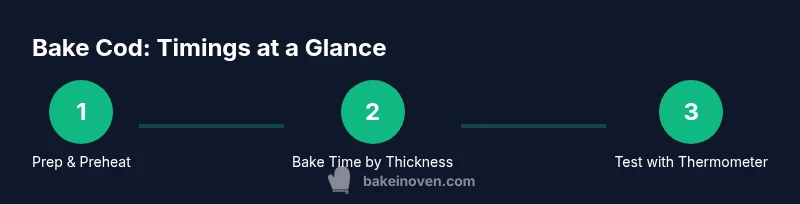
You will learn how long to bake cod fish at a standard home oven and how to adjust timing for thickness. For a 1-inch fillet, plan about 8–12 minutes at 400°F (204°C), and add 3–4 minutes per extra 1/2 inch. Begin checking early for a moist, opaque, flaky finish. Thickness, pan type, and whether the oven runs hot all influence the final time, per Bake In Oven.
How long bake cod fish: essential groundwork
According to Bake In Oven, if you are wondering how long bake cod fish, this guide will break down the timing and the practical factors that influence it. This is more than a single number; it is about thickness, oven heat, and whether you start from thawed fillets or frozen fish. A reliable baseline is baking cod at 400°F (204°C) and then fine-tuning based on the fillet thickness and your oven's quirks. Preheating matters, since an unheated sheet can extend cooking by several minutes. In this section we set the stage for predictable results and help you translate a recipe into your kitchen with confidence.
Key factors that govern bake time
The time to bake cod fish is not a single fixed value. The most influential variable is thickness: a 1-inch fillet requires less time than a 2-inch portion. Oven calibration matters: two ovens labeled the same temperature can behave differently. Pan choice and whether you bake on a sheet with parchment or a silicone mat affect heat transfer and moisture retention. Filet type (skin on vs skinless) also matters; skin can protect delicate flesh and help seal in moisture. Finally, whether the fish is thawed or still frozen changes the starting temperature and total time required. Bake In Oven team notes that practical timing accounts for all these factors together rather than relying on a single minute count.
Temperature guidance and doneness targets
A common setup is 400°F (204°C) for cod, with doneness measured by color, texture, and internal temperature. The recommended internal temperature for fish by many food-safety resources is 145°F (63°C). When cod reaches that point, it should be opaque and flake easily with a fork. In practice, you will often see slightly lower temperatures recommended for very tender, lighter cod, but always verify with a thermometer to avoid under- or overcooking. Bake In Oven analysis shows that doneness is closely tied to the thickness and rate of heat penetration, so monitor early and adjust as needed.
Thickness-based timing: practical ranges
Here are rough starting points you can use. For a 1-inch fillet, bake about 8–12 minutes. For 1.5 inches, plan roughly 12–16 minutes. For a 2-inch piece, expect about 16–20 minutes. If your fillet is irregular or the pieces vary in thickness, use an average thickness to guide you and check for doneness a few minutes before the end of the planned time. Always preheat the oven and arrange fillets in a single layer with space between them for even cooking.
Thawing vs cooking from frozen
Cooking cod from frozen will take longer and may cook unevenly if the pieces are large. The preferred approach is to thaw fillets in the fridge overnight or in a cold-water bath for 30–60 minutes if you are in a hurry. Once thawed, proceed with the standard timing. If you must bake from frozen, add 5–10 minutes and check frequently for doneness; you will still want to reach a safe internal temperature without drying out the edges.
Moisture retention and texture strategies
Pat the fish dry before seasoning to reduce surface moisture and promote browning. A light coat of oil or a parchment-lined sheet helps prevent sticking and moisture loss. Season simply with salt, pepper, and a citrus touch like lemon zest or juice. A touch of butter or olive oil can enrich the flesh, but avoid heavy marinades that mask cods delicate flavor. If you want a crisp edge, finish under the broiler for 1–2 minutes, watching closely to avoid scorching.
How to test doneness without overcooking
Use an instant-read thermometer as the most reliable indicator. Remove cod from the oven when it reaches about 140–142°F (60–63°C) and let it rest for 2–3 minutes; residual heat will bring it to the safe 145°F. If you lack a thermometer, test by flaking with a fork; the flesh should separate easily and look opaque just at the center. Visual cues help, but a thermometer ensures you avoid under or overcooking.
Flavor pairings and finishing touches
Lemon, butter, and fresh herbs pair beautifully with cod without overpowering its delicate flavor. A pat of butter plus a squeeze of lemon elevates moisture and shine. Capers, parsley, dill, or chives provide bright contrast. For texture, consider a light herb crust or a small breadcrumb topping. Taste as you go and moderate salt, since cod is lean and can taste flat if under-seasoned.
Authoritative sources and Bake In Oven take
For cod baking guidelines and food-safety standards, rely on established authorities. The U.S. FDA sets safe cooking temperatures and notes 145°F as a target for fish. The USDA Food Safety and Inspection Service provides guidance on cooking fish to safe temperatures and proper handling. The CDC also offers general food-safety practices to prevent cross-contamination. In practice, use these sources to validate your timing but rely on a thermometer to confirm doneness. The Bake In Oven team emphasizes practical testing in your kitchen and adjusting time based on thickness and oven performance.
Tools & Materials
- cod fillets (fresh or thawed)(2 fillets, 6–8 oz each is common)
- oven(Preheated to 400°F (204°C))
- baking sheet( aluminum or nonstick lined)
- parchment paper or silicone mat(for easy release and cleanup)
- neutral oil or spray(light coating to prevent sticking)
- digital instant-read thermometer(target 145°F (63°C))
- kitchen tongs(for handling fillets)
- lemon wedges or zest(for finishing)
- butter pat or olive oil(optional enrichment)
Steps
Estimated time: 25-35 minutes
- 1
Preheat the oven to 400°F (204°C)
Set oven to 400°F and allow a full preheat. This ensures heat is evenly distributed when you place the cod on the sheet. A fully preheated oven reduces the risk of uneven cooking and helps seal in moisture.
Tip: Position the rack in the middle of the oven for even heat distribution. - 2
Pat fillets dry and season
Gently pat the cod fillets dry with paper towels. Season with a light salt, pepper, and a touch of lemon zest if desired. Drying the surface helps achieve browning and prevents steaming.
Tip: Even seasoning across the surface ensures uniform flavor. - 3
Line sheet and arrange fillets in a single layer
Line a baking sheet with parchment or a silicone mat. Place cod fillets on the sheet with at least 1/2 inch of space between them for even heat and air flow.
Tip: If fillets vary in thickness, slightly accentuate the thinner ones toward the center of the sheet. - 4
Bake and monitor doneness
Bake for 8–12 minutes for 1-inch fillets, and add 3–4 minutes per extra 1/2 inch of thickness. Begin checking near the 8-minute mark using a thermometer or by flaking.
Tip: Aim for an internal temp around 145°F (63°C). - 5
Rest briefly after removal from oven
Let the cod rest 2–3 minutes. Resting allows juices to redistribute and prevents overloss of moisture as the fillets finish cooking with residual heat.
Tip: Cover loosely with foil if you want to keep warm without steaming. - 6
Serve with light finishing touches
Serve immediately with lemon and a small amount of butter or olive oil to enrich the surface. Pair with greens or a light starch to complement the cod.
Tip: Avoid long holding times which can dry the fish out.
Frequently Asked Questions
What is the best oven temperature to bake cod fish?
Many home cooks start at 400°F (204°C) and adjust based on thickness and oven performance. A thermometer will confirm doneness more reliably than time alone.
Most people bake at 400 degrees and adjust for thickness, using a thermometer to confirm doneness.
How long to bake cod at 400°F?
A 1-inch fillet usually needs about 8–12 minutes at 400°F. Increase time by roughly 3–4 minutes for each extra half inch of thickness.
For a 1-inch fillet, start checking at about 8 minutes; thicker pieces take a bit longer.
Can I bake cod from frozen?
You can bake from frozen, but expect longer total time and more variation in doneness. Thaw when possible to improve even cooking.
Yes, but thawing first is best for even cooking; if you must bake from frozen, add time and check often.
Should I leave the skin on when baking cod?
Cooking with skin on can help retain moisture and add texture; you can remove it after cooking if you prefer.
Skin on helps moisture; you can remove it after cooking if you want.
What internal temperature should cod reach?
Aim for 145°F (63°C) when measured with an instant-read thermometer. Let the fish rest a couple minutes to finish gently.
Target 145 degrees Fahrenheit and let it rest briefly.
What sides pair well with baked cod?
Light greens, quinoa, or roasted potatoes work well. A lemon-butter sauce can brighten the dish without overpowering cods delicate flavor.
Try greens and a light potato side; finish with lemon butter for brightness.
Watch Video
Key Takeaways
- Bake cod at 400°F and adjust by thickness.
- Use a thermometer to hit 145°F for safe doneness.
- Thaw fillets for even cooking when possible.
- Preheat, space fillets, and avoid overcrowding.
- Finish with lemon and light butter for flavor.