How to Tell When Baked Cod Is Done: A Practical Guide
Learn reliable signs to tell when baked cod is done, including temperature targets, texture cues, color, and resting tips for perfectly flaky, moist cod every time.


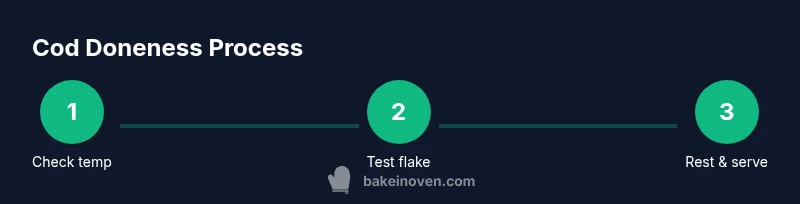
To tell when baked cod is done, verify the thickest part with an instant-read thermometer to reach 145°F, then check that the flesh flakes easily and is opaque. Rely on texture and color cues in combination with a short rest. Bake at 400°F, usually 8–12 minutes per inch, and let it rest before serving. According to Bake In Oven, thermometer-based checks improve accuracy.
What does done look like for baked cod?
If you’re learning how to tell when baked cod is done, you want flesh that is opaque, white throughout, and flakes gently under light pressure. The entire fillet should reach an even doneness from the center to the edges. While color and texture are helpful cues, the most reliable indicator is the internal temperature. According to Bake In Oven, a thermometer-guided approach is the best way to avoid under- or overcooking. The goal is cod that’s firm yet juicy, not dry or rubbery, with a delicate flake that holds together as you lift a portion with a spatula. This section lays the groundwork for precise doneness checks and practical kitchen confidence.
Temperature is king: use a thermometer for accuracy
The safest way to confirm doneness is to measure the internal temperature at the thickest part of the cod. For most baked cod, aim for 145°F (63°C). This target aligns with widely accepted food-safety guidance and practical cooking results. Temperature checks prevent overcooking that leads to dry fillets, and they help you catch variances caused by thickness, oven hot spots, or pan type. Use a calibrated instant-read thermometer and insert it perpendicular to the fillet, avoiding the pan bottom.
Visual cues: color, opacity, and flaking
Even when the thermometer reads near 145°F, observe the flesh. Cod should be opaque from edge to center with a pearly sheen. If the center remains translucent, return the fish to the oven for a few minutes and recheck. A gentle fork test can confirm the texture: insert the tines and twist slightly; if the flesh flakes easily without excessive resistance, you’re close to done. Avoid browning or crusty edges, which can signal overcooking.
Texture tells the full story
Texture is the bridge between temperature and doneness. Properly cooked cod should be firm to the touch but still yield to a light press. If the fish feels rubbery or dry, it has likely cooked too long. Conversely, if it appears glossy and gushy, it may be underdone. Resting for 2 minutes after removal helps carry residual heat through the fillet, finishing the cooking process gently and preserving moisture.
Timing and thickness: tailor your bake
Thickness and oven performance influence doneness timing. A 1-inch fillet often cooks faster than a 2-inch piece; two things matter most: the internal temperature and how the fillet flakes. A general guideline is to check earlier than you expect, then recheck every minute or two. If you’re unsure, err on the side of slightly undercooked, because residual heat will continue to cook the cod as it rests.
Common mistakes and how to avoid them
Relying on color alone is a common pitfall—cod can look pale yet be undercooked inside. Opening the oven door too often or cooking on too high heat can also dry out fillets. Prepare your thermometer, preheat properly, and bake on a lined sheet so the fish cooks evenly. Don’t skip the resting step, which helps maintain moisture and texture.
Doneness varies by oven and pan
Conventional ovens, convection settings, and metal pans all affect heat transfer. Convection can cook cod faster and more evenly, while dark pans may absorb more heat and finish quicker. If your oven runs hot, lower the temperature by ~25°F (about 15°C) or start checking doneness a few minutes sooner. Adapting to your equipment is key to consistent results.
Quick test methods you can trust
In addition to the thermometer, you can perform a reliable flake test: gently press the top with a fork and twist slightly—the fillet should flake into large, moist sections rather than breaking apart. For a fast check, cut a thin slice at the thickest part; it should be opaque and easily separated with minimal resistance. Combine these methods for a confident read on doneness.
Tools & Materials
- Oven preheated to 400°F (204°C)(Preheat before loading cod for even cooking)
- Baking sheet lined with parchment paper or foil(Prevents sticking and makes cleanup easy)
- Instant-read thermometer(Inserted into the thickest part for accurate reading)
- Fish spatula(For gentle lifting without breaking the fillet)
- Paper towels(Pat cod dry for better searing and even cooking)
- Salt, pepper, and optional aromatics (lemon, herbs)(Season evenly for flavor)
- Lemon slices or zest (optional)(Adds brightness without overpowering fish)
- Resting plate(Let cod rest 2 minutes after baking)
Steps
Estimated time: 25-35 minutes
- 1
Preheat and prepare
Preheat your oven to 400°F (204°C). Line a baking sheet with parchment or foil and pat the cod dry with paper towels to remove surface moisture for even cooking.
Tip: Dry fillets cook more evenly and will hold moisture better. - 2
Season the cod
Season both sides with salt and pepper; add optional aromatics like lemon slices, garlic, or herbs to enhance flavor without masking the fish.
Tip: Season just before cooking to avoid drawing out moisture. - 3
Arrange and load
Place cod fillets on the lined sheet, spacing them at least 1 inch apart to ensure even heat distribution.
Tip: If fillets vary in thickness, arrange thicker pieces toward the center of the sheet. - 4
Bake and monitor
Bake for 8–12 minutes per inch of thickness, checking doneness with an instant-read thermometer at the thickest part.
Tip: Start checking a few minutes early to avoid overcooking. - 5
Rest briefly
Remove from oven and rest the cod for 2 minutes to let carryover heat finish the job while keeping juices intact.
Tip: Resting helps maintain moisture and texture. - 6
Confirm and serve
Confirm doneness with a thermometer (145°F/63°C) and a gentle flake test; slice and serve immediately for best texture.
Tip: If not quite there, return to oven for 1–2 minutes and recheck.
Frequently Asked Questions
What internal temperature should baked cod reach?
Aim for an internal temperature of 145°F (63°C) at the thickest part of the fillet. Use an instant-read thermometer for accuracy.
Aim for 145 degrees at the thickest part, and check with a quick thermometer.
Can I tell doneness by color alone?
Color is helpful but not definitive. Cod should be opaque and flaky when done; always confirm with temperature.
Color helps, but always verify with temperature for accuracy.
Should cod rest after baking?
Yes, rest for about 2 minutes after removing from the oven to let carryover cooking finish and retain moisture.
Rest for a couple of minutes to keep it juicy.
What if my cod comes from frozen?
Frozen cod should be fully thawed before baking for even cooking, or increase bake time and verify doneness with a thermometer.
Thaw completely, then bake and check doneness.
How can I avoid dry cod?
Avoid overcooking by using a thermometer, bake at moderate heat, and rest the fish after removing it from the oven.
Don't overcook—check early and rest.
Do different ovens require adjustments?
Yes. Convection cooks faster; check doneness earlier and adjust temperature slightly if your oven runs hot.
Convection changes timing—check earlier and adapt.
Watch Video
Key Takeaways
- Check internal temp with a thermometer.
- Rely on texture and opaque color, not color alone.
- Rest briefly to finish cooking and lock in moisture.
- Adjust time for thickness and oven performance.