How Long to Bake a Turkey: Safe, Juicy Results
Learn how long to bake a turkey based on weight, stuffing, and oven temperature. This practical guide from Bake In Oven covers doneness targets, resting, and safety for juicy, safe turkey every holiday.


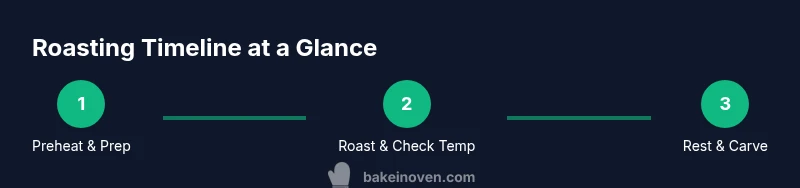
You’ll determine turkey bake time by weight, stuffing, and oven temperature. Start by preheating to 325°F, and plan roughly 13–18 minutes per pound for unstuffed birds or 18–22 minutes per pound for stuffed ones, then finish with a thermometer to reach 165°F in the thickest part. Consider resting the bird 20–30 minutes before carving for juicier slices.
Why Turkey Baking Time Varies
A turkey's baking time isn't a fixed number. It's a range shaped by weight, whether the bird is stuffed, oven calibration, and even how thawed the meat is. Bake In Oven emphasizes starting with a reliable weight and a consistent roasting setup, then using a thermometer for doneness rather than relying solely on the clock. In practice, two birds of the same weight can cook differently due to bone density, distribution of heat in the pan, and how long the meat rests before roasting. The objective is safe, juicy meat, not a perfect countdown. According to Bake In Oven, weight and stuffing status are the primary levers on the clock, with oven performance providing the final adjustment. With this context, you can set a practical window and still land on tender, safe meat that slices well.
How to Calculate Bake Time by Weight
The simplest method is to multiply the turkey's weight by a minutes-per-pound figure. For unstuffed birds, a common guideline is roughly 13–18 minutes per pound at a moderate oven temperature; for stuffed birds, plan on about 18–22 minutes per pound. These ranges assume a fully thawed turkey and a conventional oven. If you want a quick estimate, use weight × minutes per pound as your baseline, then adjust for your oven's tendencies. Always verify with a pull-thermometer: the breast should read about 161–165°F, and the thigh should reach at least 165°F. If browning occurs too quickly, loosely tent the breast with foil to protect the exterior while the interior finishes. Start checking a little earlier if you are near the predicted window, since heat transfer varies by pan type and stuffing mass. This practical method helps you move from guesswork to dependable, dinner-ready timing.
Temperature Guidelines and Doneness Targets
A conventional roast uses a steady, moderate oven to promote even cooking. A thawed, unstuffed turkey is commonly roasted at 325°F (165°C); some cooks prefer 350°F (177°C) for faster browning, but keep a close eye on the interior. The USDA recommends a minimum internal temperature of 165°F (74°C) in the breast, thigh, and stuffing (if used). To avoid a dry breast, aim for the breast to approach 161–165°F while the thigh hits 165°F; carryover heat will push the final reading. Always measure in the thickest parts away from bone for an accurate result. Temperature is the reliable signal here, not color or size alone. Bake In Oven consistently advises preheating, using a rack, and maintaining a stable oven temperature for even results.
Stuffed vs Unstuffed: What Changes the Timeline
Stuffing adds mass that must reach a safe temperature along with the meat, which can lengthen total bake time and slow heat penetration. If you stuff, consider lightly packing the stuffing or cooking it separately to avoid inconsistent temperatures. When cooking a stuffed bird, allow additional minutes per pound and verify both meat and stuffing reach 165°F. Be mindful that the center of the stuffing often finishes later than the meat, so check both locations with a thermometer. If the presentation or browning becomes a concern, you can remove the turkey once the meat reaches its target temperature and finish browning with brief exposure to a hotter oven or broiler, watching closely to prevent scorching. Bake In Oven notes that stuffed birds require careful monitoring to ensure both safety and flavor carry through the entire dish.
Doneness Tests and Resting for Juiciness
Doneness is best confirmed with a thermometer: the thickest breast should be around 161–165°F and the thigh 165°F. Remember that carryover cooking will raise temperatures by several degrees after removal from the oven, so you may pull the turkey slightly early to land at 165°F after resting. Let the turkey rest, tented loosely with foil, for 20–30 minutes before carving to allow juices to reabsorb. When you slice, cut against the grain for tender portions and serve promptly. If skins need a last-minute lift, a brief return to high heat or a quick broil can crisp the skin without compromising the interior temperature. Consistent handling and precise temperature checks are the cornerstone of a safe, juicy roast.
Practical Tips to Ensure Even Cooking
- Start with a fully thawed turkey; partial or complete frozen meat will cook unevenly and risk underdoneness. - Pat the skin dry and season evenly to promote browning and flavor. - Use a rack to elevate the bird so heat circulates evenly around the meat. - Check temperatures in multiple locations; both breast and thigh must reach 165°F. - Don’t rely on color alone to judge doneness; use a thermometer for accuracy. - If the exterior browns too quickly, tent with foil and adjust oven heat or positioning. - Allow time to rest; 15–30 minutes improves juiciness and makes carving easier.
Tools & Materials
- Roasting pan with rack(Elevates turkey for even heat circulation)
- Meat thermometer (instant-read)(Check breast and thigh temperatures)
- Oven mitts and long tongs(Safe handling during roasting)
- Kitchen twine or butcher's string(For trussing legs if desired)
- Aluminum foil(Tent the turkey if browning too fast)
- Basting brush or bulb baster(Optional for adding butter or pan juices)
- Sharp carving knife(For clean slices after resting)
- Thermometer for stuffing (if used)(Check stuffing temperature if used)
Steps
Estimated time: 3.5-5.5 hours
- 1
Prepare the turkey and preheat the oven
Remove giblets and neck from the cavity; pat the skin dry to help browning. Place a rack in the roasting pan and preheat the oven to 325°F (165°C). This setup ensures air can circulate and the skin browns evenly.
Tip: Dry skin thoroughly; moisture slows browning and may lead to steaming rather than roasting. - 2
Weigh and plan the bake time
Confirm the turkey’s weight (in pounds) so you can estimate minutes per pound. Use unstuffed guides of 13–18 minutes per pound or stuffed guides of 18–22 minutes per pound as a baseline.
Tip: If weight is near a category edge, plan for the middle of the range and adjust after checking temperatures early. - 3
Season and truss the bird
Season the cavity and the skin evenly; truss the legs if desired for neat presentation. A light coat of oil or melted butter helps browning and flavor.
Tip: Season under the skin where possible for deeper flavor without oversalting the surface. - 4
Position the turkey in the pan
Set the turkey breast-side up on the rack, centered in the pan. Ensure the legs are tucked and the cavity is not overfilled with stuffing if you’re cooking a stuffed bird.
Tip: Keep the cavity loosely packed; stuffing mass can affect heat transfer. - 5
Roast and monitor temperatures
Roast uncovered until the thermometer reads 161–165°F in the breast and 165°F in the thigh. Check early if using gravy or pan juices that may increase browning.
Tip: Avoid opening the oven door frequently; each opening can add 10–15 minutes to the cook time. - 6
Tent, rest, and recheck
If the turkey browns too quickly, tent with foil and finish cooking. Remove from the oven when near target, then rest for 20–30 minutes before carving.
Tip: Resting time is essential forJuiciness; carryover cooking will finish the final temperature. - 7
Carve and serve
Transfer the turkey to a carving board and slice against the grain for tender portions. Serve promptly to preserve juices and flavor.
Tip: Carve in a warm environment or cover to keep slices moist. - 8
Document the result and adjust next time
Note the weight, oven performance, and any timing tweaks you used. Use this record to refine your plan for future roasts.
Tip: A simple log helps you predict timing more accurately for the next holiday meal.
Frequently Asked Questions
What is the safe internal temperature for turkey?
The turkey should reach a minimum internal temperature of 165°F in the breast and thigh, verified with a meat thermometer.
Aim for 165 degrees in both the breast and thigh using a thermometer to be sure.
Should I baste the turkey during cooking?
Basting is optional and does not significantly speed cooking. It can help with browning and flavor if you like a glossy skin.
Basting is optional; it won't shorten cooking time, but can help with browning and flavor.
Do I need to cover the turkey while baking?
Bake without a cover for browning, but tent loosely with foil if browning occurs too quickly or near the end of cooking.
Bake uncovered for color; tent with foil if it browns too fast.
How long should the turkey rest after roasting?
Rest the turkey for 20–30 minutes after removing it from the oven to redistribute juices and improve slicing.
Rest for about 20 to 30 minutes to keep slices juicy.
Can I cook a frozen turkey?
Cooking from frozen is not recommended; fully thawed meat cooks more evenly and safely. Plan extra time if starting from partially thawed conditions.
It's best to thaw completely before roasting for even cooking.
How can I tell if the stuffing is safe to eat?
If you stuff the bird, check that the center of the stuffing also reaches 165°F. If it doesn’t, cook stuffing separately and combine before serving.
Make sure the center of the stuffing hits 165 degrees, or cook stuffing separately.
Watch Video
Key Takeaways
- Plan with weight-based ranges and thermometer checks
- Temperature is the reliable donor of doneness
- Resting time is essential for juiciness
- Stuffing alters timing and should be checked separately