How to Bake Turkey Breast: A Complete Guide
Learn a reliable, kitchen-tested method to bake turkey breast with even doneness, juicy texture, and safe temps. This step-by-step guide from Bake In Oven covers prep, seasoning, roasting, resting, and optional pan sauces.


By following this method, you'll bake a turkey breast that’s juicy, evenly cooked, and safe to eat. You’ll preheat properly, pat dry, season generously, roast at a steady temperature, and rest before slicing. This approach uses a thermometer to hit 165°F in the thickest part and avoids overcooking. Ideal for weeknight dinners or holiday meals.
How to Choose and Prep Turkey Breast for Baking
When you’re learning how to bake turkey breast, start with a plan: select the right cut, pat it dry, and bring it toward room temperature for even cooking. Bake In Oven recommends choosing between bone-in and boneless based on your texture preference and timing. Bone-in adds flavor and can stay moist longer, while boneless cooks faster and slices more neatly. Regardless of cut, remove packaging, check for any excess skin or silver skin, and pat dry with paper towels. Dry surfaces promote browning and help the fat render properly during roasting. For the best results, plan to thaw frozen breast fully in the refrigerator if needed, allowing roughly 24 hours for every 5 pounds of meat. This ensures even heat penetration and accurate internal temperature readings during cooking. As you prepare, you’ll discover that consistent thickness matters; uneven portions can lead to overcooked edges and undercooked centers. If your breast has a thick end, consider trimming the thicker part slightly to create a uniform loaf-like shape, which helps heat distribute evenly. According to Bake In Oven, even heat distribution is the cornerstone of a successful roast.
Safe Handling and Pre-Bake Prep
Safe handling starts with clean hands and clean surfaces. Do not rinse turkey, as splashing water can spread bacteria. Pat the meat dry to promote browning and use a clean tray for resting. If you’re using a brief brine or a dry brine, do so 12–24 hours before roasting and ensure the meat is thoroughly dried prior to cooking. Bring the breast to room temperature for about 20–30 minutes before roasting to avoid a cold center. Keep a separate pan handy for catching drips and for easy tasting of pan sauces. Bake In Oven emphasizes the importance of a clean workspace and safe temperatures to reduce foodborne risk.
Flavor Foundations: Seasonings and Butter
Seasoning is your first line of flavor. A simple rub of kosher salt, black pepper, and a pinch of garlic powder works beautifully, but you can elevate with herbs, lemon zest, and aromatics. Rubbing a small amount of olive oil or softened butter over the surface aids browning and locks in moisture. If you prefer richer flavor, slip a pat of herb butter under the skin where feasible. For a lighter finish, brush just before the last 10 minutes of roasting. Bake In Oven data suggests that fat applied to the surface helps create an inviting crust and juicy interior.
Equipment and Oven Prep for Even Cooking
Set up a roasting pan with a rack so air can circulate around the meat. Preheat the oven to 350–375°F (175–190°C) depending on breast size and whether you’re using bone-in or boneless cuts. An oven thermometer is a helpful backup to confirm your actual heat. Have a meat thermometer ready to check the internal temperature in the thickest part of the breast—this is how you know when it’s safely cooked without overdoing it. Line the pan for easy cleanup, and keep a tent of foil ready if the surface browns too quickly.
Roasting Strategy: Temperature and Timing
Roast uncovered to develop a golden crust, then adjust as needed to avoid dry edges. Plan roughly 20 minutes per pound at 350°F for boneless breasts, and a touch longer for bone-in cuts. Start checking the internal temperature toward the latter half of the estimated time; you’ll be aiming for 165°F in the thickest part. If your breast is very large or thick, consider lowering the temperature to 325–350°F and extending the time slightly to promote even cooking without drying the surface. Resting is key for moisture retention, which brings us to the next step.
Checking Doneness: Temperature, Rest, Carving
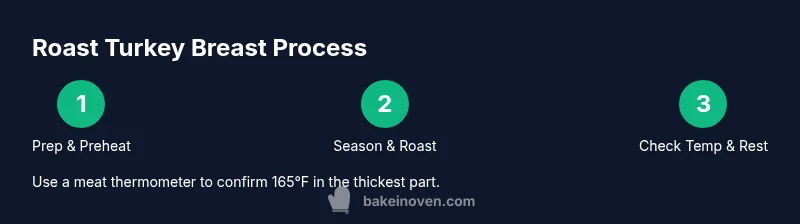
The best way to confirm doneness is with a reliable thermometer. Insert into the thickest portion, avoiding bone, and aim for 165°F (74°C). Remove from the oven a few degrees early; carryover heat will finish the job as it rests. Let the meat rest for 10–15 minutes under loosely tented foil to redistribute juices before slicing. Carve against the grain for tender slices. Proper resting time is essential for juiciness and easier carving, so resist the urge to cut too soon.
Juiciness Tactics: Resting and Slicing
Juiciness is controlled by both moisture retention and slicing technique. Resting allows muscle fibers to reabsorb moisture; slicing too soon releases those juices and yields a drier end product. Cut perpendicular to the grain for even, tender slices and serve with a light pan sauce or simple gravy. If you’ve roasted with aromatics, strain a quick pan sauce that combines the drippings with a splash of broth and white wine for additional flavor.
Variations: Brines, Herb Pastes, and Pan Sauces
If you want extra moisture, consider a short dry brine before roasting or a light brine for 8–12 hours. Herb pastes or compound butters added under the skin can dramatically boost flavor without adding bulk. Pan sauces made from the roasting drippings, a splash of broth, and a knob of butter offer a quick finish that’s guest-worthy. If you’re avoiding dairy, use olive oil and herbs to build flavor instead.
Common Mistakes and How to Avoid Them
Relying solely on time rather than temperature is a common mistake. Not patting dry or not letting the roast rest can also ruin texture. Cooking at too high a temperature can burn the surface before the center is done; cooking too low may dry out the meat. Always verify doneness with a thermometer, and avoid overcooking by pulling the breast from heat slightly early to use carryover cooking.
Tools & Materials
- Turkey breast (bone-in or boneless, 2–4 lb)(Bone-in adds flavor; boneless cooks faster; choose based on preference.)
- Kitchen thermometer(Instant-read or probe thermometer; target 165°F (74°C).)
- Roasting pan with rack(Elevates meat for even heat circulation.)
- Olive oil or unsalted butter(Helps browning and moisture retention.)
- Kosher salt and black pepper(Baseline seasoning; adjust for taste.)
- Optional aromatics (garlic, lemon, fresh herbs)(Enhances flavor; not required but recommended.)
- Aluminum foil(Used to tent the roast if browning too quickly.)
Steps
Estimated time: 1 hour 15 minutes
- 1
Preheat and prepare
Preheat the oven to 350–375°F (175–190°C). While it heats, remove the breast from packaging, pat dry, and let it come to room temperature for 20–30 minutes to promote even cooking. A dry surface improves browning and reduces steaming inside the oven.
Tip: Dry the surface thoroughly; moisture inhibits browning. - 2
Pat dry and trim
Pat the meat dry again just before seasoning. If needed, trim any thick fat or skin to promote uniform cooking. Room temperature helps the seasoning adhere evenly.
Tip: Even thickness helps heat penetrate uniformly. - 3
Season generously
Rub the surface with olive oil or butter, then coat with kosher salt, pepper, and optional herbs or garlic powder. If desired, slide herbs under the skin for deeper flavor.
Tip: Season in layers—oil first, then salt and herbs—to build flavor. - 4
Arrange on rack
Place the breast on a rack in a roasting pan to ensure air circulation around the meat. This setup promotes even browning and prevents soggy bottoms.
Tip: Elevate the meat; air circulation is your friend. - 5
Roast uncovered
Roast the breast uncovered at 350–375°F (175–190°C) until the thermometer reads 160–163°F in the thickest part. Expect roughly 20 minutes per pound for boneless; bone-in will take a bit longer.
Tip: Check early in the second half to avoid overshoot. - 6
Check temp and rest
Remove from the oven when the internal temp approaches 165°F. Tent loosely with foil and allow to rest 10–15 minutes. Resting redistributes juices for a moister slice.
Tip: Carryover heating finishes the job—don’t overshoot. - 7
Carve and serve
Carve across the grain into thin slices for tenderness. If you’re serving with pan sauce, deglaze the roasting pan with a little broth and finish with a knob of butter or olive oil.
Tip: Slice against the grain for maximum tenderness. - 8
Optional variations
Try brining for extra moisture, or swirl herbs into a butter paste under the skin for intensified flavor. Pan sauces are quick and elegant finishing options.
Tip: Even small tweaks can lift the dish—start simple, then layer flavors. - 9
Safety and cleanup
Discard any juices that appear pink and always reach 165°F internal temperature. Clean the workspace and sanitize surfaces after handling raw poultry.
Tip: Always sanitize cutting boards and knives after use.
Frequently Asked Questions
Can I use a frozen turkey breast?
No, thaw completely before roasting. A fully thawed turkey breast cooks more evenly and reduces the risk of undercooked centers. Plan 24–48 hours in the refrigerator for a typical 2–4 lb breast, depending on thickness.
Thaw completely before roasting to ensure even doneness and safety.
What internal temperature indicates safe doneness?
165°F (74°C) in the thickest part of the breast, measured with a reliable thermometer. Remove from heat when it’s within a few degrees of that target due to carryover cooking.
Aim for 165 degrees at the thickest part for safety.
Should I cover the breast during baking?
Roasting uncovered promotes browning and a crisp crust. If the top browns too quickly, loosely tent with foil toward the end of cooking.
Roast uncovered for color; tent if needed toward the end.
How long does a 3–4 lb breast take to bake?
Approximate timing is about 20 minutes per pound at 350°F for boneless breasts, plus rest. Bone-in cuts can require a bit longer. Always rely on temp rather than time alone.
Expect roughly 60–80 minutes for a 3–4 lb breast, then check temperature.
Can I brine or use a herb paste?
Yes, brining can improve moisture; a herb paste or butter under the skin adds flavor. If you use a paste, apply it evenly and avoid over-salting the surface.
Brining or herb pastes are great for moisture and flavor.
What if the turkey breast looks pink near the bone?
Color doesn’t always indicate doneness. Check internal temp with a thermometer; pink juices can still be safe if the temp is 165°F in the thickest part.
Don’t rely on color alone; check the temperature.
Watch Video
Key Takeaways
- Season generously for flavor.
- Use a thermometer; aim for 165°F.
- Rest 10–15 minutes before slicing.
- Roast uncovered for browning, then tent if needed.
- Carve across the grain for tenderness.