How Long to Bake Turkey in Oven: Timings and Tips
Learn precise oven timings for turkey by weight, plus safe temperatures, rest periods, and practical tips. This Bake In Oven guide helps home bakers nail juicy, evenly cooked turkey every holiday season.


Goal: Determine how long to bake a turkey in the oven to reach safe internal temperature without overcooking. For a standard 10–14 lb turkey at 325°F (165°C), estimate 3 to 4 hours; a 15–18 lb turkey may take 3.5 to 4.5 hours. Always verify with a meat thermometer (165°F/74°C for breast, 175°F/80°C for thigh).
Why Accurate Timing Matters
According to Bake In Oven, timing isn’t just about how long the bird spends in the oven; it’s about achieving a safe, juicy result. Turkey is prone to carryover cooking, where the internal temperature continues to rise briefly after removal from the oven. If you pull the turkey too soon, you risk undercooking; too late, and you lose moisture. Reliable timing, paired with a calibrated oven and a digital thermometer, helps you achieve consistent results across different roasts. Resting after roasting is also essential to let juices redistribute, improving sliceability and flavor. For home bakers, a simple plan that includes target temperatures and a thermometer check saves guesswork and boosts confidence. Bake In Oven emphasizes starting with a preheated oven and using thermometer readings as the real guide, not only the clock.
Factors That Change Bake Time
Several variables influence cook time besides weight. Stuffed birds require more time to reach safe internal temperatures, while unstuffed birds cook faster. A turkey that’s fully thawed, not brined, and roasted in a standard home oven tends to have the most predictable timing. Oven calibration matters: a popular home oven can deviate by 10–15°F (5–8°C) from the set temperature, which shifts timing. The pan size and whether you roast on a rack can also affect heat circulation. Larger birds with bone-in portions generally require longer times, whereas smaller, boneless breasts cook quicker. If you’re converting from a recipe that initializes at a different temperature, plan for a slower ramp to the target. Finally, whether you start with the bird at room temperature or cold from the fridge can influence the initial heat-up period.
Temperature and Roasting Guidelines
The standard guideline for an unstuffed turkey is to roast at 325°F (165°C) for even heat distribution. Preheat the oven fully before the turkey goes in, and position the rack so that the breast rests roughly in the center of the oven. Use a shallow roasting pan with a rack to maximize airflow. If the skin browns too quickly, tent with foil to prevent scorching while the interior comes up to temperature. Butter or oil on the skin helps with browning and flavor, and a light drizzle of pan juices or stock around the bottom of the pan adds moisture during the roast. Avoid opening the oven door frequently; every door opening costs heat and extends the total cooking time. For larger birds, you may extend time slightly, but rely on thermometer readings to confirm safety.
How to Use a Thermometer for Perfect Doneness
Rely on a reliable meat thermometer rather than estimates. Insert the thermometer into the thickest part of the breast, avoiding bone, and aim for 165°F (74°C) in the breast and 175°F (80°C) in the thigh for safe doneness. For a near-complete roast, anticipate carryover cooking that will raise the breast temperature by a few degrees after removal. Let the turkey rest for 20–30 minutes before carving; this resting period allows juices to redistribute, improving texture. If you’re unsure, check both the breast and thigh temperatures; if either reads below target, return the turkey to the oven in short bursts of 5–10 minutes, rechecking with the thermometer. Keep a timer handy to track total time and avoid guesswork.
Common Weight Ranges and Estimated Times
Estimates vary slightly by oven and whether the bird is stuffed. General guidance (un Stuffed, un-brined, and thawed) shows: 8–12 lb: about 2 3/4–3 1/2 hours; 12–14 lb: about 3–3 3/4 hours; 14–18 lb: about 3 3/4–4 1/2 hours. These are approximate ranges; always verify with a thermometer. If your bird is on the upper end of a weight range, plan for the longer end of the time window and adjust based on internal temperature rather than clock time alone. For stuffed birds, add roughly 15–30 minutes to the total time, and use thermometer readings in the center of the stuffing as an additional check. Adapt based on how your oven heats and whether you’re starting from frozen or thawed state.
Resting and Carryover Cooking
Resting is essential to finishing the cooking process and ensuring juicy slices. After removing the turkey from the oven, loosely tent with foil to retain heat and let it rest for 20–30 minutes. During this time, the internal temperature can rise by several degrees due to carryover cooking. Don’t rush to carve; this resting period also makes carving easier and reduces the risk of hot juices spurting. If the turkey appears to be browning too much on the outside, you can loosely cover with foil earlier in the roast and uncover for the final 15–20 minutes to re-brown the skin. For best results, plan your side dishes to be ready around the finishing window, so you can serve everything while the turkey is still moist and warm.
Tools & Materials
- Roasting pan with rack(Elevates meat for air circulation and even browning)
- Meat thermometer (digital preferred)(Insert into thickest part of breast without hitting bone)
- Oven thermometer or calibrated oven(Verifies actual oven temperature)
- Aluminum foil(Tent when browning too fast or resting)
- Kitchen timer(Track total cook time and rest)
- Carving board and sharp knife(Make clean slices after resting)
- Paper towels(Pat turkey dry before seasoning)
- Basting brush (optional)(Lightly baste for moisture, not essential)
Steps
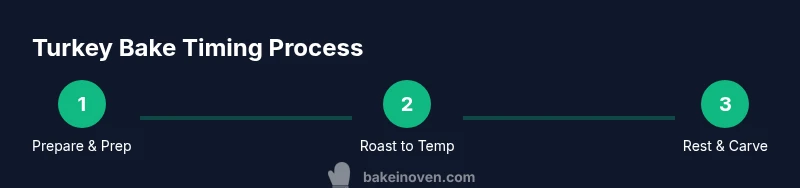
Estimated time: Total active cook time varies by weight but typically 2 3/4–4 1/2 hours plus 20–30 minute rest
- 1
Prepare and pat dry
Remove giblets and neck from the cavity, if included. Pat the turkey dry with paper towels; a dry surface promotes crisp skin. If desired, season inside the cavity and rub the exterior with oil or melted butter plus salt and pepper for even browning.
Tip: A dry surface ensures browning; wet skin steams rather than browns. - 2
Preheat and set up
Preheat the oven to 325°F (165°C). Place the turkey on the rack in the roasting pan, breast-side up, and arrange any aromatics (onion, garlic, herbs) under or around the bird for added flavor.
Tip: Preheating ensures the turkey hits the correct heat immediately, which helps even cooking. - 3
Season and prepare for roasting
Season the exterior generously with salt and pepper; add butter or oil for browning. If you prefer, stuff lightly with aromatics—avoid overfilling, which can alter cooking times and temperature uniformity.
Tip: Butter or oil boosts browning and adds richness; avoid heavy stuffing that slows heat penetration. - 4
Roast and monitor
Place the turkey in the preheated oven. Roast until the thermometer reads 160–165°F (breast) and 170–175°F (thigh). Check halfway through and rotate if your oven heats unevenly.
Tip: Use a thermometer for accuracy; timing can vary with oven calibration and bird temperature. - 5
Rest and finish carryover cooking
Remove the turkey once the breast hits 165°F, tent with foil, and rest for 20–30 minutes. Temperature will rise a few degrees during resting, completing the safety targets.
Tip: Resting prevents juices from spilling when you carve and preserves moisture. - 6
Carve and serve
Transfer the turkey to a carving board and slice against the grain. Serve with pan drippings or a prepared gravy for extra flavor and moisture.
Tip: Carve after resting to maximize tenderness and ease of slicing.
Frequently Asked Questions
What is the safest internal temperature for turkey?
The USDA recommends 165°F (74°C) in the breast and 165°F at least in the center of the stuffing. For thighs, aim for about 175°F (80°C) for safety. Rely on a well-placed thermometer for accuracy.
Safest temperatures are 165°F in the breast and 175°F in the thigh; use a thermometer for accuracy.
Should I baste the turkey during roasting?
Basting can add flavor and moisture, but it is not essential. Frequent openings can waste heat and extend cook time. If you baste, do so quickly and only when convenient.
Basting is optional; it helps with moisture but can extend cooking time if you open the oven often.
Can I cook a frozen turkey directly in the oven?
Cooking from frozen is possible but requires significantly longer time and careful thermometer checks. It’s generally recommended to thaw completely for even cooking and reliable doneness.
You can cook from frozen, but thawing first is easier and safer for consistent results.
How long should I rest the turkey after baking?
Rest the turkey for 20–30 minutes after removing it from the oven. This carries over heat and lets juices redistribute for juicier slices.
Rest for 20 to 30 minutes to finish cooking and keep the meat moist.
Is it better to stuff the turkey or roast stuffing separately?
Stuffed turkeys take longer to cook and can be uneven. If you stuff, ensure the center of the stuffing reaches 165°F. Many cooks prefer cooking stuffing separately for safety and timing.
Stuffing inside the turkey can complicate timing; consider cooking stuffing separately for best results.
What should I do if the skin browns too quickly?
Loosely tent with foil and reduce the oven temperature slightly if needed. Uncover toward the end to re-brown for a crisp skin.
Tent with foil if the skin browns too fast, then uncover to finish browning.
How do I adjust times for larger birds?
Larger birds require more time; plan for longer intervals and verify temps in both breast and thigh to ensure safety.
Larger birds need more time; use thermometer checks rather than relying on time alone.
Watch Video
Key Takeaways
- Plan for thermometer-based timing, not clock time alone
- Maintain oven temperature accuracy with calibration checks
- Rest 20–30 minutes to finish carryover cooking and improve juiciness
- Use a rack and proper pan for even browning
- Check both breast and thigh temps for safe, juicy doneness