How to Bake a Turkey in the Oven
A practical, kitchen-tested guide to roasting a turkey in the oven. Learn thawing, drying, seasoning, roasting temps, resting, and carving for juicy, golden meat every time.


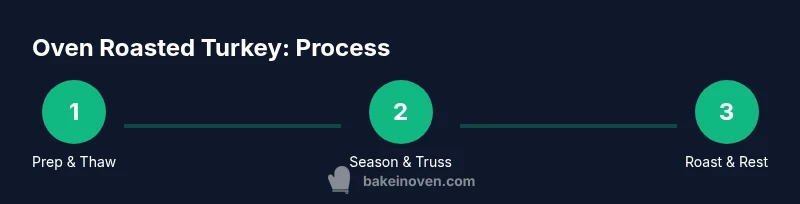
By thawing the turkey fully, drying the skin, and roasting it with butter and herbs, you can achieve juicy meat and crisp skin. Roast at 325-350°F until the thickest part reaches 165°F, then rest 20-30 minutes before carving. Use a thermometer to verify doneness and tent if browning too fast.
Why oven roasting is the ideal approach for turkey
Oven roasting is a reliable way to achieve even cooking and a deeply flavored crust. When you control heat, airflow, and moisture, the surface browns beautifully while the interior stays moist. According to Bake In Oven, success starts with smart planning: choose the right turkey size, ensure complete thawing if frozen, and prepare with a straightforward seasoning plan. The goal is a balanced method that minimizes guesswork while maximizing flavor and texture. This approach also makes it easier to manage sides and gravy without sacrificing quality. With a calm, methodical process, most home cooks can produce a restaurant-worthy roast that remains juicy after carving and serves as a centerpiece worthy of holiday tables or Sunday dinners alike.
Selecting the right turkey: weight, type, and thawing
Choosing the right bird sets the foundation for a successful roast. For most households, a 12-16 pound turkey fits standard roasting pans and yields ample slices for a family. Decide between fresh and frozen; fresh often requires less planning, while frozen must be thawed safely in the fridge. Thawing times vary by weight, so plan ahead and keep the turkey on a tray to catch any drips. If you’re considering flavor options, a light dry rub or a butter-herb under-skin application enhances moisture retention and browning. Bake In Oven recommends starting with a conservative plan and adjusting if you notice surprising levels of moisture loss or browning.
Safety first: thawing, handling, and sanitation
Food-safety basics keep everyone healthy. Thaw frozen birds in the refrigerator, allowing about 24-48 hours per 4-5 pounds until fully thawed. Wash hands and all surfaces after handling raw poultry, and never leave a room-temperature turkey out for more than an hour. Keep the bird separate from other foods during preparation. A digital thermometer is your best ally for avoiding under- or overcooking: aim for a safe internal temperature of 165°F in the thickest part of the thigh. This careful approach reduces the risk of foodborne illness and ensures consistent results.
Tools and workspace: roasting pan, rack, thermometer, and more
A sturdy roasting pan with a rack is essential for air circulation and even browning. You’ll want a reliable meat thermometer (ideally two: one for the thigh and one for the breast) to monitor internal temps without opening the oven too often. Other handy tools include kitchen twine for trussing, a sharp carving knife, and aluminum foil for tenting. Prepare a clean workspace, a dry towel, and a tray to catch drips. These elements keep the process smooth and help you maintain consistent heat distribution for a better crust and juicier interior.
Seasoning options: dry rub, butter, herbs, and optional brine
Seasoning plays a key role in flavor and moisture retention. A simple approach uses softened butter mixed with garlic and chopped herbs, applied under the skin and on the surface to promote browning. For deeper flavor, a light dry brine overnight can improve texture and juiciness, especially on larger birds. If you choose to brine, rinse and pat dry thoroughly before roasting. Fresh herbs such as thyme, rosemary, and sage complement poultry naturally, and a light touch of salt and pepper ensures the bird tastes vibrant rather than overwhelmed.
Preparing the bird: drying, trussing, and prepping
Pat the turkey dry inside and out to remove surface moisture that can steam rather than brown the skin. Truss the legs with kitchen twine and tuck the wings to prevent overcooking. For maximum crispness, loosen the skin over the breast slightly and slip butter under it before rubbing the exterior with salt and pepper. Let the prepared bird sit at room temperature for 20-30 minutes to promote even cooking, then place it on a rack in the roasting pan. This prep minimizes hot spots and encourages uniform browning.
Roasting fundamentals: heat, time, and temperature targets
Roast at 325-350°F (165-175°C) for an unstuffed turkey; this range balances browning with adequate internal heat. A general guide is roughly 13-15 minutes per pound for unstuffed birds, but always verify with a thermometer. Start checking at the lower end of the estimated window, especially if the turkey is smaller. If the skin browns too quickly, tent loosely with aluminum foil to protect the color while the center continues to cook. The goal is a golden, crackly skin with a moist, fully cooked interior.
Basting and glaze: timing, technique, and flavor balance
Basting can help with surface moisture, but it’s not strictly required. If you baste, do so every 45-60 minutes and avoid opening the oven too often, which stalls heat. A glaze applied during the final 30-40 minutes adds color and aroma; keep the glaze light to prevent a sticky surface. For best results, use melted butter, olive oil, or an herb-infused butter blend that complements the bird’s natural flavors without overpowering them. Remember: the micro-breaks you allow while basting should not extend total cook time significantly.
Resting and carving: maximizing juice retention
Resting is crucial. After removing the turkey from the oven, tent loosely with foil and let it rest 20-30 minutes. This allows the juices to redistribute, yielding a juicier slice when you carve. Carve against the grain in thin, even slices for easier serving, and consider a warmed platter to maintain temperature as you present the slices. A well-rested turkey is noticeably more tender and easier to portion.
Troubleshooting common issues
If the turkey seems underdone, give it more time in 10-15 minute increments and re-check. If the skin is pale, raise the oven temperature 25°F for the last 10-15 minutes, watching closely to prevent burning. Excess moisture on the surface can hinder browning, so ensure the skin is dry before roasting. If you see migrating juices, test a few points with the thermometer rather than relying on color alone. These checks help you avoid common pitfalls and achieve a reliable, safe roast.
Leftovers and storage safety
Leftovers should be cooled quickly and refrigerated within two hours. Store carved slices in shallow containers to promote rapid cooling, then reheat evenly before serving. Turkey keeps well for 3-4 days in the fridge and up to 3 months in the freezer when properly wrapped. For safety and quality, label containers with dates and reheat to at least 165°F before consuming. This approach minimizes waste and maintains flavor and texture for future meals.
Tools & Materials
- Whole turkey (12-16 lb)(Thawed completely; remove giblets.)
- Kosher salt(For seasoning and optional dry brine.)
- Freshly ground black pepper(Season cavity and skin generously.)
- Unsalted butter(Softened for under-skin and surface application.)
- Olive oil (optional)(Helps browning if skin looks dry.)
- Garlic cloves (minced)(For butter-herb mixture.)
- Fresh herbs (thyme, rosemary, sage)(Flavor under skin and pan.)
- Roasting pan with rack(Promotes even heat circulation.)
- Meat thermometer(Probe into the thigh; avoid bone.)
- Kitchen twine(To truss the legs.)
- Aluminum foil(Tent if browning too quickly.)
- Carving knife and carving board(For clean slices.)
Steps
Estimated time: 3-4 hours
- 1
Thaw and plan
If using a frozen bird, thaw safely in the refrigerator for 24-48 hours per 4-5 pounds until completely thawed. Plan your timeline to avoid last-minute rush and ensure even cooking. Always place the turkey on a tray to catch any juices and prevent cross-contamination.
Tip: Keep the turkey on the bottom shelf to minimize drips and maintain fridge temperature. - 2
Preheat and prep workspace
Preheat the oven to 325-350°F. Clear your workspace, assemble your tools, and lay out seasonings within reach. A tidy workstation reduces stress and helps you stay on schedule during the roast.
Tip: Have a thermometer ready and verify oven temperature with an oven thermometer for accuracy. - 3
Dry, season, and inject flavor
Pat the turkey completely dry inside and out. Rub with salt and pepper, then slip a butter-herb mixture under the skin. A dry surface plus fat under the skin promotes crisp skin and juicy meat without oversalting.
Tip: Use softened butter mixed with minced garlic and chopped herbs for even distribution. - 4
Truss and position
Tie the legs with kitchen twine and tuck the wings to prevent overcooking of wing tips. Place the turkey on a rack in the roasting pan to ensure airflow around the bird for even browning.
Tip: Secure twine loosely to allow for expansion as the bird cooks. - 5
Roast and monitor
Roast at 325-350°F and begin checking for doneness around the expected window. Use a thermometer to check the thickest part of the thigh, aiming for 165°F. If the skin darkens too quickly, tent with foil.
Tip: Avoid opening the oven repeatedly; each opening drops oven temperature and extends cooking time. - 6
Baste or glaze (optional)
If you choose to baste, do so every 45-60 minutes with pan juices or melted butter. A glaze in the final stage adds color without compromising texture. Basting is optional but can improve surface moisture if the turkey looks dry.
Tip: Keep basting minimal to prevent heat loss and greasy surface. - 7
Check internal temperature
Check multiple spots: thigh, breast, and the wing joint if necessary. Do not rely on color alone. The safe temperature is 165°F in the thickest part of the thigh and in the center of the breast.
Tip: If the breast finishes early, move the bird to the warm side and let the thigh catch up. - 8
Rest the turkey
Transfer to a cutting board and tent with foil. Let rest for 20-30 minutes to redistribute juices. This step improves slicing ease and juiciness.
Tip: During rest, keep the turkey in a warm area of the kitchen to maintain a comfortable serving temperature. - 9
Carve and serve
Carve across the grain in thin slices. Transfer slices to a warmed platter and serve with pan gravy. Enjoy the fruits of careful preparation and patient roasting.
Tip: Reserve carcass for stock if you’re making gravy base.
Frequently Asked Questions
Do I need to thaw the turkey before roasting?
Yes. Thaw completely in the refrigerator to promote even cooking and prevent a frozen center. A partially thawed bird can cook unevenly, leading to undercooked areas and safety concerns.
Yes. Make sure the turkey is fully thawed in the fridge to cook evenly and stay safe.
What temperature should I roast the turkey at?
Roast at 325-350°F (165-175°C) for unstuffed birds. This range balances browning and interior doneness. Always verify with a thermometer for safety.
Roast at 325 to 350 degrees Fahrenheit and check with a thermometer.
Should I stuff the turkey?
Stuffing the turkey can extend cooking time and risk uneven doneness. It’s safer to cook stuffing outside the turkey and roast the bird unstuffed or with a light amount of aromatics under the skin.
Stuffing inside the turkey isn’t ideal; consider cooking stuffing separately.
How long to roast per pound?
A general guideline is about 13-15 minutes per pound for unstuffed turkey at 325°F. Use a thermometer to confirm doneness rather than relying on time alone.
Plan roughly 13-15 minutes per pound, but check with a thermometer.
How can I tell when the turkey is done without a thermometer?
Color alone is not reliable. Look for clear juices and an opaque, fully cooked meat. The thermometer is the most reliable method for safety and quality.
Color isn’t enough; use a thermometer for safety and best texture.
What should I do with leftovers?
Cool leftovers quickly, refrigerate within two hours, and store in shallow containers. Reheat to 165°F and use within 3-4 days or freeze for longer storage.
Cool quickly, refrigerate, and reheat to 165°F for safe leftovers.
Watch Video
Key Takeaways
- Choose the right size turkey for your pan.
- Ensure complete thawing and dry skin before roasting.
- Use a thermometer to hit 165°F safely.
- Rest 20-30 minutes before carving for juicier slices.
- Tent or baste as needed to protect color and texture.