How Long Do You Bake Salmon in the Oven? A Practical Guide
A practical, data-driven guide to oven-baking salmon. Learn temps, timing by thickness, doneness testing, and pro tips for moist, flaky results every time.


Why Temperature and Time Matter
When you ask how long do you bake salmon in the oven, you are balancing two core variables: temperature and time. The chosen temperature sets the rate at which heat penetrates the fillet, while the time governs how fully the interior cooks. A predictable approach uses a steady oven (typically 400–425°F) and a thickness-based timing rule. In Bake In Oven testing during 2026, we consistently observed that staying within a defined temperature window helps preserve moisture while yielding a tender, flaky texture. The result is less guesswork and more reliable dinners. Think of time as a guideline, not a fixed countdown—thicker cuts will need more minutes, but carryover heat will finish the job after you remove the baked salmon from the oven.
The Science of Salmon: Heat, Time, and Texture
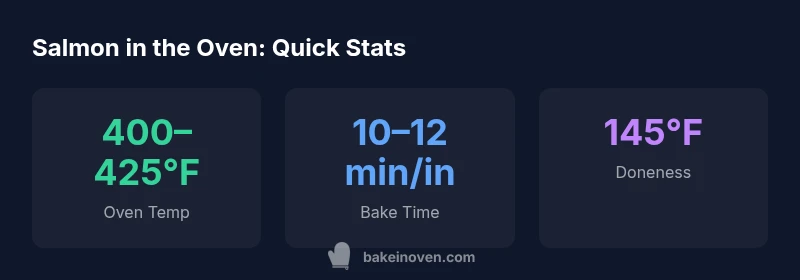
Oven heat denatures the salmon proteins, causing moisture to move and then escape if cooking continues too long. The goal is to reach a safe interior temperature without drying out the flesh. A moderate-high oven around 400–425°F (204–218°C) gives a favorable crust on the outside while the center stays juicy. A practical rule of thumb is roughly 10–12 minutes per inch of thickness for a typical fillet, though every oven behaves a little differently. Always verify with a thermometer and allow for 1–2 minutes of carryover cooking after removal.
Prepping for Even Cooking: Fillet Size, Thickness, and Prep
Preparation matters as much as temperature. Pat the fillet dry, season evenly, and consider a light oil coating to promote browning. If possible, use a rack or parchment to avoid the fish sitting in its own juices. Measure thickness at the thickest part and plan cooking time accordingly; irregular shapes can cause undercooked centers or overcooked edges. Keeping skin on can improve moisture retention and help shield the flesh from direct heat. For skinless fillets, use parchment or a light oil to prevent sticking. A consistent thickness across the fillet helps heat distribute evenly, reducing hot spots.
Step-By-Step: From Preheat to Plate
- Preheat the oven to 400–425°F (204–218°C). 2) Pat fillets dry, season, and place on a lined baking sheet. 3) Bake until the thickest part reads 145°F (63°C) with a digital thermometer. 4) Rest for 2–3 minutes to let residual heat finish the job and keep the flesh moist. If baking multiple fillets, rotate the sheet halfway through for even heat. For thicker cuts, tent with foil briefly if you notice any rapid surface browning.
Doneness Cues: Temperature, Texture, and Visual Signs
Rely on a thermometer for accuracy, but you can also read texture: cooked salmon should flake under light pressure and have an opaque color throughout. The center may remain slightly translucent with a translucent edge at 145°F, but avoid prolonged heat that dries the surface. Overcooking manifests as firmer flesh and a chalky texture, so remove from heat just shy of the final desired temperature if you plan to let carryover finish the cooking.
Variations: Skin-On vs Skinless, Butter, and Foil
If you’re aiming for maximum moisture, cooking with the skin on is advantageous because it acts as a barrier to direct heat. For skinless fillets, a light oil coating helps prevent sticking and promotes even browning. Some cooks prefer a quick finish under the broiler for color, but watch closely to prevent burning. Finishing with a small dab of butter or olive oil in the last minutes can boost flavor and keep the surface from drying. For very thick fillets, covering with foil for part of the bake will trap steam and reduce the risk of dry edges; uncover for the final minutes to reintroduce color.
Common Mistakes and How to Fix Them
Overcooking is the most common pitfall. Start checking doneness sooner than you think and rely on a thermometer rather than time alone. Uneven thickness, crowded sheets, or hot spots can produce inconsistent results; use a spacious sheet and rotate if you’re baking more than one fillet. If you’re cooking from frozen, accept longer cooking times and plan accordingly, or thaw to ensure even heat penetration. Finally, avoid adding heavy sauces that mask doneness; a light brush of oil, lemon, or herbs is enough to flavor without masking texture.
Practical Tips for Consistency: Batch Cooking and Leftovers
For meal-prep, bake salmon on a single sheet and portion after a brief rest. Reheat gently—low heat or a quick skillet finish helps maintain moisture. Store without liquid pooling and reheat to just under 145°F to avoid overcooking. Vary seasonings (dill, lemon, garlic) to keep meals interesting, and consider making a few portions with different thicknesses to accommodate future dinners. With a consistent oven temperature and thickness-based timing, you’ll achieve moist, flaky salmon with minimal guesswork.