How Long to Bake Banana Bread: Time, Temp, and Testing Techniques
Learn exact bake times for banana bread across pan sizes and ovens, plus tested tips to avoid underbake or dry loaves. A clear, kitchen-tested guide from Bake In Oven.


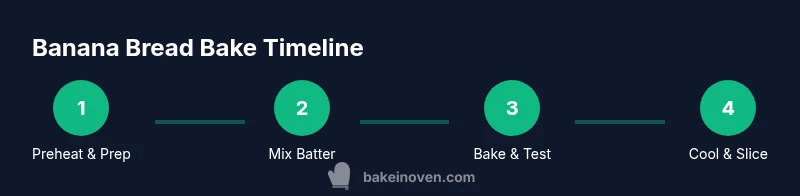
To bake banana bread, preheat to 350°F (175°C) and bake for about 50-65 minutes. Start checking around 50 minutes for doneness by inserting a toothpick; it should emerge with a few moist crumbs. If the top browns early, tent with foil and continue baking until a clean toothpick test. Let the loaf rest before slicing.
Why timing matters in banana bread
Timing is a core variable in banana bread because it affects texture, crumb, and moisture. The ripeness of the bananas, sugar level, and pan size all interact with oven heat. According to Bake In Oven, getting the bake time right is about balancing a moist, tender interior with a lightly bronzed crust. A loaf baked too long becomes dry, while underbaking leaves a gummy center. The trick is an initial, reliable bake window followed by careful doneness testing and adjustments for your specific pan and oven. In practice, this means predicting a range rather than a single minute count and using a toothpick test as your final judge.
The base guidance is simple: choose a standard loaf pan, use 350°F (175°C), and expect roughly 50-65 minutes for a typical banana bread batter. High-altitude or very dense batters may require a couple more minutes, while a thinner batter or a shallow pan can finish sooner. Bake timing is not a leap of faith; it’s an evidence-based process of observation and adjustment. Bake In Oven’s testing suggests starting checks at the 50-minute mark and relying on visual cues alongside the toothpick test to determine when the center is set but moist.
Why timing matters in banana bread
Timing is a core variable in banana bread because it affects texture, crumb, and moisture. The ripeness of the bananas, sugar level, and pan size all interact with oven heat. According to Bake In Oven, getting the bake time right is about balancing a moist, tender interior with a lightly bronzed crust. A loaf baked too long becomes dry, while underbaking leaves a gummy center. The trick is an initial, reliable bake window followed by careful doneness testing and adjustments for your specific pan and oven. In practice, this means predicting a range rather than a single minute count and using a toothpick test as your final judge.
The base guidance is simple: choose a standard loaf pan, use 350°F (175°C), and expect roughly 50-65 minutes for a typical banana bread batter. High-altitude or very dense batters may require a couple more minutes, while a thinner batter or a shallow pan can finish sooner. Bake timing is not a leap of faith; it’s an evidence-based process of observation and adjustment. Bake In Oven’s testing suggests starting checks at the 50-minute mark and relying on visual cues alongside the toothpick test to determine when the center is set but moist.
keywords
Tools & Materials
- Loaf pan (9x5 inches)(Lightly grease or line with parchment)
- Mixing bowls (2)(Medium and large)
- Whisk and spatula(For smooth batter)
- Measuring cups and spoons(Accurate dry and liquid measures)
- Bananas (ripe)(Mash until creamy but with small lumps for texture)
- Oven thermometer(Ensures accurate 350°F)
- Cooling rack(Cool loaf completely before slicing)
- Parchment paper (optional)(For easy removal)
Steps
Estimated time: 1h 20m - 1h 35m
- 1
Preheat and prepare
Preheat the oven to 350°F (175°C) and grease your loaf pan or line it with parchment. This ensures the bread releases cleanly and your oven is at the correct start temperature before batter goes in. Why: A late start temperature causes uneven rise and a denser center.
Tip: Use an oven thermometer to verify accuracy; many home ovens run hot or cool by several degrees. - 2
Mash bananas
Mash ripe bananas until mostly smooth, leaving a few small lumps for texture. Measure to ensure you have about 3/4–1 cup mashed banana in the batter.
Tip: Over-mashing can make the batter too wet; stop when you achieve a creamy consistency with small chunks. - 3
Mix wet ingredients
Whisk eggs, melted butter or oil, sugar, and vanilla with the mashed bananas until evenly combined. This creates a uniform moisture level and improved crumb.
Tip: Add dry ingredients to wet gradually to avoid overmixing, which can toughen the crumb. - 4
Combine dry ingredients
Sift or whisk flour, baking soda, salt, and spices together in a separate bowl. This ensures even leavening and an airy texture.
Tip: Small inclusions like cinnamon or nutmeg add depth without drying the batter. - 5
Fold batter together
Pour the wet ingredients into the dry and mix just until combined. A few streaks are okay; overmixing can make the loaf dense.
Tip: Scrape the bowl and fold from the bottom to keep air in the batter. - 6
Bake and monitor
Pour batter into the prepared loaf pan and bake at 350°F (175°C) for 50-65 minutes. Start checking at 50 minutes using a toothpick test.
Tip: If the top browns quickly, tent with foil without pressing down to avoid a dense crust. - 7
Test for doneness
Insert a toothpick or skewer into the center. It should emerge with a few moist crumbs; if there’s wet batter, continue baking in 5-minute increments.
Tip: Rotate the pan halfway through baking for even browning. - 8
Cool before slicing
Let the loaf cool in the pan for 10–15 minutes, then transfer to a rack to cool completely before slicing.
Tip: Cooling preserves moisture and makes slicing cleaner.
Frequently Asked Questions
What is the ideal oven temperature for banana bread?
Most banana bread bakes beautifully at 350°F (175°C). If your oven runs hot, you may lower to 325–350°F and increase bake time slightly. Use an oven thermometer for precision.
The ideal temperature for banana bread is typically 350 degrees Fahrenheit. If your oven runs hot, set it a bit lower and test with a thermometer to ensure accuracy.
How do pan size and loaf shape affect bake time?
A larger or darker loaf pan can bake faster and brown sooner, while a deeper pan can require more time. Stick to a standard 9x5 loaf for predictable timing and test with a toothpick.
Pan size matters: bigger or darker pans brown faster and may bake quicker, while deeper pans need more time.
Why is my banana bread dense or gummy in the center?
Undermixing, overfilling the pan, or not reaching full doneness can cause a dense center. Ensure batter is just mixed and use the toothpick test to confirm doneness.
A dense center usually means underbaking or overmixing. Test with a toothpick and avoid overworking the batter.
Can I bake banana bread with very overripe bananas?
Yes. Very ripe bananas add flavor and moisture, which can shorten bake time slightly. If using ultra-ripe fruit, start checking a bit earlier.
Overripe bananas are great for flavor; they can cut down bake time a touch, so start checking sooner.
How should I store banana bread after baking?
Store at room temperature in a breathable container for 2–4 days, or freeze slices for longer storage. Refrigeration can dry the loaf faster.
Keep it in a breathable container at room temp for a few days, or freeze slices for longer storage.
Can I freeze banana bread and for how long?
Banana bread freezes well for up to 3 months. Wrap tightly and thaw at room temperature, or reheat gently in a toaster or oven.
Yes, freeze for up to three months. Wrap tightly and thaw when ready to enjoy.
Watch Video
Key Takeaways
- Start at 350°F (175°C) for most banana bread loaves.
- Check doneness around 50 minutes with a toothpick test.
- Pan size and banana ripeness influence exact bake time.
- Tent with foil if the crust browns too fast.
- Cool completely before slicing for best texture.