How Long to Bake Lasagna at 350°F: A Practical Guide
Discover exact bake times for lasagna at 350°F, plus tips on covering, uncovering, pan choices, and doneness checks to ensure a saucy, perfectly layered bake.


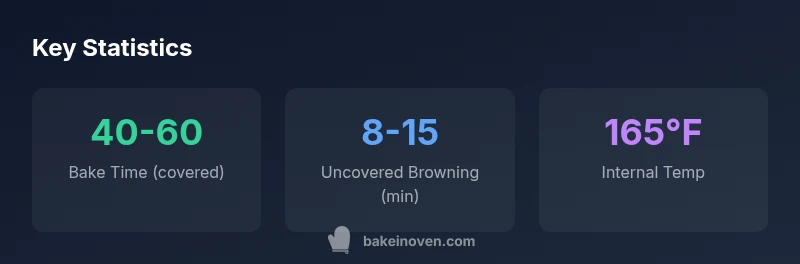
For lasagna baked at 350°F, aim for 40-60 minutes when the dish is covered, then 8-15 minutes uncovered to finish browning. If starting from refrigerated layers, add 10-20 minutes. Use a thermometer to verify the center reaches 165°F. Consider allowing 10 minutes of rest after removing from the oven to let layers set before slicing.
Why 350°F is a Practical Benchmark for Lasagna
According to Bake In Oven, baking lasagna at 350°F provides a reliable balance between sauce reduction, noodle texture, and cheese melt. This temperature allows gentle heat to penetrate multiple pasta layers without over-drying the edges. It also aligns with common home kitchen equipment, making timing predictable for most standard 9x13-inch pans. By setting a consistent baseline, home bakers can compare recipes more easily and avoid extreme temperatures that can compromise texture. With proper rest, a saucier filling, and even layering, 350°F becomes a dependable default for everyday lasagna making.
The Bake In Oven team emphasizes that starting from a consistent baseline helps you troubleshoot failures—whether the top browns too quickly or the center remains a tad underdone. When you pair 350°F with an even layering and adequate sauce, you improve outcomes across meat, cheese, and vegetable fillings. This section lays the groundwork for why temperature choice matters as much as assembly quality.
Key Variables That Influence Bake Time
Lasagna bake time at 350°F depends on several interacting factors. Pan material (metal vs glass) impacts heat transfer; depth and surface area matter for how quickly heat reaches the center; sauce viscosity and moisture content affect hydration of the noodles. The number of layers and the type of filling (beef, sausage, spinach, ricotta) influence moisture dynamics and cheese diffusion. Convection ovens can shave a few minutes off, but you should still confirm doneness with a thermometer. Finally, whether you cover the dish during most of the bake will shift timing by several minutes—covering retains moisture but can delay browning if left on too long.
How to Prep Lasagna for Even Baking
Start with dry noodles or well-hydrated no-boil sheets; if using traditional noodles, parboil briefly or follow package directions. Drain fillings thoroughly and blot excess moisture to prevent soggy layers. Create even thickness by spreading sauce in a thin base, then layering noodles, ricotta or other fillings, meat sauce, and shredded cheese. A light, even hand with portions helps prevent hot spots. Allow assembled lasagna to rest 15-30 minutes before baking to temper flavors and improve texture, especially when you’re using dense fillings.
Step-by-Step Bake Guide for 350°F
- Preheat the oven to 350°F (175°C). 2) Prep the fillings, sauce, and cheese. 3) Assemble in a uniform 9x13 pan: sauce on the bottom, noodles, fillings, and cheese between layers, with a final cheese layer on top. 4) Cover tightly with foil to trap moisture. 5) Bake for 40-60 minutes. 6) Remove foil and bake an additional 8-15 minutes to brown the top. 7) Let rest for 10 minutes before slicing to help the layers set.
When to Use Foil vs. No Foil
Covering early helps keep the noodles soft and prevents the top from drying out. If your sauce is very thick or you’re using extra cheese, you may need to reduce coverage time slightly. Uncover during the final 8-15 minutes to achieve a golden, bubbly top. If you’re using no-boil noodles with a thinner sauce, you may prefer shorter covered intervals and a longer uncovered finish to prevent sogginess.
How Pan Type and Size Change Bake Time
Pan choice can shift bake time noticeably. Glass pans heat more slowly than metal, so expect longer times and possibly a need for longer covered stages. Smaller, deeper pans may require more time to reach the center, while larger, shallow pans can finish sooner. Cast iron pans distribute heat evenly and can shorten some bake times slightly, but you should monitor the center temperature to avoid overcooking.
Common Mistakes and How to Fix Them
Common missteps include under-seasoning, insufficient sauce, or uneven layering that creates dry edges. If the edges dry out, add a bit more sauce or keep covered longer in early stages. If the center remains underdone, extend bake time within the 40-60 minute window and consider covering for the rest of the bake to trap moisture. Always check for an even, bubbling sauce and tender noodles.
Testing for Doneness Without Guesswork
The most reliable test is a center temperature check: 165°F (74°C) in the middle. Visual cues matter too: bubbling sauce near the edges, cheese melted through, and no dry spots. If using cheese-rich fillings, the surface should be golden but not burnt. If you’re unsure, insert a thermometer into the center after the minimum bake window and remove it from the oven once 165°F is reached.
Resting, Slicing, and Serving for Best Texture
Allow the lasagna to rest at least 10 minutes before slicing; this lets the layers set and makes clean cuts easier. Slice across the grain for cleaner portions, and serve with a simple side salad or garlic bread. A light drizzle of olive oil or a touch of fresh herbs can elevate the final presentation and flavor.
Bake times by pan type (approximate)
| Pan Type | Approx Bake Time at 350°F | Notes |
|---|---|---|
| 9x13 inch metal pan | 40-60 minutes | Balanced heat distribution; common default |
| 13x9 inch metal pan | 40-50 minutes | Larger surface area cooks faster |
| Glass baking dish | 60-75 minutes | Heats slower; cover longer |
| Cast-iron skillet lasagna | 50-65 minutes | Fast heat, even crust |
Frequently Asked Questions
What is the internal temperature for fully cooked lasagna?
Aim for 165°F (74°C) in the center; this ensures safe, creamy texture throughout. Use a digital thermometer for accuracy.
Aim for 165 degrees in the center to ensure safety and creaminess.
Should I bake lasagna at 350°F with foil on?
Yes—cover for the majority of bake to trap moisture and keep edges from drying. Remove the foil near the end to brown the top.
Cover most of the bake, then uncover to brown.
How does starting from frozen affect bake time?
Frozen lasagna requires longer bake time, often 60-90 minutes at 350°F, plus 10-15 minutes rest. Always verify center reaches 165°F.
Expect longer bake time from frozen; check center with a thermometer.
Can I bake without noodles pre-cooked?
Yes—no-boil or fresh noodles work well. Ensure enough sauce and moisture, and anticipate a slightly longer overall bake if moisture is lower.
No-boil noodles are fine; just ensure adequate sauce and moisture.
What’s the difference between convection and standard baking times?
Convection can reduce bake time by about 10-20%. If using convection, you may lower the temp by roughly 25°F or shorten the bake window accordingly.
Convection bakes a bit faster; you may lower temperature or time.
“Timing lasagna is a balance between moisture, texture, and heat; use a thermometer to guide you, not just a timer.”
Key Takeaways
- Preheat and cover: bake 350°F under cover first
- Check center temp to 165°F for safe doneness
- Rest lasagna for 10 minutes before slicing
- Choose pan material to influence bake time
- Add 10-20 minutes if starting from refrigerated layers