How Long to Blind Bake a Pie Crust: A Complete Guide
Master blind baking with precise times and temperatures to prevent soggy bottoms. Learn par-bake vs full bake, when to chill, and how to troubleshoot common crust issues for perfect pies every time.


Blind baking a pie crust means pre-baking the crust before filling to prevent soggy bottoms. Typically, par-bake for about 8-12 minutes at 375°F with pie weights, then finish for 15-20 minutes if you want a fully baked crust. Times vary by crust thickness and filling; docking and chilling help stability and texture.
Why blind bake a pie crust
According to Bake In Oven, blind baking creates a sturdy base that stays crisp under moist fillings and prevents the bottom from turning soggy. This technique is essential for custard pies and fruit pies with juicy fillings. A well blind-baked crust also forms a reliable edge and texture that complements a richly layered filling. The Bake In Oven team found that the right balance of chilling, docking, and weight prevents shrinkage and puffing, which can otherwise compromise the pie’s structure.
Temperature ranges and timing basics
Most home bakers start with a preheated oven set to 375°F (190°C) for par-baking. For a light, pale crust with a crisp edge, 8-12 minutes is common; for a deeper or thicker crust, you may need 12-15 minutes. To achieve a fully baked, golden crust that supports hearty fillings, plan for 15-20 minutes or longer, depending on filling moisture and crust thickness. Always err on the side of slightly underbaking when your filling is very wet, then finish in the oven if needed. Always use a reliable oven thermometer to verify your temperature.
Tools, weights, and prep you need
The backbone of a successful blind bake is good preparation. Gather parchment paper or heavy-duty foil, pie weights or dried beans, a rolling pin, and a 9-inch pie pan. Chill the dough before rolling to minimize shrinkage. Docking (pricking the crust) helps prevent air pockets, especially in thinner crusts. Having a sheet pan to catch any overflow makes cleanup easier and keeps your oven tidy.
Tips for different fillings and crusts
Custard pies benefit from a longer par-bake and a crisp bottom, while fruit pies with high moisture may require a shorter initial bake plus finishing time with the filling already added. Shortcrust and flakiest crusts respond well to chilling between steps, ensuring the dough stays cool as it bakes. If you’re using store-bought dough, follow the package’s chilling and pre-baking recommendations, then adapt with your own tests.
Common mistakes and how to fix them
A soggy bottom usually means insufficient par-bake time or missing weights. Shrinkage happens when dough isn’t chilled enough; docking and a proper edge can help. Over-browning is common if you bake too long or at too high a temperature. Always monitor the crust’s color and texture, and be prepared to cover the edges with foil if they brown too quickly.
Make-ahead tips and storage
Chill the dough for at least 30 minutes before rolling, and consider freezing to extend shelf life. Par-baking a crust ahead of time can speed up pie night, especially when you plan to bake custards or fruit fillings later. Store baked crusts in a cool, dry place, or freeze unfilled baked crusts for up to a month.
Tools & Materials
- unbaked pie dough (shortcrust or your preferred crust)(Chilled if possible; roll to about 1/8 inch (3 mm) thick.)
- parchment paper or heavy-duty foil(Line the crust while weighing to prevent sticking.)
- pie weights or dried beans/rice(Weight to keep crust from puffing and shrinking.)
- rolling pin(Roll dough evenly to maintain uniform thickness.)
- 9-inch pie pan(Prefer a shallow edge for even browning.)
- baking sheet(Catches overflow and helps with even heat distribution.)
- oven thermometer(Verify oven temperature for consistent results.)
- cooling rack(Cool crust completely before filling.)
Steps
Estimated time: 60-90 minutes
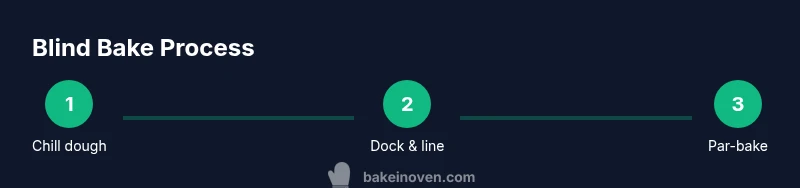
- 1
Chill the dough
Start with a well-chilled dough. Roll to about 1/8 inch thick and gently place it in the 9-inch pan, trimming edges flush with the rim. Chill the assembled crust for 30 minutes to reduce shrinkage during baking.
Tip: Chilling locks in shape and minimizes shrinking once heated. - 2
Roll and fit the crust
Roll dough evenly to avoid thick or thin spots. Transfer to the pie pan, press gently to fit the corners, and trim edge evenly. A consistent thickness bakes more evenly and browns uniformly.
Tip: Keep dough cool while adjusting to prevent tearing. - 3
Dock the dough
Use a fork to dock the bottom and sides in several places. This creates channels for steam and prevents air pockets that can cause puffing.
Tip: Even docking helps maintain a flat, even base. - 4
Line with parchment and add weights
Line the crust with parchment or foil and fill with pie weights, dried beans, or rice until the bottom is evenly weighted. This keeps the crust from bubbling and shrinking.
Tip: Make sure weights cover the entire bottom; avoid gaps. - 5
Par-bake the crust
Bake in a preheated oven at 375°F for 8-12 minutes, watching for light golden color on the edges. If the center looks pale, give it a few more minutes but don’t overbake.
Tip: Edges browning early means you may need to shield them with foil. - 6
Remove weights and continue baking
Carefully lift the parchment/foil with weights and bake 5-10 minutes more if you’re aiming for a fully baked crust. The bottom should look set and dry before filling.
Tip: Handle hot parchment with oven mitts to avoid steam burns. - 7
Cool before filling
Let the crust cool completely on a cooling rack before adding any filling. A warm crust can trap moisture and soften the base.
Tip: Cooling ensures the crust stays crisp under the filling.
Frequently Asked Questions
Should I blind bake with or without weights?
Always use weights or a lined crust for par-baking to prevent puffing and shrinking. Without weights, the crust may bubble and the bottom won’t stay crisp.
Use weights or parchment with weights to keep the crust flat and solid during par-baking.
What temperature should I use for blind baking?
A common starting point is 375°F (190°C) for par-baking a standard crust. If you’re aiming for a fully baked crust, you may bake a bit longer or at slightly lower heat to avoid over-browning.
Most recipes bake at 375°F for par-bake; adjust if your crust is very thick or if you need a crisper bottom.
Can I blind bake a crust for custard pies?
Yes. Par-bake the crust first, then add the custard filling and bake as directed. The par-bake helps prevent soggy bottoms.
Par-bake the crust first, then fill with custard and finish baking as your recipe directs.
How long should the dough chill before rolling?
Chill the dough for at least 30 minutes before rolling. For best results, refrigerate for 1-2 hours or freeze briefly.
Chill for 30 minutes or longer to reduce tearing and shrinking.
What if the crust starts browning too fast?
Cover the edges with foil or a crust shield to prevent over-browning, and consider lowering oven temperature slightly for the remainder of baking.
If the edges brown too quickly, shield them and bake a bit longer at a lower temperature.
How do I fix a soggy bottom after baking?
If the bottom is soggy, bake the crust longer before filling or return it to the oven with weights to complete the bake. Ensure proper cooling before filling.
To fix soggy bottoms, give the crust a longer bake or reheat with weights, then cool completely before filling.
Watch Video
Key Takeaways
- Chill dough to minimize shrinkage
- Use weights or a lined crust to prevent puffing
- Par-bake time varies with filling moisture
- Cool completely before filling to retain crispness
- Shield edges if they brown too quickly