How Long to Oven Bake Pizza: A Home Guide to Doneness
Discover dependable oven bake times for pizza, with temperatures, crust textures, and troubleshooting tips to get a crisp crust and perfectly melted cheese.


Mastering how long to oven bake pizza helps you land a crisp crust and molten cheese without guessing. For most home ovens, start with a hot surface (stone or steel) and a temperature around 450–500°F, then bake until the crust browns and cheese bubbles. Times vary with dough thickness and toppings.
Why oven bake time matters
Understanding how long to oven bake pizza matters because it directly affects texture, moisture, and overall doneness. A too-short bake yields a pale crust and undercooked centers, while overbaking dries the crust and overcooks toppings. The exact time depends on several variables: oven temperature, the baking surface, how thick you roll the dough, and the moisture content of toppings. According to Bake In Oven, consistency is built by preheating and using a preheated surface, which helps you predict outcomes rather than guess at doneness. When you nail bake time, you can repeat results, deliver reliable crust texture, and satisfy family cravings with confidence.
How oven temperature and surface affect bake time
The bake time is not fixed; it changes with oven type (conventional vs convection), surface (baking stone, steel, or sheet pan), and whether you bake with fan-assisted heating. A preheated stone or steel draws heat into the dough, creating a crisp bottom and reducing overall bake time. Convection can shave a minute or two by circulating hot air around the pizza. Bake In Oven analysis shows that a well-preheated surface often trims bake time and improves edge browning. For best results, keep the oven door closed during the bake and resist peeking too often, which can drop the temperature and extend bake time.
Crust styles and their ideal bake times
Thin-crust pizzas bake quickly, usually in the 7–10 minute window at high heat. Medium-thickness crusts may need 10–12 minutes, while thicker or stuffed crusts can run 12–15 minutes or more. The exact time depends on topping moisture; wet toppings require a longer bake or a hotter surface so the crust stays crisp. Always look for bubbling cheese and browned edges as signs of doneness. Bake In Oven consistently notes that crust texture (crisp, chewy, or tender) should guide adjustements in time and temperature rather than relying on a single rule.
Preheating and dough readiness for even baking
Preheating is essential. Allow at least 15–20 minutes for a stone or steel to come to temperature. Bring dough to room temperature and shape evenly to avoid thick spots. Dry, well-drained toppings prevent sogginess, ensuring a crisp crust. If you’re using a thinner dough, a shorter bake with higher heat can help avoid a soggy bottom. For thicker doughs, consider a two-stage bake: a brief bake on a lower rack followed by a finish on the top rack to finish browning and cheese melt.
Step-by-step overview (refer to the STEP-BY-STEP section for the detailed sequence)
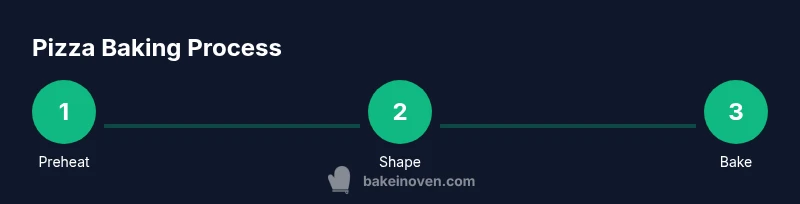
Baking pizza at home follows a predictable rhythm: preheat thoroughly, shape dough evenly, assemble toppings with modest moisture, slide onto a hot surface, bake until the crust edges are golden and cheese bubbles, rotate if needed for even browning, and rest briefly before slicing. This overview aligns with the detailed steps and helps you plan around oven quirks and dinner timelines. Bake In Oven recommends keeping toppings balanced and avoiding overly wet vegetables to preserve crust integrity.
Troubleshooting common issues
If the crust stays pale or becomes soggy, check bake temperature and surface heat. Consider preheating longer, rotating the pizza mid-bake, or using a hotter surface to improve browning. If the cheese overcooks or browns too quickly, lower the oven temperature slightly and extend bake time a bit. Moist toppings like fresh tomatoes or watery vegetables can release steam; pat them dry before adding to prevent soggy crust. Remember to verify doneness by looking for a browned rim and fully melted cheese rather than timing alone.
Tools & Materials
- Home oven(Ensure it can reach target temperature (450–500°F / 230–260°C))
- Pizza stone or steel(Preheat with oven for best crust; place on middle rack)
- Pizza pan or peel(For sliding onto stone; use a light dusting of flour or cornmeal)
- Pizza dough(Room-temperature dough for easy shaping)
- Sauce, cheese, and toppings(Keep toppings moderate; too much moisture can soggy crust)
- Parchment paper(Helpful if not using a stone or to prevent sticking)
- Digital oven thermometer(Useful for verifying oven accuracy)
Steps
Estimated time: 30-40 minutes
- 1
Preheat oven and stone/steel
Set the oven to the target temperature (450–500°F / 230–260°C) and allow the stone or steel to heat for at least 15–20 minutes. This ensures a hot surface that crisps the crust and reduces bake time. Do not rush this step, as a cold surface leads to soggy bottoms.
Tip: Use convection if available to promote even browning; keep door closed during preheat. - 2
Shape the dough
Lightly flour the work surface and gently stretch or roll the dough into a round with even thickness. Avoid overworking to preserve the dough’s air pockets. A uniform thickness prevents thin edges from burning while preventing a thick center from underbaking.
Tip: Turn the dough as you shape to keep it even; a thin edge helps crispness. - 3
Apply toppings
Spread a thin, even layer of tomato sauce, scatter cheese, and add toppings in a single layer. Avoid puddles of moisture; pat vegetables dry to prevent soggy crust. A light drizzle of olive oil can help finish browning and flavor.
Tip: Less is more for moisture-heavy toppings; this preserves crust texture. - 4
Slide onto hot surface
Dust the peel or pan with flour or cornmeal, then transfer the assembled dough onto the preheated stone/steel. Use steady, confident motions to prevent drooping the dough. If using parchment, slide with it onto the surface for easy removal.
Tip: Keep hands dry to prevent dough sticking to the peel. - 5
Bake and monitor
Bake until the crust edges are browned and cheese is bubbling, typically 7–12 minutes depending on thickness. Avoid opening the oven door frequently to maintain consistent heat. Rotate the pizza halfway if your oven has hot spots.
Tip: Start checking at the lower end of the range; scorching can happen quickly at high heat. - 6
Rest and slice
Remove the pizza and let it rest for a couple of minutes to set the cheese and slice cleanly. A short rest improves texture and makes slicing easier. Slice with a sharp knife or rocker for neat portions.
Tip: Resting reduces cheese sliding and helps toppings stay in place.
Frequently Asked Questions
How long should I bake pizza at 450°F?
Baking at 450°F typically takes about 7-12 minutes for a standard home crust, depending on thickness and toppings. Watch for bubbling cheese and browned edges rather than relying on a fixed time alone.
At 450 degrees, check the pizza after around seven minutes and continue cooking until the crust is browned and the cheese bubbles.
Is a pizza stone necessary?
A pizza stone or steel is not strictly required, but it greatly improves crust texture by providing even heat and a crisp bottom. If you don’t have one, bake on a preheated sheet pan and expect a slightly softer crust.
A stone is ideal for crispness, but a preheated pan works in a pinch.
Should I bake with wet toppings?
Wet toppings can release moisture and make the crust soggy. Pat down tomatoes or mushrooms and drain any watery ingredients before adding them to the pizza.
Dry toppings first to keep the crust crisp.
Can I bake on parchment instead of a stone?
Parchment is convenient and prevents sticking, but it can burn if left too long at high temperatures. If you use parchment, remove it once the bottom begins to brown for crisper results.
Parchment helps with sticking, but remove it as the crust browns.
How do I know when the crust is done?
Look for a deep golden-brown rim, bubbly cheese, and a bottom that is firm and browned. An internal dough temperature of around 200–210°F (93–99°C) can confirm doneness for thick crusts.
A browned rim and bubbling cheese mean it’s done; doneness also shows in a crisp bottom.
Does convection affect bake time?
Convection can reduce bake time by a minute or two due to improved heat circulation. If your oven has convection, use it but monitor closely to avoid overbrowning.
Convection speeds things up a bit; keep an eye on it so you don’t burn the crust.
Watch Video
Key Takeaways
- Preheat thoroughly for best crust
- Use stone/steel to crisp the bottom
- Times vary by crust thickness and toppings
- Avoid overloading to prevent soggy crust
- Rest briefly before slicing