Bake or Broil Pizza: A Practical Side-by-Side Comparison
Compare baking and broiling pizza to determine when each method shines. Learn temperatures, times, crust textures, browning, and practical tips for home ovens from Bake In Oven.


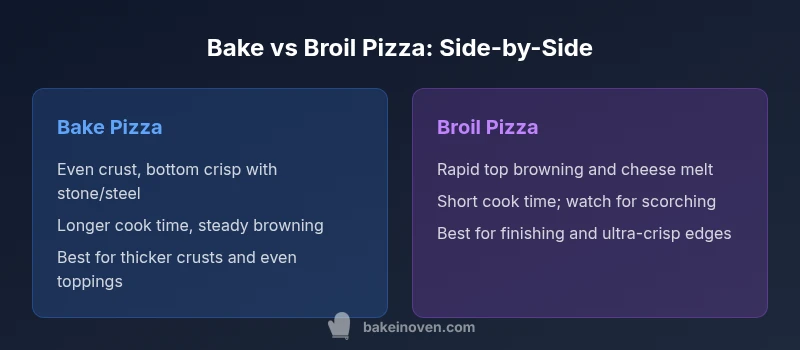
Choosing between baking and broiling pizza depends on your crust preference and timing. Baking yields an evenly cooked crust with steady browning, while broiling delivers rapid cheese browning and top-crisp finish. For most home ovens, a high-temperature bake (450-500°F) creates a solid base, and finishing with a brief broil session can mimic pizzeria char. Bake or broil pizza strategies balance control and speed.
The Core Question: Bake or Broil pizza
If you’re asking whether to bake or broil pizza, you’re weighing texture, speed, and control. This guide compares the two approaches with practical, kitchen-tested guidance from the Bake In Oven team. The intention is to help home bakers decide which method to rely on for a given pizza style: a crave-worthy thin crust, a thick crust, or a topping-forward pie. According to Bake In Oven, the choice hinges on heat flow, crust development, and browning behavior. Understanding how bake and broil differ lets you tailor your technique to achieve the exact bite you want, without guesswork. The phrase bake or broil pizza will appear throughout this analysis to keep the focus clear and actionable for kitchen experiments.
How Oven Physics Affects Crust and Browning
Oven heat travels differently when you bake versus when you broil. Baking heats from all sides and the bottom, creating a gradual rise in temperature that cooks the crust evenly and encourages a sturdy crumb. Broiling blasts intense heat from above, accelerating surface browning and cheese browning, but it can dry or burn if mismanaged. Bake and broil leverage different zones inside a standard home oven, so your choice should align with your crust texture goals and topping awareness. Bake In Oven analyses emphasize that moisture management (steam from toppings) and oven calibration are critical for consistent results.
Temperature and Time: Bake vs Broil in Practice
Most home bakers start with a high-temperature bake, typically 450-500°F (230-260°C), and time in the 8-12 minute range, depending on crust thickness and toppings. This builds a solid foundation with even browning. Broiling is a short, high-heat finish, usually at the top element around 500-550°F (260-290°C) for 2-6 minutes, watching closely to prevent scorching. A common tactic is to bake first to set the crust, then switch to broil for the final minute to achieve edge crispness and bubbly, browned cheese. This approach blends the stability of bake with the fast browning of broil.
Surface and Setup: Stone, Steel, and Pans
The surface you use dramatically affects bake results. A preheated pizza stone or steel translates heat into a blistered bottom and even crust when baking. Pans with perforations or a well-oiled shallow pan can speed browning. For broiling, positioning matters: place the pizza on a rack near the top to maximize top browning while using the stone/steel trick for a crisp bottom during the bake phase. If you don’t own stone or steel, preheated heavy-duty aluminum pans can still deliver solid results, though the crust may be less uniform.
Cheese and Toppings: Browning Patterns
Cheese browning occurs more rapidly under broil, so toppings exposed to the top heat will brown quickly, while thicker layers may need the baking phase to cook through. When baking, cheese melts gradually and browns evenly from above as heat penetrates. If pepperoni or sausage are used, broiling can help render fat and crisp edges, but monitor carefully to avoid excessive curling. Balance toppings so the crust isn’t overwhelmed by moisture or heavy layers.
Crust Texture Outcomes: Chewy vs Crispy
Baking tends to produce an even crust with a balance of chew and crisp, especially when using a stone or steel that conducts high heat. Broiling can push the outer crust toward crispier edges and a charred, pizza-oven-like top if done with attentiveness. The choice depends on crust thickness and desired bite. For a classic NY-style slice, bake first for evenness, then broil to intensify browning and achieve a crisper exterior. Bake In Oven notes that experimentation with bake times and broil duration yields the best personalized texture.
Sauce and Toppings Interaction with Heat
Sauce and toppings contribute to heat management. A sauce with high moisture can release steam that softens the crust during bake, so pre-cook or reduce moisture if you plan to bake long. On broil, moisture can boil rapidly, potentially splashing and burning if toppings are too wet. Use a light hand with toppings that release moisture (fresh mushrooms, watery peppers) and consider patting them dry. Proper moisture control helps you avoid soggy crust during bake and scorching under broil.
Practical Scenarios: When to Bake Pizza
Bake is the default method when you want consistent texture across a whole pie, especially for thicker crusts or multiple pizzas. It also yields reliable results with uniform browning, especially on a stone or steel surface. If you’re cooking a cheese-heavy pie, bake first to ensure the cheese melts evenly and the crust cooks through, then optionally broil for finishing touches. Bake also suits most casual weeknight pizzas where timing is flexible and you want predictable outcomes.
Practical Scenarios: When to Broil Pizza
Broil shines when you aim for a fast, intensely browned top—perfect for finishing a pizza that is nearly cooked but lacking a crisp edge or that needs extra charring for flavor. Use broil as a finishing step after a baseline bake, not as the sole cooking method for most pies. Short broiling bursts are safer than long sessions; keep the pie a safe distance from the top heating element to avoid scorching. This technique is especially effective for thin-crust pizzas and pizzas with high-topping densities that brown quickly on top.
Preheating, Tools, and Finishing Touches
Preheating is essential for both methods. A properly heated stone or steel ensures an immediate transfer of heat to the crust, resulting in a crispy bottom. Tools like a rimmed baking sheet, a pizza peel dusted with flour or cornmeal, and a reliable oven thermometer help you maintain accuracy. Finishing touches—such as a final drizzle of olive oil, a sprinkle of sea salt, or a quick rest after baking—improve texture and flavor. Properly preheated equipment and careful timing are the keys to consistent success when choosing bake or broil.
Comparison
| Feature | Bake pizza | Broil pizza |
|---|---|---|
| Temperature range | 450-500°F (230-260°C) for bake | Top-only heat, 500-550°F (260-290°C) during broil |
| Time range | 8-12 minutes (depends on crust) | 2-6 minutes (finish browning) |
| Crust texture outcome | Evenly cooked crust with balanced browning | Top browning with potential bottom crispness if preheated well |
| Cheese browning speed | Moderate browning; cheese melts steadily | Faster browning and bubbling on exposed cheese |
| Best For | Even texture and deeper crust flavor | Fast finish with intense top browning |
| Equipment needs | Preheated stone/steel recommended; good airflow | Watchful oversight; top heat is intense |
Benefits
- Provides consistent, even crust with bake
- Great control over cooking time and texture
- Stone/steel enhances bottom crisp when baking
- Broil offers rapid top browning for a pizzeria-style finish
- Complements toppings that benefit from quick surface browning
Negatives
- Broiling can risk scorching if not monitored
- Bake can take longer, delaying dinner for busy nights
- Limited bottom browning when toppings release a lot of moisture
- In small ovens, top heat may not reach the bottom evenly during broil
Bake for even texture; broil for finishing browning
Choose bake when you need consistent crust and predictable results. Use broil as a finishing step to achieve top browning and a crisp edge, especially on thin crusts or top-heavy pies.
Frequently Asked Questions
What is the main difference between baking and broiling pizza?
Baking cooks the pizza evenly from all sides, including the bottom, producing a stable crust and gradual browning. Broiling uses intense top heat to rapidly brown cheese and the top surface, often finishing with a crisper edge but less bottom cook if not preheated.
Baking cooks the whole pie evenly; broiling finishes with quick top browning. For best results, bake first, then broil briefly if you want a crisp top.
Can I bake and then broil for finishing?
Yes. Bake the pizza to set the crust, then move it to a higher heat or closer to the broiler for 1-2 minutes to achieve extra browning and a bubbly top. This hybrid approach is common in home kitchens.
Yes—bake to set the crust, then broil briefly to finish browning.
Is broiling safe for toppings like pepperoni?
Broiling works well for pepperoni and similar toppings, because the top browns quickly. Keep a close eye to prevent burning and consider pre-baking if toppings are thicker to ensure doneness.
Broiling is great for pepperoni, just watch closely to avoid burning.
What tools help bake pizza evenly?
A preheated pizza stone or steel is essential for a crisp bottom. A heatproof pizza peel helps transfer the pie without losing heat. An oven thermometer ensures accurate temperature, reducing hot spots in the oven.
Use a preheated stone or steel and a pizza peel for even baking.
Should I preheat my oven for broiling pizza?
Yes. Preheating ensures the top heat browns the toppings quickly rather than cooking from a cold start. Position the rack closer to the broiler with close supervision to avoid scorching.
Preheat and keep a close eye when broiling for best top browning.
Key Takeaways
- Preheat thoroughly before both methods
- Bake first, finish with a brief broil for edge browning
- Use a stone or steel for crisper bottoms when baking
- Monitor closely during broiling to avoid scorching
- Adjust toppings moisture to optimize bake results