Bake or Convection Bake for Pizza: Which Method Wins?
A practical, data-driven comparison of bake vs convection bake for pizza. Learn heat flow, crust texture, topping behavior, and setup tips to choose the best method for your crust style and weeknight workflow.


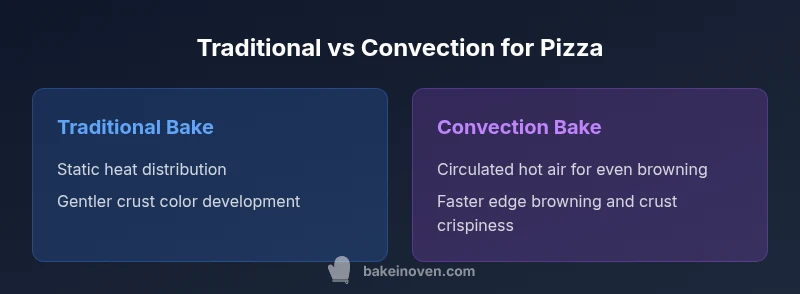
Convection bake typically delivers a crisper crust and faster browning for pizza by circulating hot air, but it can overcook thin toppings or dry the crust if misused. Traditional bake provides gentler, more even cooking ideal for thicker pies and heavier toppings. Practically, convection is best for fast, blistered crusts; traditional bake works well for sturdy, toppings-heavy pizzas. See our detailed comparison chart for nuances.
Understanding the core question: bake or convection bake for pizza
For many home bakers, the question of bake or convection bake for pizza is not a simple yes-or-no decision. The choice depends on crust style, toppings, oven design, and how you want the final texture to feel. This guide explains how each method works, what to expect in terms of crust color and chew, and how to adapt timing and heat to your pizza. The Bake In Oven team frames the core trade-offs that guide practical decisions. Whether you’re aiming for a blistered Neapolitan crust or a sturdy deep-dish, the method you choose will influence texture, flavor development, and overall balance between crust and toppings.
In this discussion we’ll address why home ovens behave differently than professional deck ovens, how to harness convection without sacrificing toppings, and how to run simple tests to decide what works best for your kitchen. If you’re asking whether you should bake or convection bake for pizza in your oven, the short answer is: it depends on your dough hydration, thickness, and the bake environment you can create with your equipment. This is precisely where Bake In Oven’s practical, kitchen-tested guidance becomes valuable.
As you read, keep in mind the keyword bake or convection bake for pizza and how it frames the choices you’ll make about heat, airflow, and timing. The goal is not a universal prescription but a reliable framework to predict outcomes and tailor the method to your preferred crust. By the end, you’ll be empowered to test confidently and adopt a workflow that consistently delivers the crust you want.
analysis_note_only_for_editorial_review_prefix_for_focus
Comparison
| Feature | Traditional bake (no convection) | Convection bake (with fan) |
|---|---|---|
| Heat distribution | Static, inward-to-outward heat | Circulated hot air for even exposure across the crust and toppings |
| Crust texture outcome | Bottom crust browns gradually with softer edges | Crispier bottom and more pronounced edge browning |
| Bake time guidance | Longer bake with gradual browning | Shorter overall bake time with quicker color development |
| Best for | Thicker crusts and generously topped pies | Thin, blistered crusts and fast bake lines |
| Setup considerations | Fewer airflow variables to manage | Requires careful airflow management and stone/steel setup |
Benefits
- Faster browning and crisper crust with convection
- More even heat distribution reduces hot spots
- Shorter bake times can improve weeknight throughput
- Better control over surface browning when used with proper equipment
Negatives
- Convection can dry thin toppings or crust if overused
- Not ideal for very thick or tall pizzas that rely on heat penetration
- Requires attention to airflow and preheating to avoid uneven browning
- Some ovens may have uneven convection strength across racks
Convection bake is the preferred default for crisp, fast pizzas, while traditional bake remains the safer choice for thick or heavily topped pies.
Choose convection for thin, blistered crusts and quicker results; revert to traditional bake for thick crusts or when topping moisture preservation matters. Practice and tuning with your specific oven will yield the best consistency.
Frequently Asked Questions
Which pizza styles benefit most from convection baking?
Thin crusts and blistered Neapolitan-style pizzas typically benefit from convection due to faster, even browning. Thick crusts or pizzas with a lot of toppings may not see the same advantage and can even over-brown if not monitored. Consider a test bake to see how your oven handles your preferred style.
Thin crusts tend to do best with convection; for thick crusts, test and decide what texture you prefer.
Can I bake two pizzas at once using convection?
Yes, convection can handle multiple pies if you allow space for air to circulate. Avoid stacking and rotate the pizzas between racks if your oven has uneven airflow. Maintain awareness of color progression to prevent over-browning.
Yes—give them space and rotate if necessary.
Should I adjust temperature when using convection?
Yes. Because convection moves heat more efficiently, you generally lower the temperature compared to a non-convection bake. The exact adjustment depends on your oven, dough type, and crust style. Start with a small reduction and fine-tune with a testing bake.
Lower temperature when using convection and watch closely.
How does convection affect cheese melt?
Convection can promote even cheese melt and surface browning, but it may cause topping juices to concentrate on the surface more quickly. Positioning and timing help balance melt with crust color. Consider finishing with a brief top-heat phase if needed.
It helps melt evenly but watch for quick browning.
When is a traditional bake clearly preferable?
Traditional bake is preferred for thick-crust pizzas, heavy toppings, or when you want gentler, more forgiving heat penetration. It reduces risk of drying the crust and helps maintain moisture in taller pies. Use it as your default when texture control matters most.
Choose traditional bake for thicker, moister pies.
Key Takeaways
- Experiment with convection for crisp edges on thin pies
- Use traditional bake for thicker crusts or load-heavy pizzas
- Preheat thoroughly and keep airflow unobstructed for even browning
- Test with side-by-side pies to calibrate oven behavior
- Keep notes on crust texture, color, and moisture after each bake