How Much Baked Beans for 20 People: A Practical Guide
Learn how to estimate baked beans for 20 guests with practical serving guidelines, a simple calculator, and tips for serving, storage, and safety. A kitchen-tested approach from Bake In Oven.


How Much Baked Beans for 20 People: A Practical Start
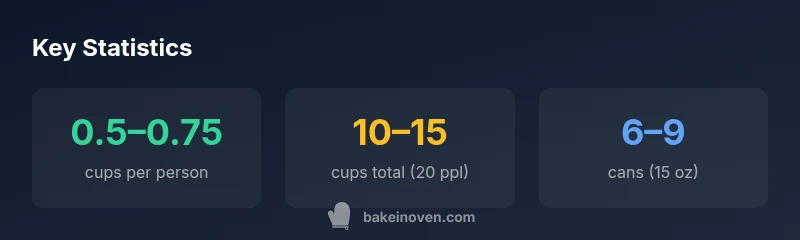
When planning a crowd, the question often starts with how much baked beans for 20 people. A simple guideline keeps this manageable: allocate about 0.5 to 0.75 cups of cooked beans per person when beans are a side dish. For 20 guests, that means roughly 10 to 15 cups of beans in total. If beans will play a larger role in the meal, lean toward the higher end of that range or round up to ensure generous portions. Bake In Oven recommends treating servings as a flexible target rather than a fixed quota, so you can adjust based on the other dishes and the crowd’s appetite. This approach helps minimize waste while keeping portions satisfying for most guests.
Per-Person Servings: Side vs Main
Serving baked beans as a side differs from using them as a main protein, and this affects portions. As a side, 0.5–0.75 cups per person is a comfortable baseline. If beans are the star of the plate, plan closer to 0.75–1.0 cup per person. For a group of 20, that translates to roughly 10–15 cups total as a side dish, or closer to 15–20 cups if beans are the main feature alongside other protein options. Remember that other dishes—salads, bread, and desserts—also influence how hungry people feel. Bake In Oven’s practical approach helps home bakers balance variety with sufficient portions.
Canned vs Dry Beans: Pros, Cons, and Yields
Canned baked beans offer speed and convenience, especially for gatherings. They’re ready to heat and serve, with predictable texture. Dry beans, by contrast, can be cheaper and let you control flavor more directly, but they require soaking and longer cooking times. If you choose dry beans, plan a head start: soak overnight or for 8–12 hours and cook until tender, then simmer with your preferred sauce. Either option can meet your needs for 20 guests; the choice often comes down to time, budget, and flavor preferences.
The Simple Calculation Method
A straightforward way to estimate is to decide how many cups per person you want and multiply by your number of guests, then translate cups to cans if you’re using canned beans. A compact formula is: totalCups = people × cupsPerPerson; cansNeeded = round(totalCups ÷ cupsPerCan). For example, with 20 people and 0.6 cups per person, and a can giving about 1.5 cups, you’d need round( (20 × 0.6) ÷ 1.5 ) = round(12 ÷ 1.5) = round(8) = 8 cans. This method keeps planning flexible and scalable for larger groups.
Real-World Scenarios: Side Dishes, Buffets, and Main Dishes
In a buffet, baked beans are often a secondary or supporting element. For 20 guests, you might offer 8–9 cans and supplement with extra sides. If you’re hosting a potluck with a baked-beans-focused dish, you may want 10–12 cans and consider a second, lighter savory side to balance heaviness. For a main-dish approach (e.g., beans with rice or cornbread), plan toward the higher end of your range and monitor crowd uptake as service begins.
Batch Cooking, Freezing, and Reheating Guidelines
If you cook beans in batches, reheat thoroughly before serving. Baked beans reheat well in a slow cooker or on the stove, stirring occasionally to prevent scorching. If you prepare beans ahead of time, cool them quickly, refrigerate within two hours, and reheat to steaming hot. Freezing is possible for cooked beans but may affect texture; for best results, freeze in portions and reheat gently, adding a splash of sauce or water to restore consistency.
Flavor Boosts: Seasonings and Add-Ins
Beans benefit from complementary flavors. Consider smoky elements (smoked paprika or bacon bits), sweetness (brown sugar or maple), tang (mustard or vinegar), and aromatics (onion, garlic). A finishing touch of fresh herbs or a squeeze of lemon can brighten the dish. If you’re feeding a variety of tastes, offer a couple of customizable toppings or sauces so guests can tailor portions to their liking.
Safety, Storage, and Quality Tips
Handle beans with clean tools and store leftovers promptly. Refrigerate within two hours and reheat to at least 165°F (74°C). If using dry beans, ensure they are fully cooked to avoid digestive discomfort. When reheating, keep beans covered to retain moisture and flavor, and avoid over-thickening with excess starch if you’re topping with breadcrumbs or cheese later.
Quick Prep Checklist for Your Bean Feasts
- Decide side vs main dish role and estimate servings accordingly.
- Choose canned vs dry beans based on time, budget, and flavor goals.
- Use the calculation method to estimate cans, then round up for safety.
- Plan flavor enhancements and serving methods (warmers, chafers, or slow cookers).
- Prepare storage and reheating steps to maintain texture and safety.