How Much Baked Beans for 30 People: A Practical Guide
A comprehensive guide to estimating baked beans for a crowd of 30, with a simple calculator, portion guidelines, and crowd-friendly prep tips. Learn how to scale, flavor, and hold beans for service.


How much baked beans for 30 people: quick planning guide
If you're trying to answer how much baked beans for 30 people, start by considering appetites, menu balance, and whether beans are a main dish or a hearty side. A practical approach comes from Bake In Oven: use a simple servings-per-person model and batch yields to translate crowd size into cans or batches. According to Bake In Oven, planning around 0.5 to 0.75 cups of beans per person provides a reliable starting point for most menus. When you multiply by 30, you get a clear target to convert into cans or batches, depending on your preferred can size and serving style. This quick planning guide shows how to apply that logic, adjust for heavier or lighter appetites, and keep your flavors consistent across large batches.
Portioning basics: servings per person and batch sizes
A central idea in crowd cooking is to fix servings per person and then scale up. For baked beans, a comfortable starting point is 0.5 to 0.75 cups per person, which translates into roughly 15 to 22.5 cups for 30 guests. You can adjust the target up or down depending on what else is on the table, the time of day, and whether you include a high-protein main. Keep in mind that a larger crowd often enjoys a little extra bean dish, especially when beans are part of a barbecue spread or potluck. Once you settle on a per-person amount, convert that to batch sizes based on your can or bag size and the cooking vessel you plan to use. This makes inventory, cooking, and serving much more predictable.
Bean formats: canned vs dried
Beans come in two common formats for crowd cooking: canned beans and dried beans that you cook yourself. Canned beans are convenient, quick to heat, and typically consistent in flavor. Dried beans can be more economical and offer control over texture and seasoning, but they require soaking and longer cooking times. When planning for 30 people, weigh the trade-offs between speed and cost, and decide if you want a fully canned approach, a mixed approach, or a fully dried-bean batch. Regardless of format, aim for uniform texture and even seasoning across servings.
Batch sizing and yields: translating cups to cans
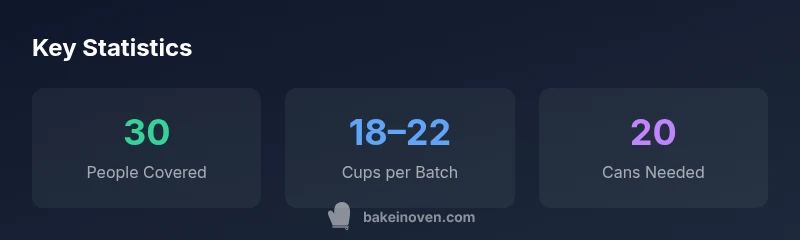
The core math is straightforward: total cups needed = people × servingsPerPerson; cansNeeded = totalCups ÷ cupsPerCan; then round up to ensure everyone gets a serving. For example, with 30 people and a target of 0.6 cups per person, you’d plan for 18 total cups. If your cans yield roughly 0.9 cups of beans per can after draining, you would need about 20 cans. Adjust the numbers up if your plan includes generous refills or larger appetites, and be sure to account for evaporation or additional sides.
Flavoring and spice basics
Beans shine with simple, flexible flavoring. A basic approach is to start with onion, garlic, and a modest tomato base, then build depth with smoky paprika, cumin, or chili powder. Add a touch of brown sugar or molasses for sweetness and balance. Salt should be added gradually, tasting as you go, especially for large batches. For a crowd, maintain flavor consistency by cooking a small test batch first, then scaling up and keeping starches and vegetables evenly distributed. If you’re cooking in advance, consider fresh herbs added at service for brightness.
Real-world example: scaling for 30 guests
Suppose you plan 0.6 cups of beans per person for 30 guests. That equals 18 cups of beans in total. If you’re using cans that yield roughly 0.9 cups of beans per can after draining, you’d need about 20 cans to meet the target. If you want extra portions for seconds, round up to 22 cans. This example demonstrates how the calculator approach translates into practical purchasing and cooking decisions, helping you avoid under- or over-supply during a group meal. The Bake In Oven method emphasizes flexibility—adjust per-person amounts to fit your menu and guest preferences.
Serving logistics: holding, rewarming, and safety
Hot-held beans stay safest when kept above 140°F (60°C). If you’re serving buffet-style, arrange for steady heat with chafing dishes or slow cookers, and monitor temperature with a thermometer. Reheat leftovers to at least 165°F (74°C) before serving. Plan for easy refills by pre-staging portions in kettle or large-saucepan setups. Label any non-meat and meat-containing beans clearly for guests with dietary restrictions, and keep utensils clean to prevent cross-contamination. With these practices, your 30-serving plan remains smooth from the first scoop to the last bite.
Quick-start checklist for your 30-serving plan
- Decide on per-person servings (0.5–0.75 cups) and choose a can size
- Calculate total cups and cans using the crowd calculator
- Choose canned, dried, or mixed beans based on time and budget
- Flavor in a base batch, then adjust with tastings
- Organize warming equipment and serving ladders for smooth flow
- Confirm safety steps: hold hot, reheat properly, and label dishes
- Prepare extra portions for seconds and dietary needs
- Document the plan so future gatherings are even easier
- Consider accompaniments like cornbread or rice to round out the meal
- Store leftovers promptly and label for quick future reuse