How Much Baked Beans Per Person: A Practical Serving Guide
Find clear guidance on portioning baked beans per person for sides, mains, and crowds. This analytical guide covers kid-friendly portions, bean-forward menus, and smart prep tips to avoid waste.


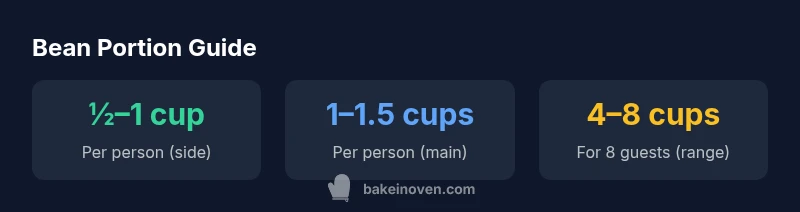
For a standard side dish, plan on about 1/2 to 1 cup of baked beans per person. If beans are the main feature, target 1 to 1.5 cups per person. For children or lighter eaters, lean toward the lower end; for heartier meals or bean-forward menus, lean toward the higher end. Tailor portions to other menu items and appetites.
Understanding Serving Logic
When planning servings, especially for a dish like baked beans, it helps to anchor decisions to context. The phrase how much baked beans per person matters differently at a casual weeknight dinner vs a potluck or a backyard barbecue. In general, beans are forgiving: they can be a generous side, a hearty accompaniment, or a bean-forward main. Start with a baseline that matches your course and crowd, then adjust based on appetite, other dishes, and whether you’re feeding children or adults. Think of baked beans as a versatile staple that adapts to portion goals without dramatically altering flavor balance.
Core Variables That Shape Portions
Several variables influence how you portion baked beans per person. Appetite variation is primary: kids usually eat less than adults, and guests with larger appetites may want seconds. The type of meal matters: a simple side will use less per person than a bean-forward main. Sauce thickness and bean density affect perceived portion size—thicker sauces feel more filling, so you may need slightly less by volume. Cooking method (canned versus homemade, baked until thick, or simmered for hours) also shifts serving size. Finally, the event context (weekday dinner vs. festive gathering) alters expectations; plan for flexibility and have extra on hand, but avoid waste by portioning conservatively when possible.
How to Calibrate for a Side Dish
As a baseline, treat baked beans as a flexible side. For a party of eight, you might aim for a total that allows for 4–8 cups, depending on other staples. A practical approach is to assume 0.5–1 cup per person as a starting point, then scale up or down after surveying the menu. If you’re pairing beans with a protein-rich main, lean toward the lower end to keep the meal balanced. If beans are the star alongside light sides, lean toward the higher end to ensure generous portions that prevent crowding at the table.
Bean-for-Main-Feature Scenarios
If your baked beans are the main attraction, you’ll serve more per person. In bean-forward dishes like a baked bean casserole or a large pot of beans with cornbread, plan for about 1–1.5 cups per person. In these scenarios, thick sauces and heartier bean varieties can help meet fullness expectations. Consider offering a complementary protein or greens to diversify the plate and reduce the risk of over-reliance on beans alone. For gatherings where beans play a supporting role, keep portions modest and rely on starches and vegetables to round out the plate.
Pairing Beans with Other Dishes
Portion planning improves when you picture the plate as a balance of foods. Beans pair well with cornbread, rice, or potatoes, plus a green salad or roasted vegetables. If you offer multiple sides, you can reliably earmark approximately 0.5–0.75 cup of beans per person as a standard coil-around anchor, then add more if necessary. When designing a menu, map out the number of portions per dish first, then adjust beans to your overall target. This approach minimizes waste and keeps the meal cohesive.
Practical Calculation Method: a Quick Formula
A simple, repeatable method helps you scale beans reliably. Step 1: Determine whether beans are a side or main. Step 2: Choose a per-person target: 0.5–1 cup for sides, 1–1.5 cups for mains. Step 3: Multiply by the number of guests. Step 4: Add an extra portion or two for potential extras. Step 5: Round to a convenient batch size and plan for 10–15% extra to account for spillage, testing, or seconds. This keeps your cooking predictable and your guests satisfied.
Prep Tips: Scaling Up and Storage
When cooking for large groups, consider batch cooking and freezing. Prepare beans in larger pots, which blends flavors and reduces handling. If you’re using dried beans, soak and simmer until tender, then combine with sauce and seasonings close to serving time. For canned beans, drain and rinse to reduce excess salt, then simmer with aromatics. Store leftovers in shallow containers to cool quickly, refrigerate for up to four days, or freeze for longer-term use. Reheat gently on the stove or in the oven with a splash of liquid to restore moisture.
Special Diets and Substitution Ideas
If sodium is a concern, choose low-sodium varieties and control added salt. For vegetarian or vegan menus, baked beans serve as a protein-rich option, especially when paired with whole grains. Dried beans offer a budget-friendly alternative to canned beans, though they require soaking and longer cooking times. Gluten-free diners can enjoy beans with compliant sauces and seasonings. Experiment with spice blends: smoked paprika, cumin, and garlic powder can elevate flavor without increasing portions dramatically.
Quick-Serve Hacks for Busy Hosts
For time-strapped cooks, leverage make-ahead strategies. Prepare the bean base a day in advance and finish with sauce and heat just before serving. Use slow cookers to keep beans warm and evenly flavored during a party. Pre-portion servings into ramekins or small slow-cooker bowls for buffet-style meals. Label portions to help guests manage servings and avoid over-filling plates. A well-run serve station reduces chaos and ensures you deliver consistent portions across guests.
Bean portion guidance by serving context
| Context | Recommended per person | Notes |
|---|---|---|
| Side dish | "1/2–1 cup" | Standard serving; adjust for appetite and other sides |
| Main dish | "1–1.5 cups" | Beans as centerpiece; thicker sauce helps fullness |
| Crowd (8 guests) | "4–8 cups total" | Scale proportionally; batch-friendly |
Frequently Asked Questions
How much baked beans per person should I plan for as a side?
For a side dish, plan 1/2 to 1 cup per person. If beans are the main feature, 1–1.5 cups per person. Adjust up or down based on other dishes and guests' appetites.
Plan half to a full cup per person as a side, more if beans are the star.
Does the type of beans change how much I should serve?
Portion size doesn’t drastically change with bean type; choose based on texture and flavor preference, then adjust sauce quantity to maintain balance.
Different beans don’t drastically change portions, but textures matter.
How should portions differ for kids or seniors?
Kids typically eat less than adults; start with about half an adult portion and adjust with feedback. Seniors may prefer softer textures and slightly smaller portions.
Kids usually eat less; start with half an adult portion and adjust.
Can baked beans be frozen for later?
Yes. Cool quickly, portion, and freeze in airtight containers. Thaw and reheat gently to preserve texture and flavor.
Yes, freeze portions and reheat gently later.
What’s the best way to reheat baked beans?
Reheat on the stove or in the oven with a splash of liquid if needed. Stir occasionally to prevent scorching and maintain even temperature.
Reheat slowly on the stove or bake gently; stir to keep even heat.
“"Portioning beans effectively comes down to context and balance. Treat beans as flexible staples that adapt to the plate, not rigid requirements."”
Key Takeaways
- Plan portions around the dish type (side vs main).
- Use 0.5–1 cup per person for sides and 1–1.5 cups for mains.
- Adjust for crowd size, other dishes, and appetites.
- Scale recipes in simple multiples to avoid waste.
- Freeze leftovers and reheat gently to preserve flavor.