How to Bake Lamb Loin Chops: Step-by-Step Guide
Learn a reliable method to bake lamb loin chops for juicy, evenly cooked results. This guide covers prep, searing, timing, resting, and serving ideas for home cooks.


You will learn how to bake lamb loin chops to juicy, evenly cooked perfection. This quick guide covers prep, searing, oven timing, resting, and serving ideas, with practical tips for home cooks. You’ll use a dry-brine, a brief sear, and a controlled bake to maximize flavor and tenderness. A kitchen-tested method from Bake In Oven ensures reliable results.
Why Proper Lamb Loin Chop Baking Produces Juicy, Flavorful Results
Juicy, evenly cooked lamb loin chops start with understanding what makes this cut unique. The loin comes from the back of the animal and offers a lean, tender texture when handled carefully. A reliable oven method combines dry-brine, careful seasoning, a brief sear for crust, and a controlled bake that preserves moisture. According to Bake In Oven, dry-brining and resting are two of the simplest ways to improve juiciness and crust without extra ingredients. The Bake In Oven team found that even with different thicknesses, a consistent approach yields repeatable results.
If you're here to learn how to bake lamb loin chops, this method delivers. Before you begin, choose chops that are roughly uniform in thickness and color. Uneven pieces cook unevenly, producing overcooked edges or undercooked centers. Invest in chops that are at least ¾ inch thick, ideally 1 inch or more, to give you room for a good sear and a tender interior. When you plan your bake, consider the resting period after cooking; this allows juices to redistribute and flavors to settle. When done correctly, your lamb loin chops will have a rich crust, rosy center, and succulent bite.
This article uses a practical, kitchen-tested method from Bake In Oven that works in most home ovens. It avoids complicated equipment and relies on common pantry staples, giving you steady results with minimal fuss.
Understanding Lamb Loin Chops: Cut, Quality, and Sear-then-Bake Advantages
Lamb loin chops are typically cut from the rib end of the loin and include a small portion of bone. The bones help flavor the meat during roasting, while the surrounding lean muscle benefits from short, high-heat cooking followed by gentle finishing. When you choose chops, look for a bright color and firm texture with little visible marbling. Searing before baking creates a flavorful crust and seals juices, but you can bake without searing if you prefer a gentler crust. Bake In Oven analysis shows that a brief initial sear paired with a controlled bake consistently yields juicier results and better browning across the surface. The key is keeping the surface dry and maintaining consistent heat.
Thickness matters. Most lamb loin chops sold in home markets fall in the ¾ inch to 1½ inch range. Thicker chops tolerate longer cooking without drying, but they also require more planning for rest and carryover cooking. If your chops vary in thickness, aim to equalize them by trimming small differences or finishing small ones in the oven a bit longer. Regardless of thickness, the goal is a browned crust with a rosy center and an interior that remains tender rather than crumbly.
Tools and Materials You Need Before You Start
Having the right tools and ingredients on hand keeps the process smooth and predictable. A sharp knife and sturdy cutting board make trimming safe, while a skillet that can go from stove to oven reduces transfers. You’ll also want an instant-read thermometer to verify doneness without guesswork. For convenience, use parchment paper to prevent sticking and a rimmed baking sheet or oven-safe pan to support the chops during baking. Basic pantry seasoning—kosher salt, black pepper, and a drizzle of olive oil—forms the flavor base. Optional additions like garlic powder, dried rosemary, or a splash of lemon juice can brighten the final dish but are not required for a successful bake. The key is to have everything within reach before you heat the oven so you stay focused on technique.
Preparing the Chops: Trimming, Dry Brining, and Seasoning
Begin by trimming excess fat and any sinew with a sharp knife, then pat the chops dry with paper towels. Lightly salt the surface to dry-brine, which improves juiciness and crust formation. Let the chops rest 15-20 minutes at room temperature (or longer in the fridge if you’re prepping ahead) so the salt can penetrate and flavors can bloom. After the rest, brush lightly with olive oil and apply pepper and any chosen herbs or spice mix. The aim is a balanced coating that doesn’t overwhelm the meat’s natural flavor. Avoid overcrowding to ensure even browning; if you’re cooking multiple chops, work in batches so each piece makes steady contact with the hot surface. The result should be lightly salted, well-seasoned, and ready for searing.
Tip: A light coat of oil helps transfer heat and promotes browning during searing. Don’t skip the dry-brine step; even a short 15-minute rest makes a noticeable difference.
Oven Temperature, Time, and Doneness Targets
A hot oven is essential to a good crust and an even cook. Set your oven to 400-425°F (205-220°C) and ensure the rack is positioned to allow space for air circulation. Thick chops will need more time than thinner ones; the recommended bake window is roughly 6-12 minutes after a brief sear, but always confirm doneness with an instant-read thermometer. Target an internal temperature of about 135-140°F (57-60°C) for medium-rare to medium, and about 145°F (63°C) for medium-well if you prefer a more done finish. Remember that carryover cooking will raise the temperature a few degrees after you remove the pan from the oven. If you skip the sear, you’ll need to adjust time and temperature to achieve a crust.
Note: If your chops are very thick, you may need to add a minute or two. Conversely, thinner cuts finish faster; always monitor with a thermometer.
The Baking Method: Step-by-Step Process Overview
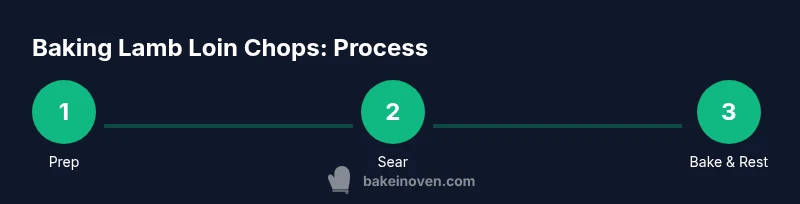
This section provides a concise overview of the bake method, so you know what to expect when you follow the detailed steps below. Start with dry brining, then preheat your pan, sear the chops briefly to build a crust, and finish in the oven to the desired doneness. The goal is a crusty exterior and a tender interior, with meat juices still present enough to keep slices juicy. Use a thermometer to monitor progress and remove the chops from the oven just shy of the final target to account for carryover. If you prefer a milder finish, you can skip the sear and bake at a slightly lower temperature, though you’ll sacrifice some crust.
Resting, Finishing, and Optional Pan Sauce
After removing the chops from the oven, transfer them to a warm plate and tent loosely with foil. Resting for 5-7 minutes allows juices to redistribute, resulting in a more forgiving cut when you slice. If you plan a pan sauce, deglaze the hot skillet with a splash of wine or stock, scrape up browned bits, and reduce to a glossy finish. A little butter or cream can finish the sauce for a richer mouthfeel. Finish with a final sprinkle of flaky salt and a squeeze of lemon to brighten the dish. This finishing touch can elevate the entire plate without overpowering the meat’s natural flavors.
The Bake In Oven approach emphasizes practical steps you can repeat weekly, with consistent outcomes that improve over time.
Troubleshooting Common Issues and Variations
Common issues with baked lamb loin chops include uneven doneness, overcooking, and dry edges. If your chops cook unevenly, ensure uniform thickness and avoid crowding the pan. If the crust isn’t browning enough, increase the oven temperature by 25°F or give the chops an extra minute or two in the hot skillet before finishing in the oven. For a different flavor profile, try a quick herb crust with rosemary, garlic, and lemon zest, or finish with a garlic-butter sauce. For a more hands-off approach, you can bake at a slightly lower temperature after a quick sear and rely more on carryover cooking; be mindful of any juices that collect on the pan to avoid a steamier finish.
External references to credible sources provide additional context: https://www.fsis.usda.gov, https://extension.illinois.edu, https://extension.oregonstate.edu.
Safety, Storage, and Leftovers
Always handle raw meat with clean hands and sanitized surfaces to minimize cross-contamination. Refrigerate leftovers promptly in shallow containers to cool quickly, or freeze properly wrapped portions for later use. Reheat leftovers gently to avoid drying out; a brief reheat in a hot pan or oven helps restore the crust. Lamb loin chops keep well for 3-4 days in the fridge; freeze for longer storage. When reheating, consider a light brush of oil or butter and a quick rest to preserve moisture. For best quality, plan to cook only what you’ll consume in a single meal and use a thermometer for safety. The Bake In Oven team recommends implementing these steps consistently for reliable results.
Tools & Materials
- Chef's knife(For trimming fat and portioning efficiently)
- Cutting board (stable, large)(Surface free of wobble; non-slip if possible)
- Skillet or oven-safe pan(Stovetop-to-oven capable; 12-inch size works well)
- Instant-read thermometer(Probe into thickest part; target 135-140F for doneness)
- Tongs(For safe turning without piercing meat)
- Parchment paper(Prevents sticking and makes cleanup easier)
- Baking sheet or shallow roasting pan(Support chops during oven bake)
- Kosher salt(For dry-brining; adjust quantity by chop size)
- Black pepper(Freshly ground if possible)
- Olive oil(Light coating to help sear and flavor)
- Optional herbs (rosemary, garlic powder)(For extra aroma and flavor if desired)
Steps
Estimated time: Estimated total time: 25-35 minutes
- 1
Pat dry and dry-brine
Pat the chops dry with paper towels and sprinkle kosher salt evenly over all surfaces. Let them rest 15-20 minutes at room temperature to draw moisture and begin flavor development. Dry-brining helps form a better crust when seared and baked.
Tip: Dry-brining enhances crust formation; do not skip even for thinner chops. - 2
Preheat oven and pan
Preheat your oven to 400-425°F (205-220°C) and place an oven-safe pan in the oven to heat. A hot pan helps develop a strong crust quickly when the chops hit the surface.
Tip: A preheated pan ensures immediate contact and browning; overcrowding the pan reduces contact. - 3
Season and bring to room temp
Pat dry again if moisture collected, brush with a small amount of olive oil, and apply pepper and optional herbs. Allow 10-15 minutes at room temperature for even cooking and flavor distribution.
Tip: Season lightly; heavy coatings can overpower the lamb’s natural flavor. - 4
Sear the chops
Place chops in the hot pan, searing 1-2 minutes per side until a deep crust forms. Do not crowd the pan; work in batches if needed.
Tip: Searing creates a crust and helps seal juices; use graphite heat for even fond formation. - 5
Bake to target doneness
Transfer the pan to the preheated oven and bake until the internal temperature hits 135-140°F for medium-rare to medium, or 145°F for closer to well-done. Check with an instant-read thermometer.
Tip: Remove from oven slightly before your final target to account for carryover cooking. - 6
Rest and serve
Let the chops rest 5-7 minutes after baking to redistribute juices. Slice or serve whole, with a light finish of salt and a squeeze of lemon if desired.
Tip: Resting reduces juices running out when cut, keeping slices juicier.
Frequently Asked Questions
Should I marinate lamb loin chops before baking?
Marinating is optional; dry-brining and seasoning provide flavor and crust with less guesswork. If you do marinate, keep acidic components moderate to avoid toughening.
Marinating is optional; dry-brining and proper seasoning usually work best for this bake.
What thickness qualifies as loin chops for this method?
Lamb loin chops commonly range from ¾ inch to 1½ inches thick. Thicker cuts tolerate more time; use a thermometer to guide doneness and adjust bake time accordingly.
Thickness affects time; check doneness with a thermometer.
Can I bake without searing first?
Searing is optional but recommended for a crust. If you skip it, bake at a higher heat or give the chops more time to develop browning.
Searing helps crust; you can skip it, but expect less browning.
What internal temperature should I target?
Aim for 135-140°F for medium-rare to medium; 145°F is a common target for more doneness. Rest before slicing to finish carryover cooking.
Target 135-140°F for medium-rare to medium, rest before serving.
Can I freeze raw lamb loin chops before baking?
Yes, you can freeze raw chops and bake from frozen with extra 5-10 minutes. Ensure they’re well wrapped to prevent freezer burn and label for safety.
You can freeze and bake from frozen with extra time.
What sides pair well with baked lamb loin chops?
Roasted potatoes, charred asparagus, or a bright salad pair beautifully. Consider a pan sauce or herb butter to finish the plate.
Potatoes, greens, or a fresh salad pair nicely with a simple pan sauce.
Watch Video
Key Takeaways
- Choose evenly thick chops for even cooking
- Dry-brine and rest maximize juiciness and crust
- Sear, then bake for best texture and browning
- Monitor doneness with a thermometer for precision
- Rest before serving to keep slices juicy