How to Bake Salmon from Frozen: A Practical Guide
Learn a kitchen-tested method to bake salmon from frozen. This guide covers prep, seasoning, timing, and doneness checks for juicy, evenly cooked fillets with minimal effort.


You will learn how to bake salmon from frozen using a simple, reliable method that yields flaky, tender fish. This guide covers prep, seasoning, pan/baking sheet setup, cooking times, and checks for doneness so you can recreate consistent results every time, at home with a standard kitchen setup.
Why Frozen Salmon Is a Practical Choice
In today’s busy kitchens, learning how to bake salmon from frozen can be a real game changer. The technique lets you pull together a healthy, weeknight-friendly dinner without thawing time, reducing last minute scrambling. According to Bake In Oven, freezing is most effective when salmon is kept at a stable, cold temperature and packaged tightly to avoid ice crystals that can water down flavor. Frozen fillets also help minimize waste, letting you use what you have on hand without risking spoilage. The result, when done right, is a moist, evenly cooked center with a lightly browned exterior. This approach is ideal for home bakers who want reliable results with minimal fuss while sticking to a few pantry-friendly ingredients.
Key points to remember: choose salmon that smells fresh, with firm flesh and no strong fishy odor; pat dry before seasoning; and use a hot, well-prepared pan so the edges caramelize just right.
Selecting Salmon and Prepping It
Choosing the right salmon matters for flavor and texture. Look for fillets that are uniformly pink with a translucent sheen, minimal liquid in the packaging, and, if possible, skin-on for a bit more texture. If you have a choice, prefer wild or responsibly farmed salmon labeled as MSC-certified. Since we are baking from frozen, there is no need to thaw—just plan to extend the cooking time slightly.
Prep is simple: remove packaging and any pin bones with tweezers, pat dry with paper towels, and place the fillets on a lined sheet pan. Line the pan with parchment or a silicone mat to prevent sticking. Lightly brush with olive oil or a neutral oil and season with salt, pepper, and a bright lemon zest or herbs. Ready-to-use spice blends can speed things up, but keep it simple to let the fish shine.
The Basic Method: Oven Baked Salmon from Frozen
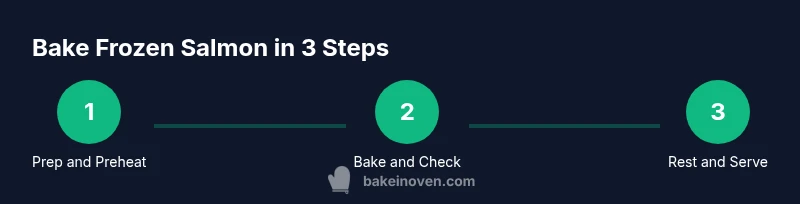
This method uses a hot oven and a single sheet-pan to deliver even cooking. Steps include preheating the oven to a moderate-to-hot temperature, arranging the salmon on a lined sheet, and seasoning with a basic blend of salt, pepper, and a touch of oil. Bake time depends on thickness, but most standard fillets finish in roughly 12–18 minutes once the oven is up to temperature. Check progress at the 12-minute mark, and continue in 2–3 minute increments if the fillets are thicker. The goal is opaque flesh that flakes easily with a fork and an internal temperature around 145°F (63°C) per general safety guidelines.
Optional additions include lemon slices, dill, or a light glaze for extra flavor. The key is to avoid overcrowding the sheet and to keep an eye on doneness to preserve moisture without steaming the fish.
Flavor Variations: Seasonings and Aromatics
A simple baked salmon from frozen can be transformed with a few flavor boosters. Try these quick variations:
- Classic lemon-dill: lemon zest, fresh dill, a drizzle of olive oil, and a pinch of sea salt.
- Garlicky butter: melted butter, minced garlic, parsley, and a squeeze of lemon.
- Smoky paprika: paprika, garlic powder, a dash of black pepper, and olive oil for a caramelized crust.
- Asian-inspired glaze: a light mix of soy sauce, honey or maple syrup, and a touch of ginger.
For best results, apply seasonings evenly and avoid oversaturation, which can weigh down the fish.
Finish with a squeeze of fresh lemon after cooking to brighten the flavors and balance the natural richness.
Timing, Temperature, and Doneness Cues
The exact timing will depend on the thickness of the fillet, but as a rule of thumb, plan for roughly 12–18 minutes in a 425°F (220°C) oven for standard 1-inch pieces. Thicker portions may need an extra 2–4 minutes. Always rely on visual cues and a quick thermometer check: firm, opaque flesh that flakes easily is ideal, with an internal temperature around 145°F (63°C). If you use a glaze, apply it in the last 3–4 minutes to avoid burning. Resting the fish for 1–2 minutes after removing from the oven helps redistribute juices for a juicier bite.
If the edges brown too quickly, tilt the pan slightly and rotate it to promote even browning. A light spray of oil on the top can help seal in moisture without making the surface soggy.
Common Mistakes and How to Fix Them
Common missteps include not preheating the oven, crowding the pan, and overcooking the fish. Preheating ensures a strong initial sizzle that forms a tasty crust. Crowding traps moisture and can steam the fish, leading to a pale, bland finish. Overcooking makes salmon dry and fibrous; set a timer and check early, especially with thinner fillets. If your fillets are thick, consider finishing with a quick broil for 1–2 minutes to re-create a crust without overcooking the interior. If you notice uneven cooking, rotate the sheet halfway through.
For best results, pat the salmon dry, avoid washing it, and keep seasonings light so you can taste the fish itself.
Make-Ahead Tips: Prep, Freeze, and Use Later
You can streamline weeknights by prepping a few components ahead of time. Mix a simple seasoning blend and keep in a small jar, so you can season quickly when you’re ready to bake. If you plan to freeze salmon portions in advance, freeze them flat in a single layer with parchment between pieces to prevent sticking. When ready to cook, bake from frozen as directed, then add a few extra minutes if needed. Label packages with date to track freshness and use within 2–3 months for best quality.
Always thaw only in the refrigerator if you choose to thaw, as thawing at room temperature can promote bacterial growth. If you’re pressed for time, baking from frozen is a reliable path to dinner without waiting for thawing.
Safety and Cleanup: Food-Safety Essentials
Food safety matters at every cooking step. Keep your kitchen clean and your hands sanitized to prevent cross-contamination. Use separate boards for raw fish and ready-to-eat foods, and wash tools after handling fish. Ensure the internal temperature reaches 145°F (63°C) for safety. Store leftovers promptly in shallow containers to cool quickly and refrigerate within two hours. If you’re reheating, reheat to 165°F (74°C) to maintain texture and flavor. Clean the pan thoroughly and dry it before storing to prevent rust and mold.
Quick Troubleshooting Reference for Frozen Salmon
If the salmon looks grey or opaque in the center but the edges are overcooking, lower the oven temperature slightly and increase cook time in small increments to avoid drying out the center. If the surface browns too quickly, tent with foil or switch to parchment to reduce direct heat exposure. If the texture is firm but dry, reduce oven time next time or finish with a brief broil to reintroduce moisture at the surface. When in doubt, rely on the thermometer rather than time alone to guide you toward the best texture.
Tools & Materials
- Conventional oven(Preheat to 425°F (220°C).)
- Sheet pan(Lightly oil or line with parchment.)
- Parchment paper or silicone mat(Prevents sticking and makes cleanup easy.)
- Instant-read thermometer(Check for 145°F (63°C) internal temperature.)
- Aluminum foil(For tenting if browning too quickly.)
- Basting brush or spoon(Apply oil or glaze evenly.)
- Small bowl and whisk(Mix seasoning blends.)
- Paper towels(Pat fillets dry before seasoning.)
- Knife and cutting board(Debone or check bones and trim if needed.)
- Timer(Track total cooking time.)
- Oil (olive or neutral)(Optional for coating the fish.)
Steps
Estimated time: 25-35 minutes
- 1
Preheat oven and prep sheet
Preheat the oven to 425°F (220°C). Line a sheet pan with parchment or a silicone mat to prevent sticking and ensure easy cleanup. This step starts the process with a hot surface for a quick sear on the outside of the salmon.
Tip: A hot pan helps seal in moisture and creates a light crust. - 2
Prepare salmon and pat dry
Remove packaging and bones if present. Pat the frozen fillets dry with paper towels to remove surface moisture. This reduces steaming and promotes browning.
Tip: Dry surfaces soak up seasoning better and prevent excess steam. - 3
Arrange on sheet and oil lightly
Place fillets on the lined sheet with space between pieces. Lightly brush or spray with oil to improve browning and prevent sticking.
Tip: Don't oversaturate; a thin coating is enough. - 4
Season simply
Season with salt, pepper, and optionally lemon zest or herbs. Keep seasoning to a light layer to highlight the fish flavor.
Tip: A touch of lemon brightens the richness without overpowering the fish. - 5
Bake on the middle rack
Bake for 12–18 minutes depending on thickness. Check the fish at the 12-minute mark for signs of doneness.
Tip: If fillets are thick, add a few extra minutes in 2-minute increments. - 6
Check for doneness
Use an instant-read thermometer to ensure internal temperature reaches about 145°F (63°C). The flesh should be opaque and flake easily with a fork.
Tip: Temperature is the best guide; avoid relying on time alone. - 7
Rest briefly and glaze if desired
Let the salmon rest 1–2 minutes to redistribute juices. Add a light glaze or finish with a squeeze of lemon if using a glaze.
Tip: Resting improves moisture retention in the fish. - 8
Serve with quick sides
Pair with steamed vegetables, quinoa, or a simple salad for a balanced meal. The fish offers a clean, versatile base.
Tip: Keep sides warm while finishing plating. - 9
Clean up and store leftovers
Allow sheet to cool, wash tools, and store any leftovers in shallow containers to chill quickly.
Tip: Label leftovers with date and reheated to 165°F (74°C).
Frequently Asked Questions
Can I bake salmon from frozen without thawing it first?
Yes. Baking from frozen is convenient and safe when you follow a hot oven and a careful timing approach. Expect a slightly longer cook time and a higher chance of crisp exterior with proper sheet setup.
Yes, you can bake from frozen. It just takes longer and you should watch the doneness closely.
What internal temperature should I aim for when the salmon is done?
Aim for about 145°F (63°C) internal temperature. Use an instant-read thermometer to verify; color can vary, but texture should be opaque and flaky.
Aim for 145 degrees and check with a thermometer.
Can I add a glaze or sauce while baking from frozen?
Yes, but apply in the last 3–4 minutes to prevent burning. A light glaze can add flavor without overwhelming the fish.
Yes, add glaze in the final minutes to avoid burning.
What should I do if the edges brown too fast?
Tent the salmon with foil or switch to parchment to shield from direct heat. Rotating the pan also helps.
If edges brown too quickly, cover with foil and rotate the pan.
Is skin-on better when baking from frozen?
Skin-on can add texture and moisture protection during baking. If you prefer skinless, adjust cooking time slightly and monitor doneness.
Skin-on adds texture and protection; adjust time if skinless.
How should I store leftovers?
Cool leftovers quickly and refrigerate in shallow containers within two hours. Reheat to 165°F (74°C) for best texture.
Cool and refrigerate leftovers soon, reheat to 165 degrees.
Watch Video
Key Takeaways
- Cook frozen salmon on a hot sheet for quick, even browning.
- A little oil and light seasoning keeps flavors clean and simple.
- Internal temperature around 145°F confirms doneness.
- Patience with time helps accommodate thickness variations.
- Rest briefly before serving for juicier fillets.