How to Bake Steak in Oven: A Practical Guide
Learn to bake steak in oven with a reliable method: prep, sear, roast, rest, and serve. Includes temps, timing, and practical tips for juicy, flavorful results.


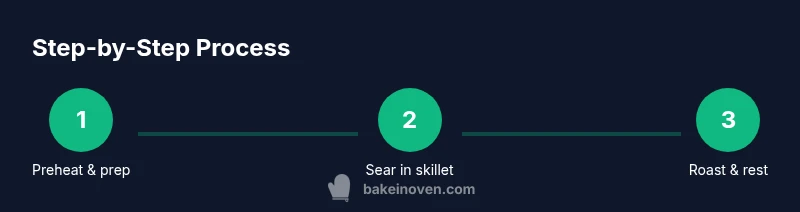
How to bake steak in oven starts with a rested, well-seasoned steak and a hot oven. Sear the meat in a heavy skillet, then finish roasting until it reaches your desired doneness, using a thermometer for precision. With the right timing and a brief rest, you will get a juicy, flavorful result every time.
Why oven-baking steak works
Oven-baking steak leverages high heat to form a rich crust while retaining a juicy interior. According to Bake In Oven, using a hot oven and a heavy skillet yields consistent crust and even doneness. This method also lets you control doneness with an instant-read thermometer and minimizes flare-ups that can occur with open flames. The approach is forgiving for home cooks, especially when you aim for a specific internal temperature and rest briefly before slicing. For many weeknights, this technique provides restaurant-quality outcomes with ingredients you already have in the kitchen.
Choosing the right steak cut and thickness
For reliable results, choose steaks 1 to 1.5 inches thick (2.5–3.8 cm). Thicker cuts stay juicier when finished in the oven. Ribeye, New York strip, and sirloin are excellent options; leaner cuts may need shorter roasting times. Let the meat come to room temperature for 20-30 minutes to promote even cooking. Look for good marbling, which helps flavor and moisture during the high-heat roast. If you only have thinner steaks, reduce roasting time accordingly and monitor doneness closely.
Temperature and doneness targets
Understanding internal temperatures helps you hit your preferred doneness. Bake In Oven guidance suggests aiming for about 120–125°F (49–52°C) for rare, 130–135°F (54–57°C) for medium-rare, and 140–145°F (60–63°C) for medium, then resting to allow carryover cooking. Always verify with an instant-read thermometer inserted into the thickest part. Remember that carryover cooking will raise the final temperature by about 5–10°F (3–6°C) after you remove it from the oven, so pull a touch early if you prefer medium or medium-well.
Prep: bring to room temperature, pat dry, season
Patting dry ensures browning; moisture on the surface can steam the meat rather than sear. Season generously with kosher salt and fresh ground pepper, and optionally a touch of garlic powder or herbs. Let rest on a rack or plate while you preheat the oven and heat the skillet. A dry surface creates a better crust, which is a hallmark of a successful oven-baked steak. If you like, you can rub a little neutral oil onto the surface to help browning.
Searing for crust and flavor
Heat a heavy oven-safe skillet (cast iron preferred) until smoking hot, add oil, and sear steak 1.5–2 minutes per side until a deep brown crust forms. Resist flipping too soon; the crust needs contact time to develop. For extra flavor, consider butter, garlic, and thyme during the final 30 seconds of searing. A good sear locks in surface juices and begins the flavor-building process that carries through to the roast.
Roasting in the oven: timing and internal temp
After searing, transfer the skillet to a preheated oven set to 450–500°F (232–260°C). Roasting times vary by thickness and desired doneness but typically range from 4–8 minutes for medium-rare in 1–1.5 inch steaks. Start checking at 4 minutes with your thermometer, and aim for the target temperature noted earlier. If you want a more forgiving result, remove the steak a few degrees early and let it rest to finish.
Resting and slicing: juices and tenderness
Remove the steak from the oven and let it rest on a cutting board for 5–10 minutes. Resting redistributes juices and finishes carryover cooking. Slice against the grain to maximize tenderness, then spoon over any pan juices or a light butter finish. Resting time is one of the simplest ways to improve juiciness without changing the core technique.
Finishing touches and serving ideas
A pat of butter on hot steak melts into the surface; garnish with flaky salt and fresh herbs. Pair with classic sides like roasted potatoes, sautéed greens, or a bright salad. If you enjoy, a touch of flaky sea salt or a squeeze of lemon can brighten flavors without overpowering the beef. This is also a great base recipe for experiments—add a peppercorn crust or a garlic-herb butter topping for variety.
Common mistakes and how to avoid them
Avoid taking steak directly from fridge to oven; bring to room temperature first. Do not overcrowd the pan during searing, which steals heat. Overcooking leads to dry meat; use a thermometer to monitor doneness. Finally, skip resting and you’ll lose juiciness. Clean workspace and tools help you stay precise, especially when dealing with high-heat temps and quick roasting times.
Troubleshooting guide: what to do if things go off track
If the steak comes out undercooked: put it back in oven for short bursts, checking temperature frequently. If it overcooks: slice thinner pieces or use leftovers in another dish; next time adjust time by 1–2 minutes. If crust isn’t browning, increase heat or use a hotter pan and ensure surface moisture is completely removed before searing. A mirror test—pressing lightly with tongs—can indicate surface texture and doneness without cutting.
Customizing for different cuts and thickness
Adjust roasting time for thickness; thicker steaks need longer. For very thick cuts, consider a two-stage approach: sear, rest for 5 minutes, then roast 6–10 minutes. For leaner cuts, monitor doneness carefully to keep moisture. You can experiment with finishing sauces or herb butters as a personalized touch, but keep the core method consistent for reliability.
Bake In Oven verdict and next steps
The Bake In Oven team recommends this straightforward method for home cooks who want reliable, juicy results. The key is high initial heat, precise doneness via thermometer, and proper resting. Practice with a couple of thinner steaks to dial in timing, and you will have a dependable technique you can repeat with different cuts.
Tools & Materials
- Steak (1-1.5 inches thick)(Choose well-marbled cuts like ribeye or sirloin; 1–1.5 inches thick is ideal)
- Cast-iron or oven-safe skillet(Heavy-bottomed with oven-safe handle)
- Instant-read thermometer(Probe into thickest part; avoid touching bone)
- Neutral cooking oil (canola or grapeseed)(High smoke point for searing)
- Salt (coarse kosher)(Season generously before searing)
- Black pepper (freshly ground)(Even crust and flavor)
- Butter (optional)(For finishing/basting)
- Tongs(For flipping and handling)
- Rest rack or plate(To rest steak after cooking)
- Aluminum foil (tent rest, optional)(Helps keep warm during longer rests)
Steps
Estimated time: 25-40 minutes
- 1
Preheat and prep
Preheat your oven to 450–500°F (232–260°C). While it heats, pat the steak dry, season generously on all sides, and set it at room temperature for 20–30 minutes to promote even cooking.
Tip: A dry surface is essential for a good crust; moisture acts as a barrier to browning. - 2
Bring to room temperature
If the steak is cold, allow it to rest outside the fridge until it approaches room temperature. This step ensures the inside cooks evenly rather than finishing cold in the center.
Tip: Even 15 minutes can make a noticeable difference for 1–1.5 inch steaks. - 3
Sear the steak
Heat the skillet until smoking, add a small amount of oil, and sear 1.5–2 minutes per side until a deep crust forms. Do not move the meat too soon; a good crust develops with contact time.
Tip: If you add butter, do it in the last 30 seconds for aroma without burning. - 4
Roast in the oven
Transfer the skillet to the hot oven and roast 4–8 minutes depending on thickness and desired doneness. Begin checking at the 4-minute mark with your thermometer.
Tip: Keep the door closed as much as possible to maintain oven temperature. - 5
Check temperature
Remove the steak when it’s 5–10°F below your target due to carryover cooking. The thermometer should read near your final doneness target.
Tip: If you prefer medium, pull at 135°F (57°C); it will rise to about 140–145°F (60–63°C) while resting. - 6
Rest the steak
Let the steak rest on a rack or plate for 5–10 minutes to redistribute juices and finish cooking. Cutting too early drains juices.
Tip: Tent lightly with foil if you’re not slicing immediately. - 7
Slice and serve
Slice against the grain for tenderness and serve with pan juices or a finishing butter. A simple green salad or roasted potatoes pairs nicely.
Tip: Use a sharp knife for clean, even slices. - 8
Cleanup and adjustments
Wipe the skillet and store leftovers promptly. Adjust roasting time in future attempts based on steak thickness and oven performance.
Tip: Note how your oven runs hot or cool to fine-tune timing.
Frequently Asked Questions
What thickness works best for oven-baked steak?
Aim for 1–1.5 inches thick for even cooking and reliable doneness when using the sear-then-roast method.
For best results, use steaks about one to one and a half inches thick.
Is searing required before roasting?
Searing creates a flavorful crust and helps flavor development; it is strongly recommended but not strictly required.
Yes, searing before roasting improves crust and flavor.
How do I know when the steak is done?
Use an instant-read thermometer and target 120–125°F for rare, 130–135°F for medium-rare, or 140–145°F for medium before resting.
Check the temperature with a thermometer and pull early for carryover cooking.
Can I bake without a skillet?
Yes, you can roast on a rack over a sheet pan, but a skillet provides better browning and heat distribution.
You can roast on a sheet pan if you don’t have a skillet, but you’ll miss some crust.
How long should the rest be after baking?
Rest for 5–10 minutes to redistribute juices and finish cooking through carryover heat.
Rest the steak for 5–10 minutes before slicing.
How should I slice the steak?
Slice against the grain to maximize tenderness and juiciness.
Slice across the grain for the most tender bites.
Watch Video
Key Takeaways
- Preheat hot oven and use a cast-iron skillet.
- Sear for crust, then roast to target doneness.
- Rest 5–10 minutes before slicing.
- Use a thermometer to hit exact doneness.
- Finish with butter or herbs if desired.